
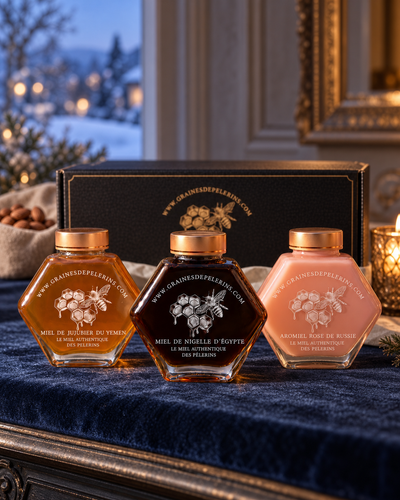
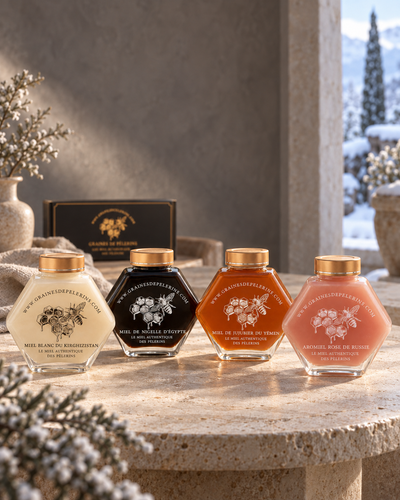
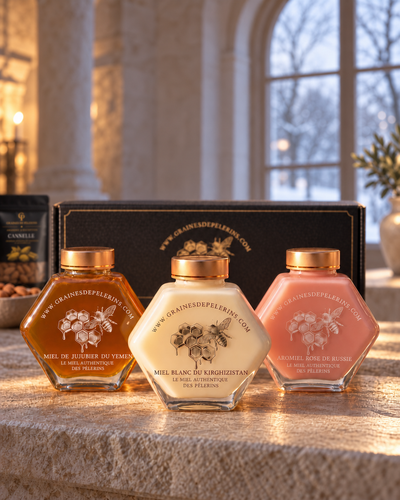
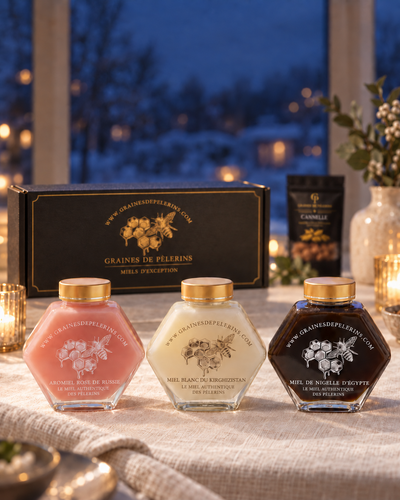
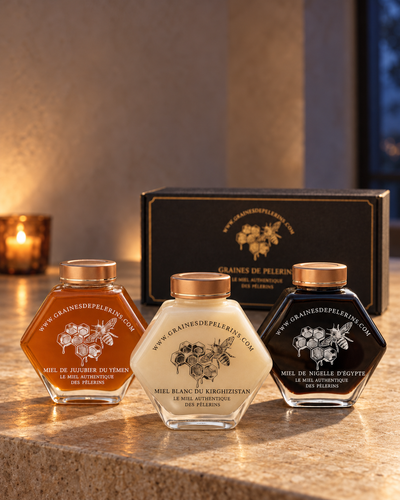
Tasting rare honeys
Rare honey guide
Twelve moments to slow down, look at the texture and let each honey reveal its terroir.

Graines de Pèlerins
The Gourmet Guide:
12 moments to taste honey differently
Not a list of recipes. An invitation to slow down.
Rare honey is tasted before it is cooked with. It is something you meet. Here are twelve moments in a day, twelve textures, twelve gestures, where a rare honey can turn an ordinary minute into something you remember. Choose a moment, then let texture, intensity and finish lead you to the honey that suits it.
Moment 01
First light: the first spoonful
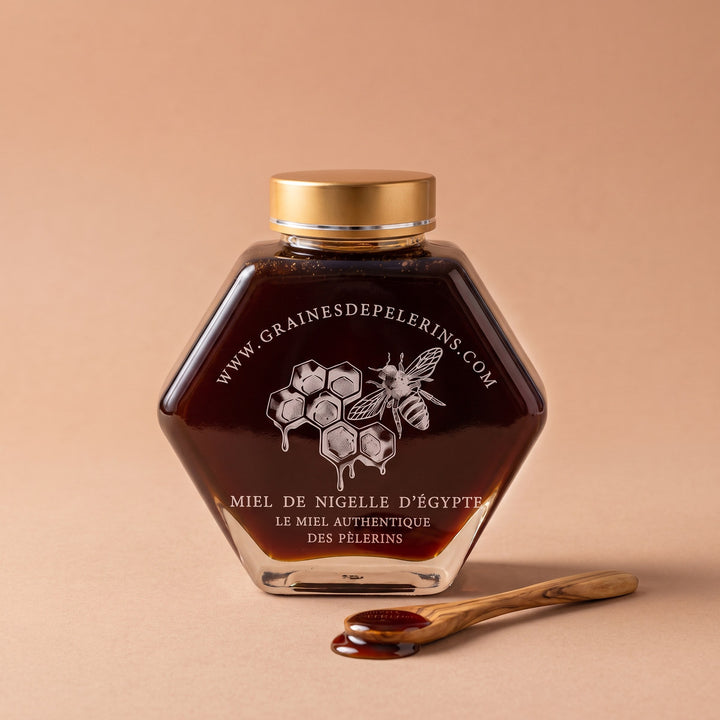
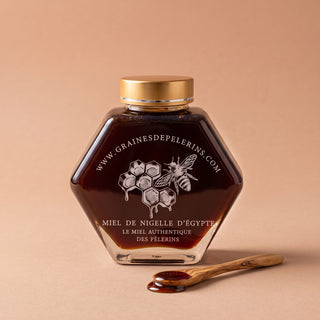
Egyptian Black Seed Honey (Nigella)
Before coffee, half a spoonful is enough. The dense texture opens with a clean attack, then notes of liquorice and a lasting finish. A first sensory marker, to taste on its own before any other flavour.
Moment 02
Tea: added once it has brewed
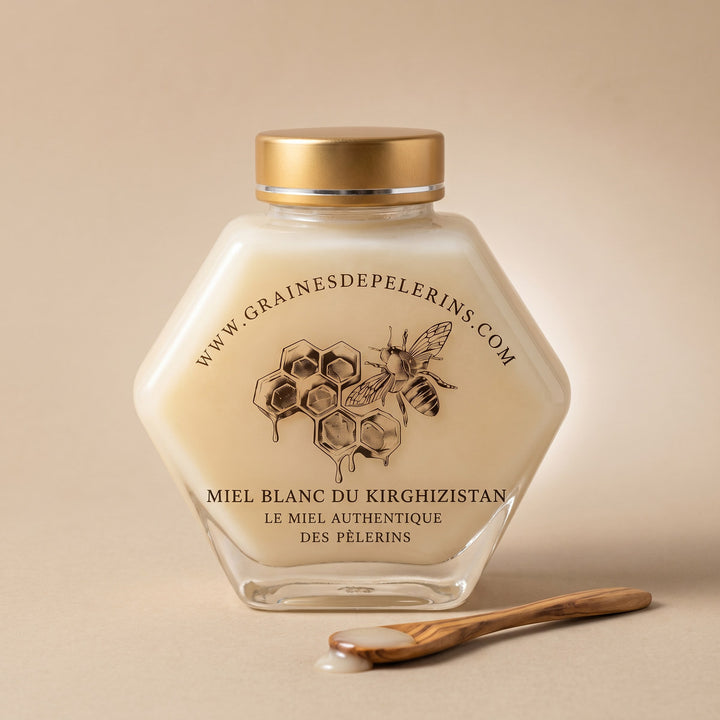
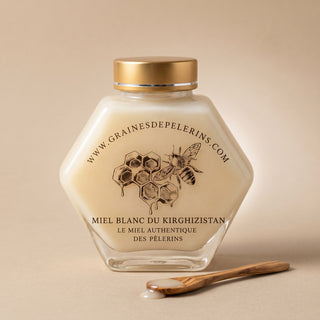
White Honey from Kyrgyzstan (sainfoin)
Make the tea, then let it cool until warm before adding the White Honey. Half a spoonful is enough: its creamy texture loosens slowly and brings a floral roundness without masking the tea.
Moment 03
The slice: salted butter and honey
Whichever honey you fancy
Country bread, lightly toasted, slightly salted butter still cool, then a thin line of honey. The salt sharpens the sweetness; the texture of the honey meets the crunch of the bread. A short bite, a pairing that reads perfectly.
Moment 04
Yoghurt: tangy and floral
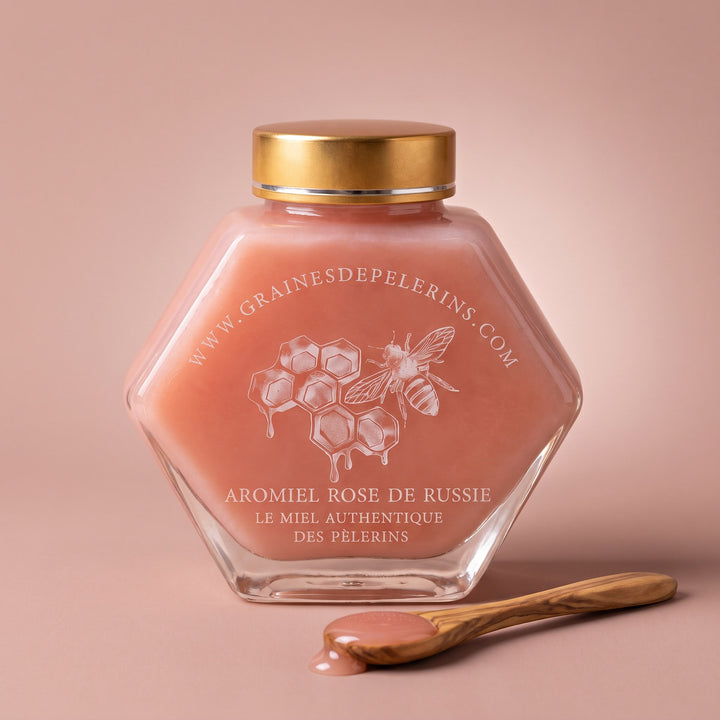
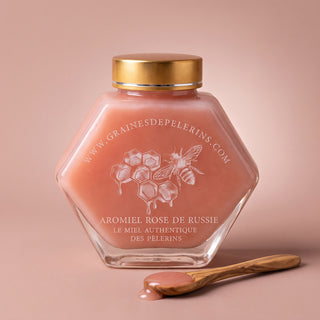
Rose Aromiel from Russia
Spoon some Rose Aromiel into a plain yoghurt and barely stir. The yoghurt keeps its tang, while the floral, fruity profile comes through in touches. Two textures, two intensities, never the same mouthful twice.
Moment 05
The vinaigrette: balancing the acidity
A gentle, floral honey
Whisk a teaspoon of honey with the mustard and the salt, then add the vinegar and the oil in a thin stream. The honey does not take over: it rounds off the acidity and gives the dressing a smoother, better-bound texture.
Moment 06
Cheese: a pairing of contrasts
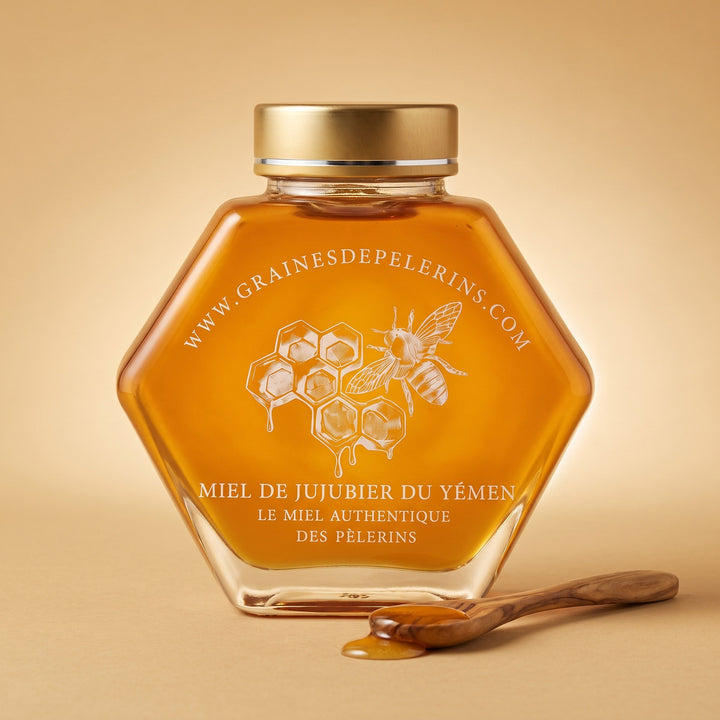
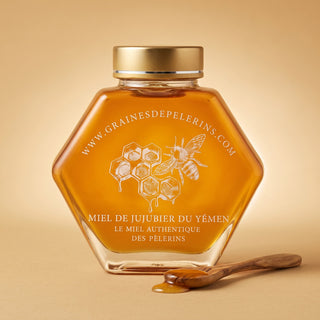
Yemeni Sidr Honey (jujube)
On a well-aged blue cheese, place a single drop of Sidr honey. The salt and the power of the cheese open first; the woody, caramelised notes of the honey then carry the finish. An intense pairing, best served in small portions.
Moment 07
The glaze: a veil at the end of cooking
An amber honey, at the end of cooking
Five minutes before the end of cooking, brush a very thin veil of honey over roast meat or vegetables. Keep a close eye on it: the surface glazes and takes on an amber tint without the honey dominating the dish.
Moment 08
Afternoon tea: brioche or fresh fruit
A gentle or an amber honey
On a slice of warm brioche, add a knob of butter and a drizzle of honey. For something fresher, serve it with green apple and soft fresh cheese. Two simple afternoon treats, built on contrasting textures.
Moment 09
The infusion: choosing your intensity
White Honey, Black Seed Honey or Yemeni Sidr Honey
Once the infusion has brewed, let the cup cool until warm, then add the honey. White Honey brings a floral sweetness; Black Seed or Sidr honey give a bolder profile. Choose according to the intensity you are after.
Moment 10
Neat: the reference tasting
Any of the rare honeys
Place a small amount on your tongue and let it melt, with nothing else. Notice in turn the texture, the aromatic attack and the finish. Repeat with a second honey to compare the differences.
Moment 11
Ice cream: a contrast of temperatures
An amber honey, or Yemeni Sidr Honey
Pour a thread of amber honey over vanilla ice cream made with real pods. The cold thickens the honey and heightens the contrast between melting, creamy and crisp. A few toasted almonds add a final crunch.
Moment 12
Warm water: letting the aroma open
Black Seed Honey or Yemeni Sidr Honey
In a tall glass of warm water, half a spoonful of Black Seed or Sidr honey makes a simple drink with a distinct aromatic profile. Stir, taste, then adjust purely to your palate.
Three truths about keeping honey
- At room temperature. Keep the jar closed, in a dry cupboard, away from any source of heat.
- A clean, dry spoon. Keep water and crumbs out of the jar, and close it after each use.
- Crystallisation is natural. Its pace depends on the floral origin and the storage temperature. To soften the texture, stand the closed jar in a gentle, controlled warm water bath.
“Rare honey is not a product.
It is an appointment.”