The art of giving
A gourmet Christmas gift with a story to tell
For the person who has everything: a honey from one flower, one country, in a black and gold box with its spoon.

On the first day of the year, the Romans gave each other honey. Ovid explains why: so that the whole year might taste of its beginning. The gesture has lost none of its force. A rare honey tells its story before it is even opened: a flower, a valley, a harvest of a single season, set in its black and gold box with its spoon. Here is how to choose the one to open first, on Christmas morning.
Contents
From a Roman omen to the Christmas table
Why do we give honey at Christmas?
Because it is an omen. In Rome, honey, dates and figs were given on 1 January so that the year would be sweet; the Latin word for that gift, strena, gave French its étrennes, the New Year gifts.
In his Fasti, Ovid questions Janus, the god of beginnings: why these dates, these wrinkled figs, this honey shining in a snow-white jar? The god answers that it is an omen: may what follows taste of the beginning. For the Académie française, “étrenne” comes from that strena: first “omen”, then “gift given on a feast day as a good omen”.
To give honey in December is to take up one of the oldest gifts in Europe. And from one country to the next, Christmas honey has taken forms you would not suspect.
Which European Christmas traditions run on honey?
Almost all those that end sweetly: the black nougat of Provence’s thirteen desserts, Nuremberg’s Lebkuchen, Alicante’s turrón. Three recipes, one heart of honey and almonds.
In Provence, on the evening of the 24th, thirteen desserts await the guests. The regional tourist board says it plainly: the king of the assortment is nougat, “especially the black, made from honey and almonds”. One detail few families know: the number thirteen appears in writing only in 1925, from the pen of Dr Joseph Fallen, in a Christmas issue of the newspaper La Pignato: “You need thirteen, yes thirteen, no more if you like, but not one fewer.”
In Germany, Lebkuchen remains the cake of the Christmas season, and Nuremberg has made it its signature. Its honey came from the forests surrounding the city, where forest beekeepers, the Zeidler, harvested with special rights. In 1487, during the Imperial Diet, Emperor Frederick III summoned the town’s children to the castle moat and gave them small gingerbreads bearing his portrait: the Kaiserlein. A gift of honey, already, signed with a portrait.
In Spain, Alicante turrón carries its protected geographical indication on one condition: at least 10% pure honey. For the “Calidad Suprema” category, the specification further requires at least 60% roasted almonds. Honey and almond, again, always together.
Christmas honey was never a dessert like any other. It is a wish set on the table.
La Maison Graines de PèlerinsWhat remains is the question that counts: who to give it to, and which one?
Who should you give a rare honey to at Christmas?
To those who like to taste before they judge. The gentlest for cautious palates, the deepest for gourmets, a trio when you do not yet know their tastes.
The gourmet who has already tasted everything
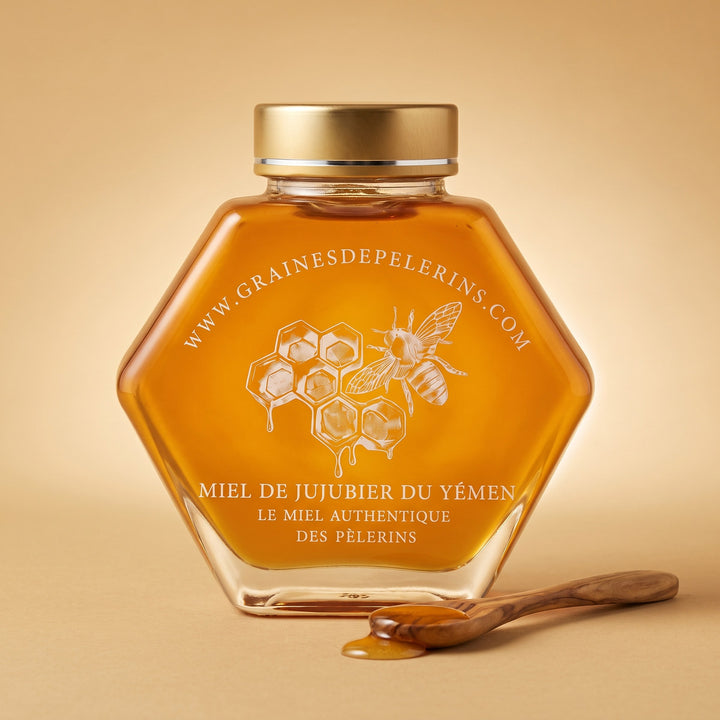
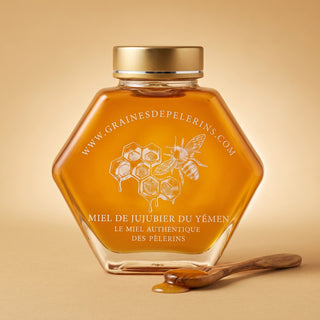
They know their cheesemonger by first name. Give them what they have never come across: the Jujubier Honey from Yemen, from Wadi Do’an, in the Hadhramaut, where the tree flowers only a few weeks a year. Amber and dense, it begins on caramel and lingers on warm wood. It is the jar you keep for the big evenings.
Your parents
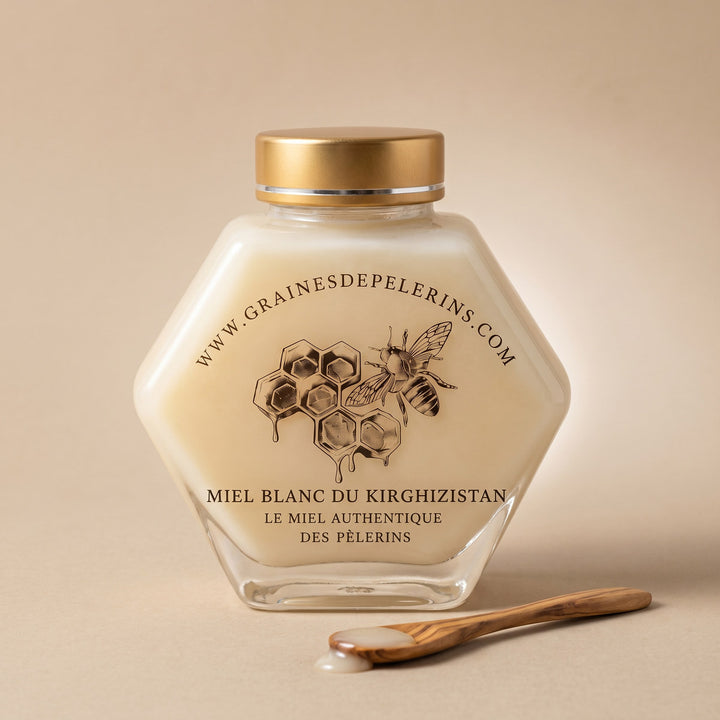
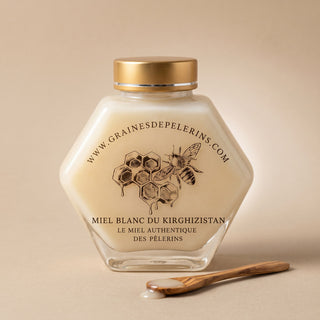
For those who have always had a jar of honey in the cupboard, the White Honey from Kyrgyzstan changes everything without upsetting anything. It is a sainfoin honey from the Tian Shan mountains, and here is its surprise: the sainfoin flower is pink, but its honey, as it crystallises, becomes an ivory cream. It holds on the spoon and melts without the slightest bitterness: the morning toast becomes a journey.
The host of the Christmas dinner
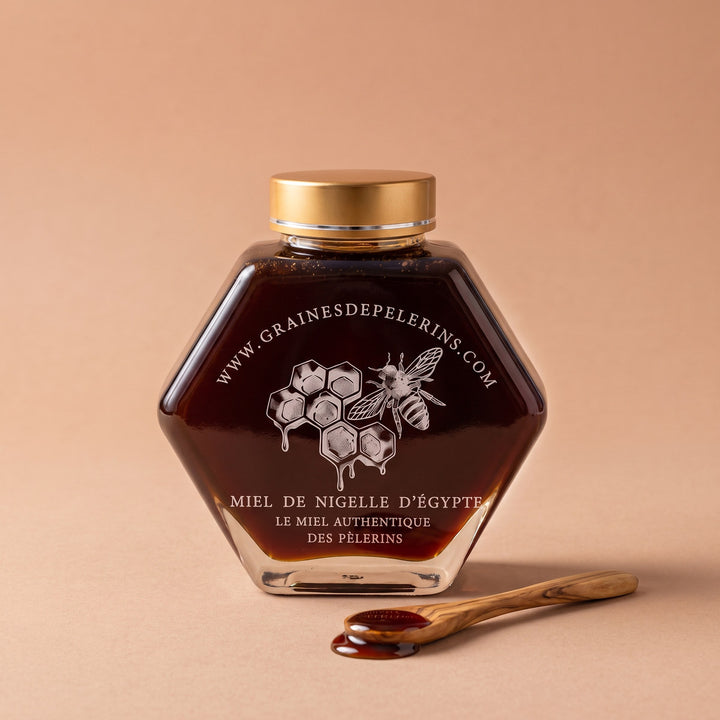
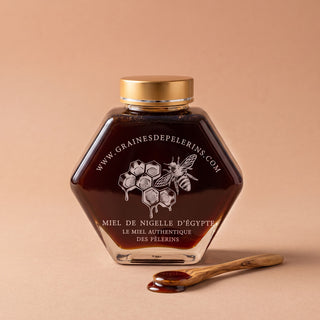
Arriving with flowers is expected. Arriving with the Egyptian Black Seed Honey is offering the end of the meal. Mahogany and dense, it keeps a peppery note for the finish that goes looking for a mature Comté, a sheep’s cheese or a blue. Its warmth comes from the black seed flower foraged in the Nile Delta: no seed is added to the jar.
A colleague or a neighbour
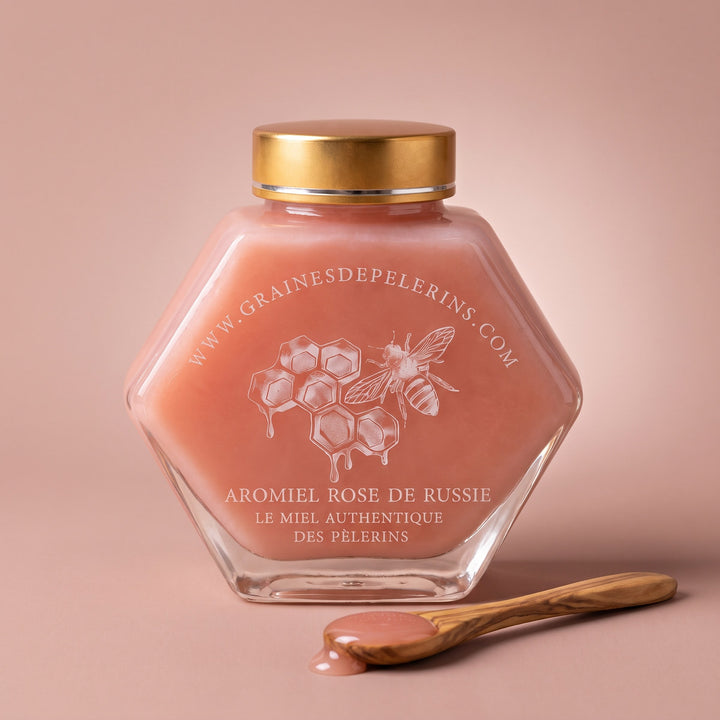
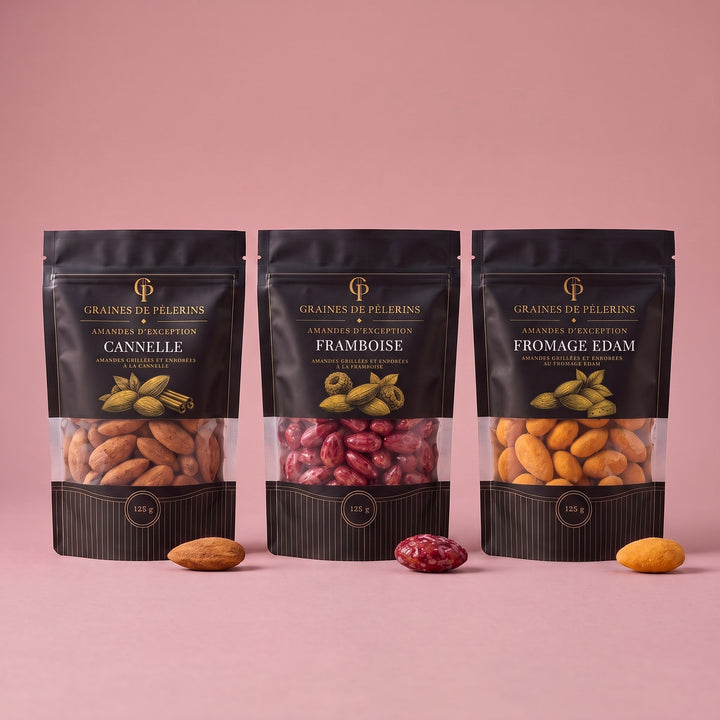
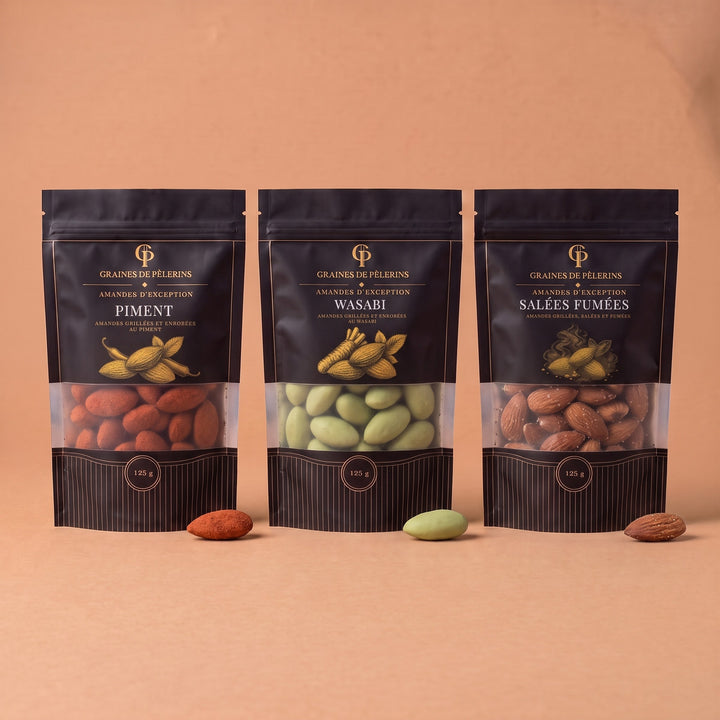
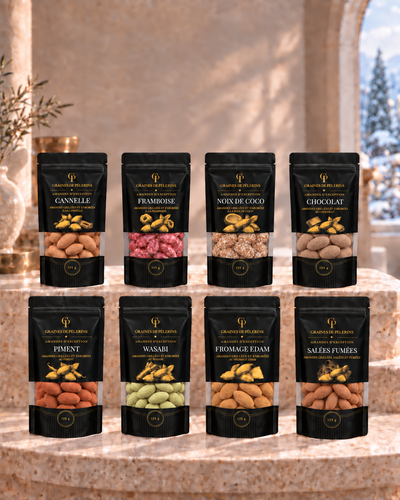
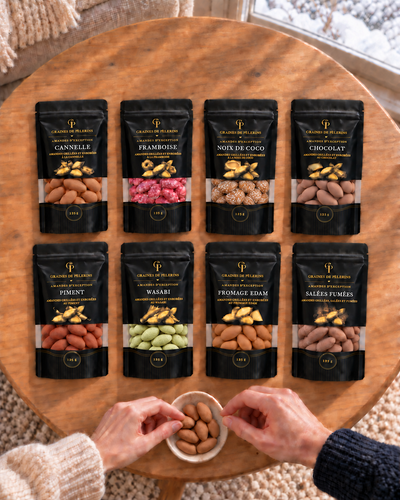
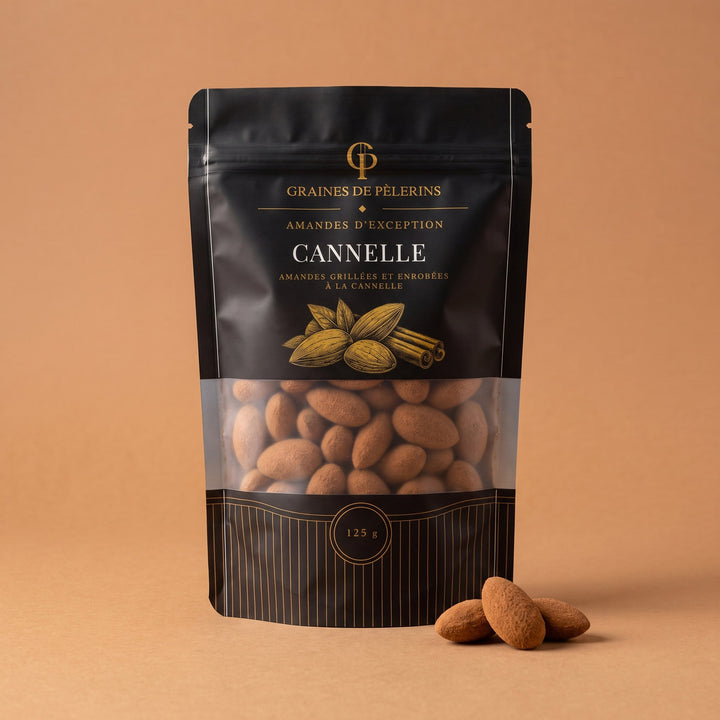
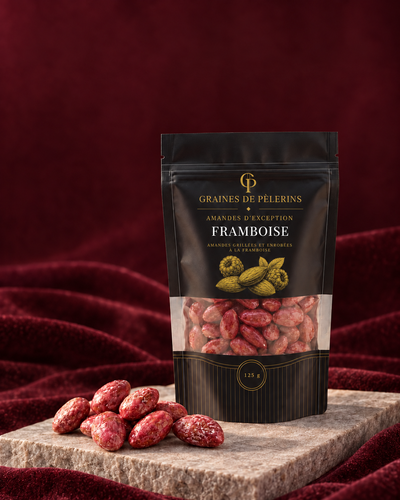
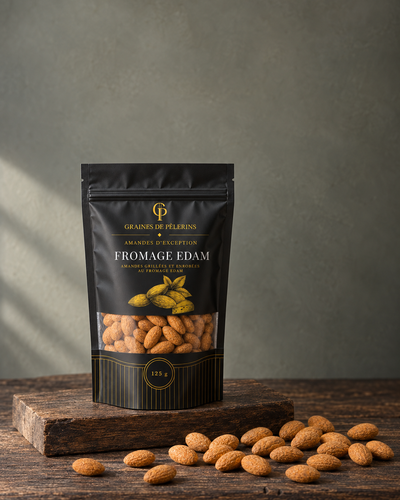
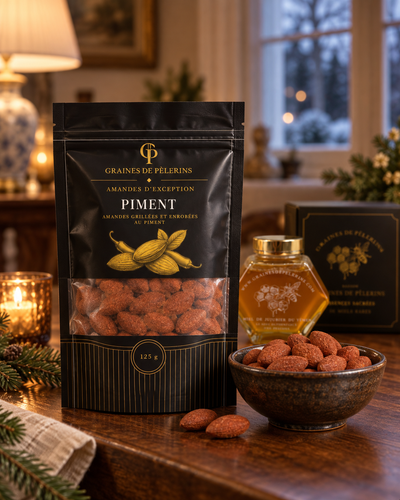
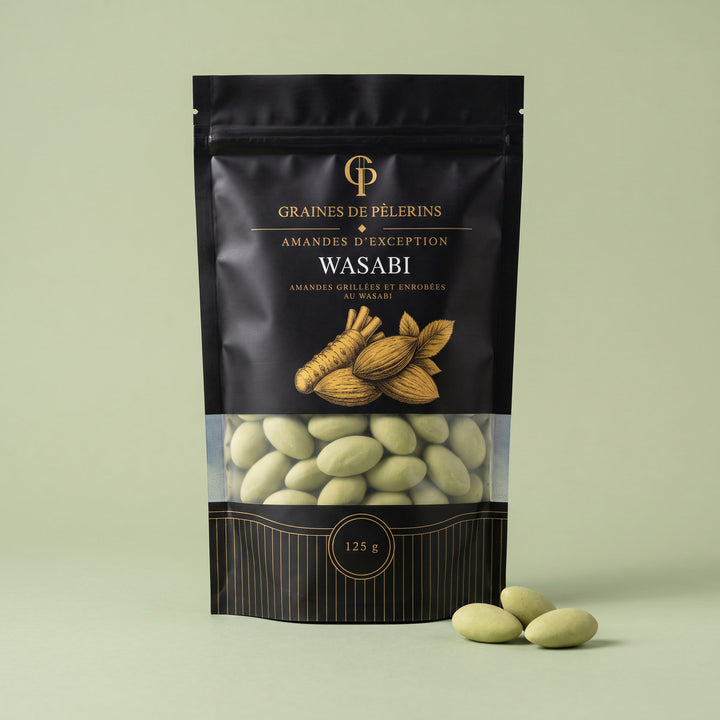
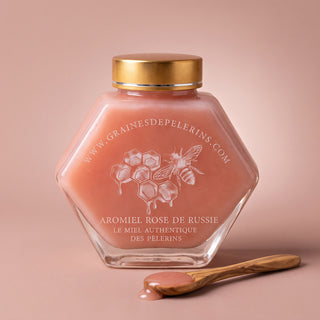
For a gift that is right, that touches without committing, think of the Coated Almond Discovery Trio: Cinnamon, Raspberry and Edam Cheese, three 125 g bags that go from sweet to savoury. Or the Rose Aromiel from Russia, a preparation of acacia honey and rosehip extract, the fruit of the dog rose: powder-pink colour, a floral then fruity taste, perfect with afternoon tea.
For a whole team or your clients, the House prepares boxes in quantity: everything is explained on the page corporate gifts.
The one who has everything
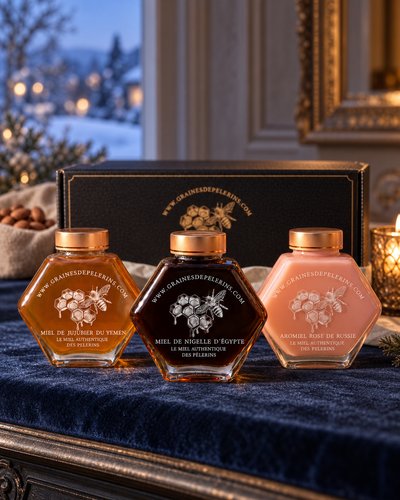
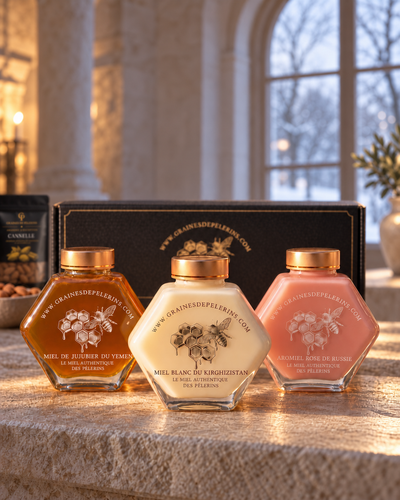
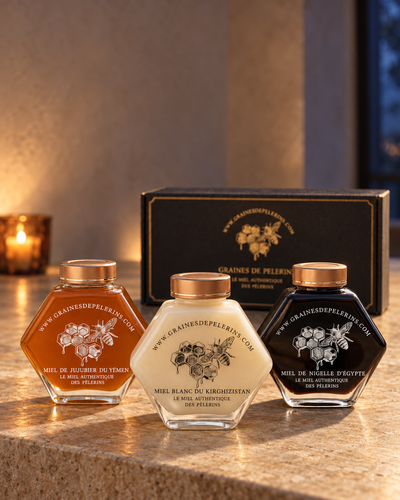
That one wants no more objects. Give them a comparison: three honeys side by side, from the gentlest to the deepest. The Ritual Box brings together White Honey, Black Seed and Jujubier. The Discovery Box replaces the Jujubier with the Rose Aromiel, for a more floral trio. You taste, you compare, everyone defends a favourite.

How much does a lovely gourmet Christmas gift cost?
From €26.90 for a jar of rare honey to €124.90 for a trio built on the Jujubier from Yemen, box and spoons included.
Under €40: a jar, or a trio of almonds. White Honey, Black Seed and Rose Aromiel are €26.90 a 250 g jar, each in its box with its spoon. The Coated Almond Discovery Trio is €36.90.
From €47.90 to €69.90: the Jujubier alone, or three honeys. The Jujubier Honey from Yemen, harvested once a year in autumn, is €47.90 a jar. The Discovery Box brings together three 250 g jars for €69.90, where the same jars bought separately cost €80.70.
€79.90: the two great trios. The Ritual Box and The Prestige Box are the same price, each with the Jujubier: bought separately, their three jars would cost €101.70. The Prestige has the Rose Aromiel and the black and gold box, the Ritual the warmth of the Black Seed.
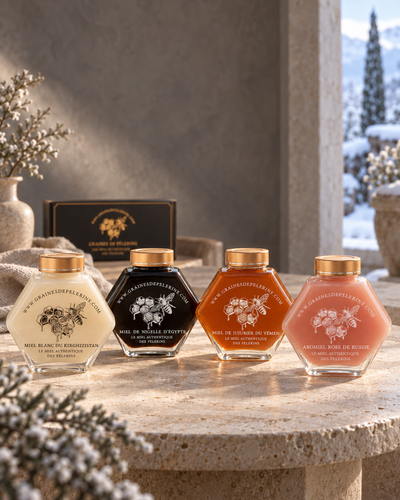
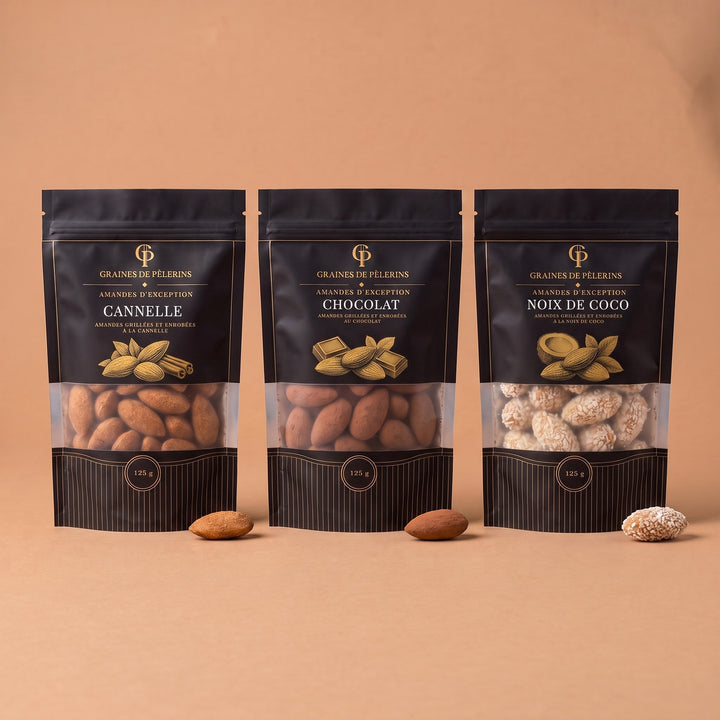
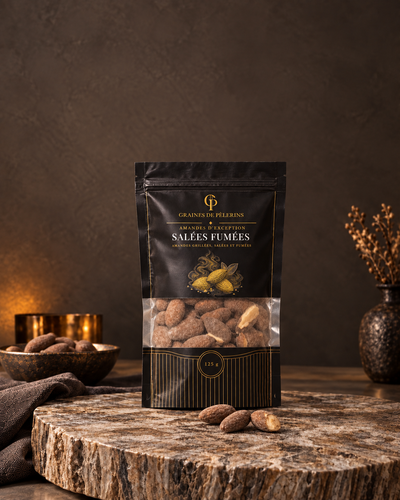
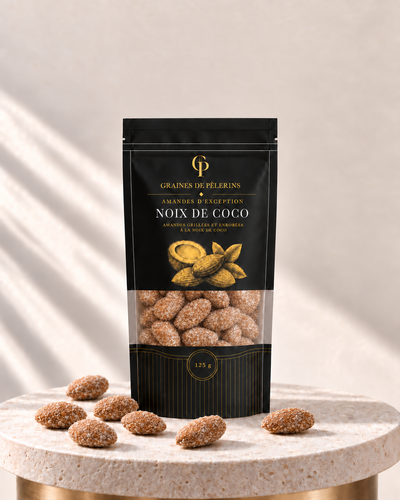
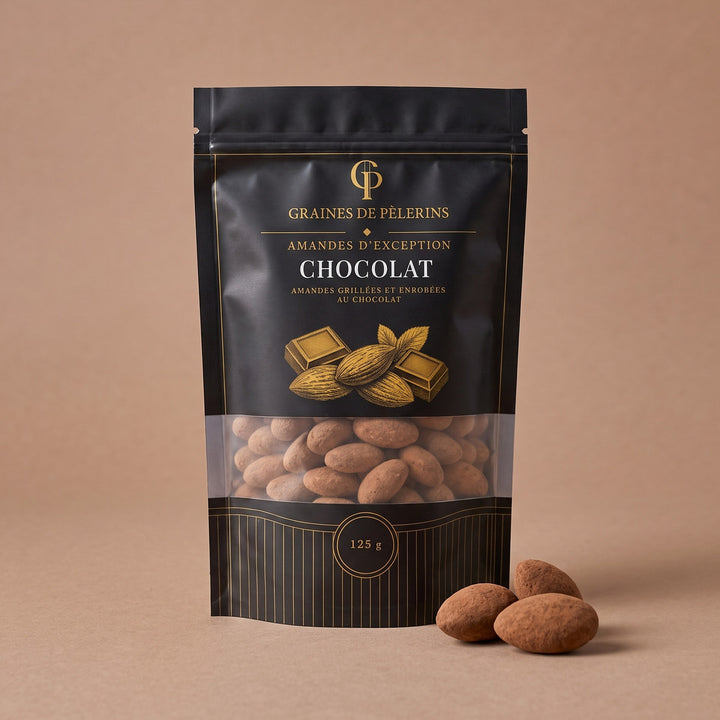
Beyond: made to measure. The Complete Almond Collection gathers the eight almond flavours, one bag of each, for €89.90. Build your own honey gift box lets you choose three honeys from four: €69.90 with no Jujubier, €79.90 with one, €104.90 with two, €124.90 with three.
To see every honey gift set of the House staged side by side, the collection gathers them all.

The grand gift · Black and gold box
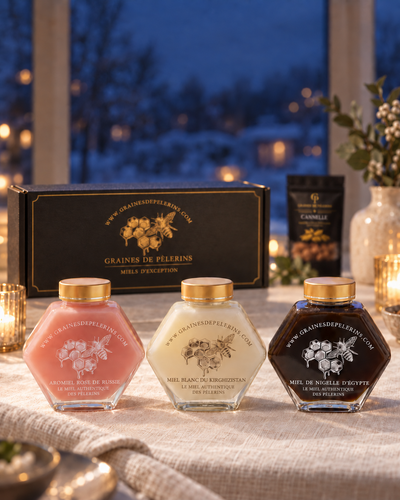
The Prestige Box
Discover the PrestigeWhat do you find when you open the box?
Three 250 g jars, that is 750 g of honey, and three bamboo spoons. Nothing to wrap: the gift arrives ready to give. A single jar travels in its box too, with its spoon.
You lift the lid and the colours appear side by side: the ivory of the White, the mahogany of the Black Seed, the amber of the Jujubier or the powder pink of the Aromiel. The honeys are raw, never heated or pasteurised: they crystallise naturally, at their own pace.
A note to slip in? Write it on the cart page, in the order note field. And for the tasting order, the House has its rule: start with the gentlest, finish with the deepest, a sip of water between two honeys.

How do you get your gift in time for Christmas?
By ordering early. We prepare each order usually within 48 working hours; in France and Belgium, the parcel then arrives in 3 to 5 working days.
Free Mondial Relay delivery · France, Belgium and Luxembourg. Weekends, public holidays and the weeks before the festivities can lengthen those times a little: for a gift with a fixed date, ordering early means giving with a peaceful mind.
A jar damaged on arrival? A photo is enough: we send another at our expense, with no need to return it.

Frequently asked questions
What gourmet gift should I give at Christmas to someone who has everything?
A tasting rather than an object: three rare honeys to compare side by side. The Ritual Box (White Honey, Black Seed, Jujubier) and the Prestige Box (Jujubier, White Honey, Rose Aromiel) are €79.90, each in its box with three spoons.
Is the gift ready to give?
Yes. The jars arrive in their box, each with its spoon: there is nothing to wrap. To add a note, write it on the cart page, in the order note field.
When should I order to receive my gift before Christmas?
As early as possible for a gift with a fixed date. The order is usually prepared within 48 working hours, then delivered within 3 to 5 working days in France and Belgium; the weeks before the festivities can lengthen those times a little.
How long does a honey keep once given?
A long time: jar tightly closed, dry, at room temperature and away from light. The best before date, two years, is printed on every jar. Over time, honey crystallises naturally, without its taste changing.
Sources
- Ovid, Fasti, book I: the honey of the Kalends of January.
- Dictionnaire de l’Académie française: “étrenne”. (in French).
- Provence regional tourist board: the thirteen desserts. (in French).
- Treize desserts: the first mention, in 1925. (in French).
- Lebkuchen-Schmidt: the Kaiserlein of 1487. (in German).
- Lebkuchen and the Christmas season. (in German).
- Specification of the PGI “Turrón de Alicante”. (in Spanish).
- The House’s product pages and shipping policy.
For Christmas
The gift that is not forgotten
Three honeys, three origins, a box and its spoons. Ready to give, with nothing to wrap.
Choose your box →In the same spirit: Which rare honey to give? · Honey and cheese, the festive board