
Taste, word by word
Rare honey glossary
Twenty-five precise entries to understand the origins, the textures and the gestures that shape a honey, with no jargon and no overblown promises.

Graines de Pèlerins
A Glossary of Rare Honey
Every term you need to make sense of the world of rare honey. From A to Z.
A
Apis dorsata
The giant honey bee of South and South-East Asia. Its colonies build a single comb in the open air, often on tall trees; some honeys sold as Tualang come from this species.
Apiarist · nomadic
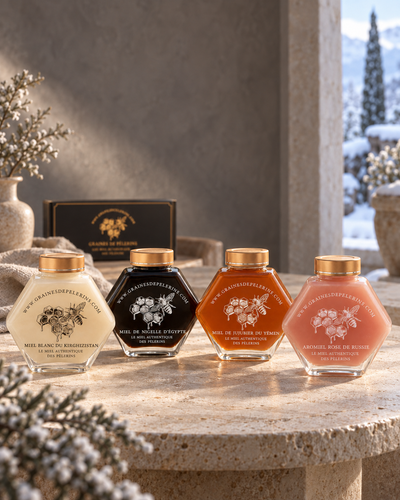
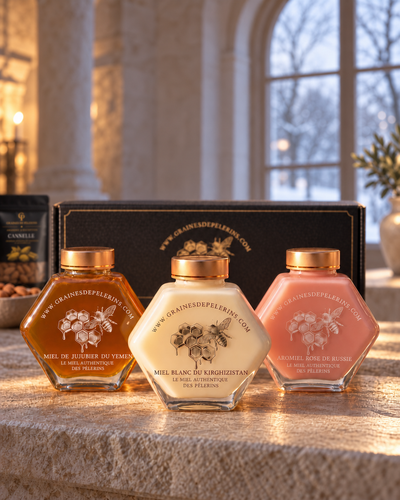
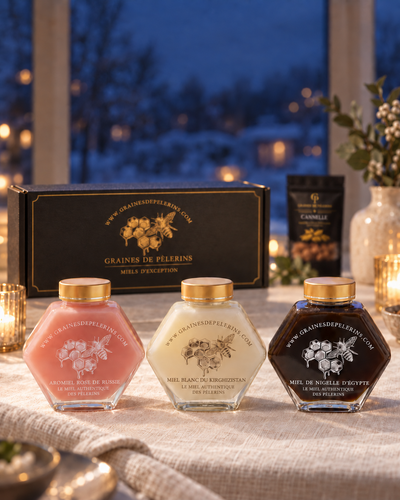
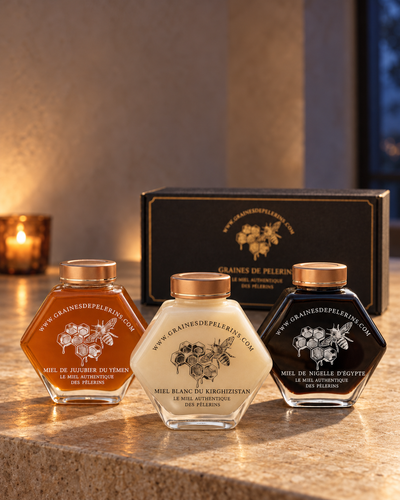
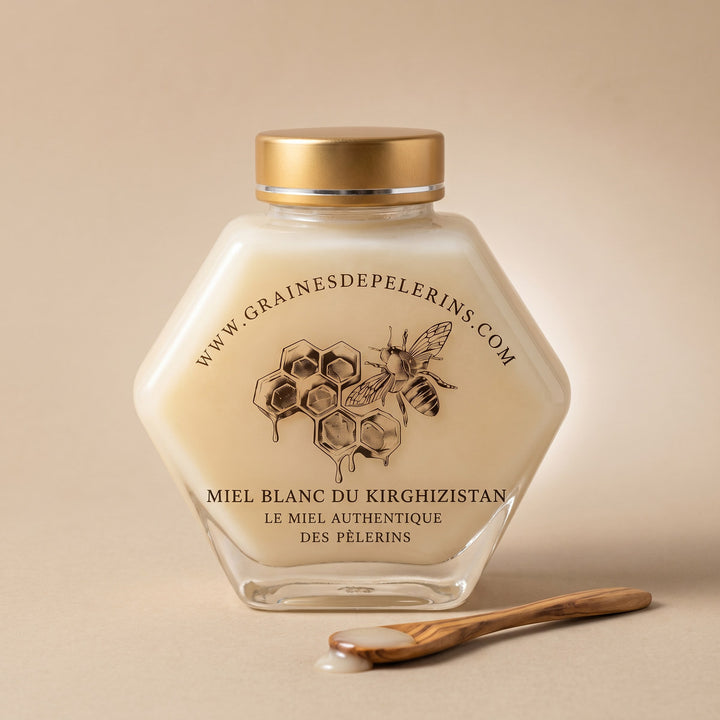
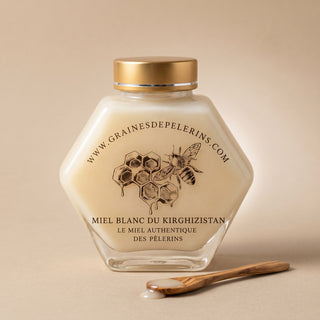
A beekeeper who moves the hives with the flowering. Our White Honey from Kyrgyzstan (sainfoin) is harvested by nomads who take their hives above 2,500 m for the season.
B
Bee to jar (raw honey)
A term used for a minimally processed honey. On its own it is not a harmonised regulatory category: the treatments and the traceability of each honey should be stated product by product.
C
Crystallisation
A natural setting process, driven mainly by glucose. Its pace depends on the honey's composition and on the temperature; on its own, it says nothing certain about where or how a honey was made. A gentle, controlled warm water bath can soften it.
Cold-extracted (raw honey)
A marketing term often used alongside “raw”, but with no universal threshold. To choose with precision, look at the treatments stated and at the analyses available.
G
Grayanotoxins
Natural toxins that some rhododendrons can pass into honey. Eating them can cause serious adverse effects: this is a food safety term, not a tasting promise.
H
Habba Sawda (حبة سوداء)
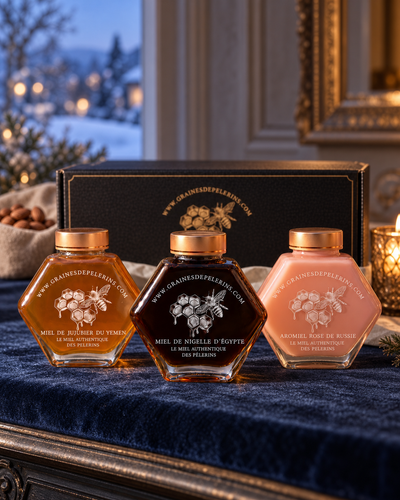
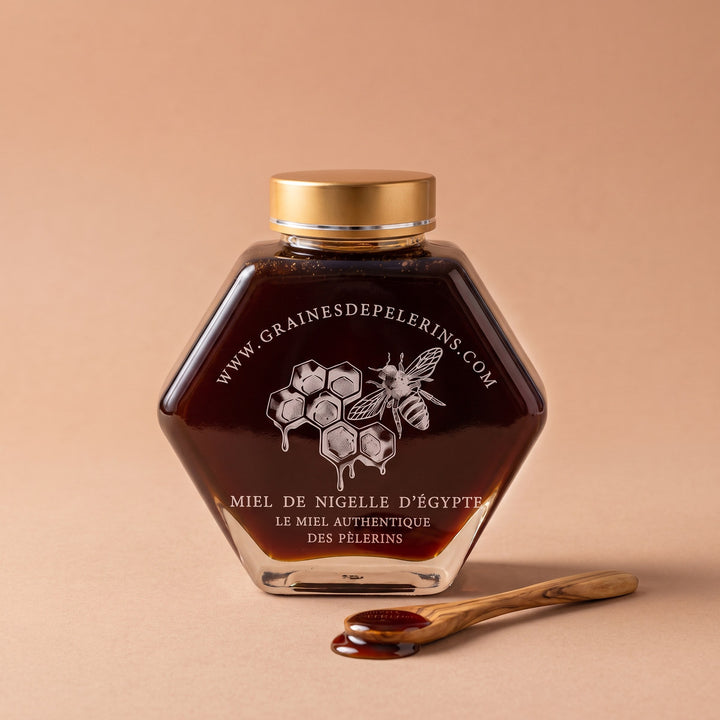
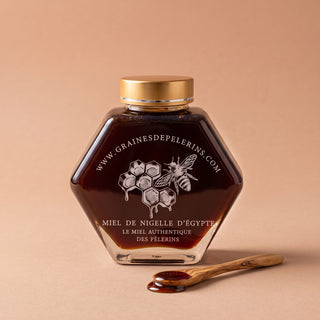
The Arabic name for Nigella sativa, literally “black seed”. Present in the cooking and the traditions of the Mediterranean basin for thousands of years. At the origin of our Egyptian Black Seed Honey (Nigella).
J
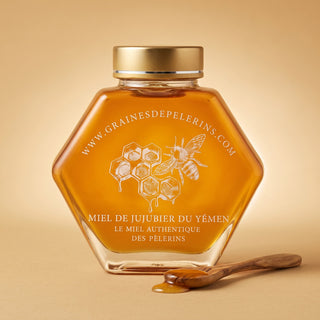
Jujube · the Sidr tree (Ziziphus spina-christi)
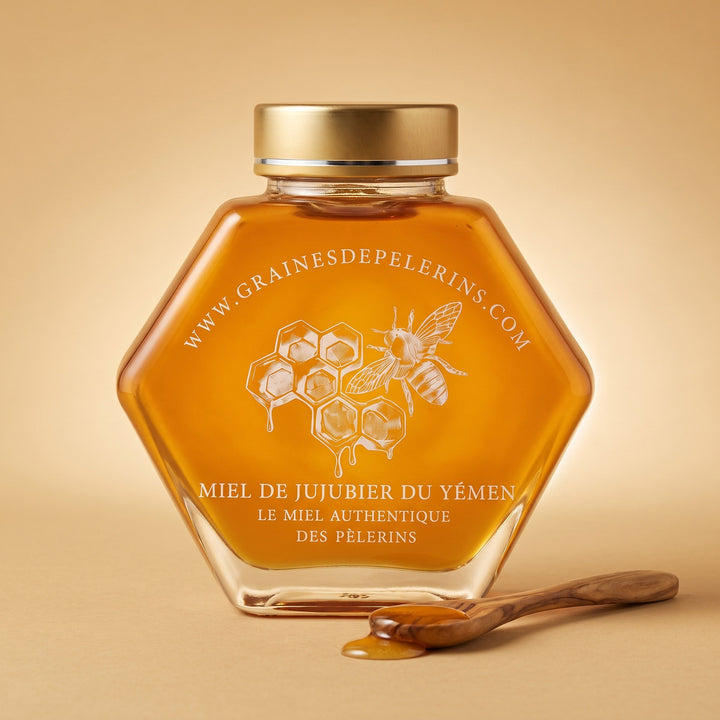
A tree suited to hot, dry regions, whose flowers provide the nectar of Yemeni Sidr Honey. Its botanical and geographical origin should be documented.
L
Leptospermum scoparium
The scientific name of Manuka, a shrub from New Zealand. The source of Manuka honey, known for its MGO rating.
M
Mad Honey
The common name for certain rhododendron honeys that contain grayanotoxins. They can carry a toxicological risk and are not part of our selection.
Manuka
A New Zealand honey from the flowers of Leptospermum. Known for its MGO rating. Read our Yemeni Sidr Honey vs Manuka comparison →
MGO (methylglyoxal)
Short for methylglyoxal, measured in mg/kg in some mānuka honeys. This indicator does not replace the official criteria used to establish botanical and geographical origin.
Monofloral (honey)
A honey made from the nectar of one dominant flower species. Our Black Seed Honey and our Yemeni Sidr Honey are both single-flower honeys.
N
Nigella sativa
The scientific name of black seed, a plant of the buttercup family whose black seeds (Habba Sawda) have been used since antiquity. Grown mainly in Egypt, Ethiopia and India.
P
Pasteurisation
A heat treatment used mainly to control texture and stability. Excessive heat can alter some of a honey's characteristics; the treatment should be described plainly, without alarmist wording.
Polyphenols
A family of plant compounds naturally present in many raw honeys. They play a part in the colour, the aromas and the character of a honey.
R
Rhododendron (honey)
Some honeys from rhododendrons can contain grayanotoxins. Eating them can carry a risk that should not be taken lightly.
S
Sidr honey
A name commonly used for honeys from jujube trees of the genus Ziziphus. For a Yemeni jujube honey, the stated origin, the batch and the traceability documents matter more than any world figure that nobody can check. See our Yemeni Sidr Honey →
T
Thymoquinone
A molecule studied in the seed and the oil of Nigella sativa. Its presence in a honey should only be claimed when an analysis of that specific honey shows it.
Tien Shan
The mountain range in eastern Kyrgyzstan where our White Honey is harvested, at more than 2,500 m.
Traceability, jar by jar
The ability to link a product to its declared origin, its batch and the documents available. The evidence should remain accessible and match the product on sale.
Tualang
A Malaysian honey produced by Apis dorsata bees in Koompassia excelsa trees. Harvested at night, 80 m up, by the Orang Asli.
V
Virgin (honey)
A figurative expression with no precise regulatory definition. We prefer verifiable information on origin, batch, texture and treatments.
W
Wadi Do'an
A valley in the Hadhramaut, in Yemen, known for its landscapes and its jujube honey harvests. A provenance should always be linked to a documented batch.
Z
Ziziphus spina-christi
A jujube species found in several hot, dry regions. Its nectar can contribute to honeys labelled Sidr, depending on their floral and geographical origin.