
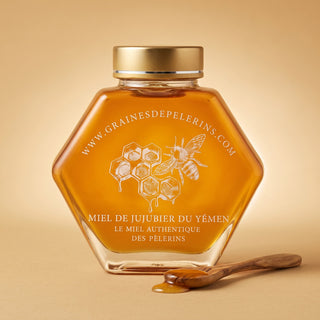
Sidr honey vs Manuka honey: how the two actually taste
A full comparison of Yemeni Sidr honey and New Zealand Manuka: world output, price, aroma profile, terroirs and what to eat them with. Our factual verdict, so you can choose on taste rather than on reputation.
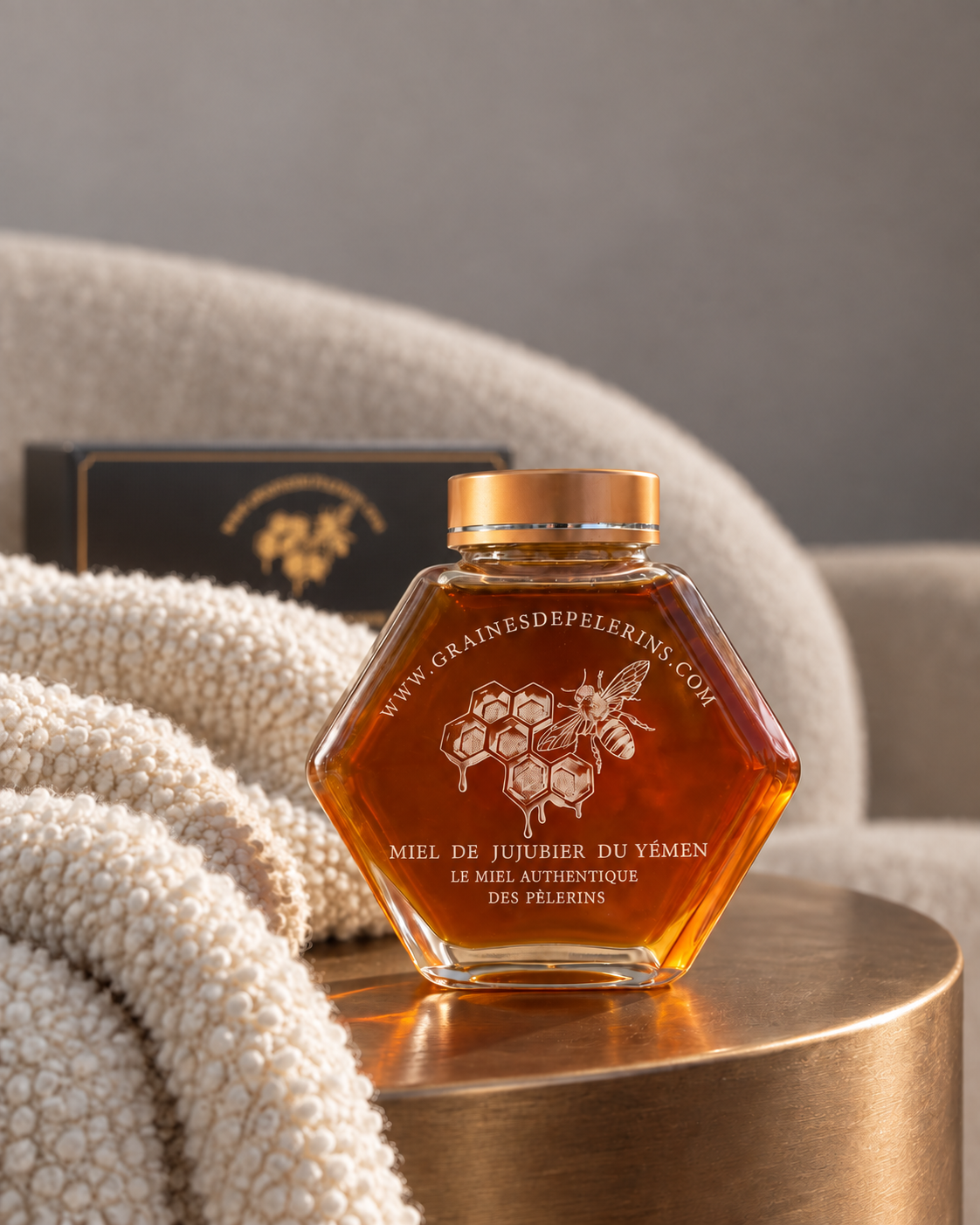
Yemeni Sidr honey (jujube) and Manuka from New Zealand are the two names that come up whenever rare honey is mentioned. Yet their trades, their sensory profiles and their traditions have almost nothing in common. One comes from the age-old aridity of the Arabian Peninsula, the other from a New Zealand industry born in the 1980s. Comparing them is less about picking a winner than about seeing that two worlds can coexist without overlapping.
Contents
Sidr honey vs Manuka, the comparison
The head to head table
| Measure | Yemeni Sidr Honey | Manuka NZ |
|---|---|---|
| Origin | Wadi Do'an, Hadhramaut | North Island, New Zealand |
| Botany | Ziziphus spina-christi | Leptospermum scoparium |
| Harvest window | October to November | December to February |
| Quality checks | Pollen and moisture analysis (published CETAM report) | UMF / MGO (methylglyoxal) |
| World output | Small, with no reliable public figures | Several thousand tonnes a year |
| Colour | Deep amber, mahogany | Dark mahogany brown |
| Aroma profile | Woody and resinous, a long noble finish | Herbaceous and sharp, an earthy finish |
| Indicative price/kg | 150-500 € | 300-800 € (UMF 20+) |
Origins: two opposite worlds
Yemeni Sidr honey is born in the semi-desert valleys of the Hadhramaut, in south-east Yemen. Arid climate, wild Sidr trees scattered across the land, nomadic beekeeping that follows the flowering on the back of a donkey. The tradition is very old and barely touched by modern methods. Manuka is born on the New Zealand North Island, in a temperate ocean climate, in cultivated or wild stands of Leptospermum scoparium. That trade is modern, organised from the 1980s onwards around the work of the Honey Research Unit at Waikato University.
Quality checks: pollen analysis against UMF and MGO
Our Yemeni Sidr honey is checked by pollen analysis (43% Ziziphus pollen) and a moisture reading (14.2%), set out in CETAM report M253022, which we publish. Pollen analysis confirms where the honey comes from botanically. There is no single international grading system for this honey: each house builds its own chain of checks. Manuka uses UMF, the Unique Manuka Factor, and MGO, methylglyoxal, a system standardised by the UMF Honey Association. UMF 5+, 10+, 15+, 20+ and 25+ correspond to rising concentrations of the compound specific to manuka. That standardisation is what allowed manuka to industrialise and to gain international recognition so quickly.
Aroma profiles compared
Yemeni Sidr honey opens on woody, resinous notes, with echoes of toasted dried fruit, and ends on a long finish carrying a noble bitterness. It is a honey you listen to: it takes its time to open out in the mouth. Manuka attacks on sharp herbaceous notes, dry leaves, deep earth. The finish is shorter but more intense, closer to bitter herbs than to sugar. Two sensory experiences that never overlap.
Yemeni Sidr honey and Manuka tell two different stories. The first is noble and woody, the second herbaceous and sharp. Neither is superior: they are simply not comparable.
The Graines de Pèlerins doctrineWorld output
This is the sharpest difference of all. Output from the valleys of the Hadhramaut is small, and no reliable public statistics exist for it. Exporting is constrained by the geopolitical situation in Yemen, which makes every available jar a rare object. New Zealand, for its part, exports thousands of tonnes of manuka a year. Manuka UMF 20+ remains expensive (300-800 €/kg), but it is widely available through specialist channels worldwide.
The verdict
Yemeni Sidr honey remains a small production with no reliable public figures, set against the thousands of tonnes of Manuka exported every year. Manuka is better known commercially thanks to its standardised UMF index, which makes it easier to buy with confidence if you do not know the subject. For a palate after woody nobility, Yemeni Sidr honey; for a palate after a sharp herbaceous profile, Manuka. The choice is not about quality: it is about taste.

Yemen · Hadhramaut
Yemeni Sidr Honey From 39,90 € / jar
Discover Yemeni Sidr HoneyGoing further
- Yemeni Sidr honey: the complete guide
- Sidr honey vs acacia honey
- The seven rarest honeys in the world
- Why rare honey costs between 30 € and 1 000 €/kg
Sources & References
- CETAM Lorraine laboratory. Analysis report M253022, Yemeni Sidr honey (pollen analysis, moisture). Lab analyses and traceability
- UMF Honey Association. UMF Grading System. umf.org.nz
- International Bee Research Association. Beekeeping in Yemen. ibra.org.uk
The honey in this article
Yemeni Sidr Honey
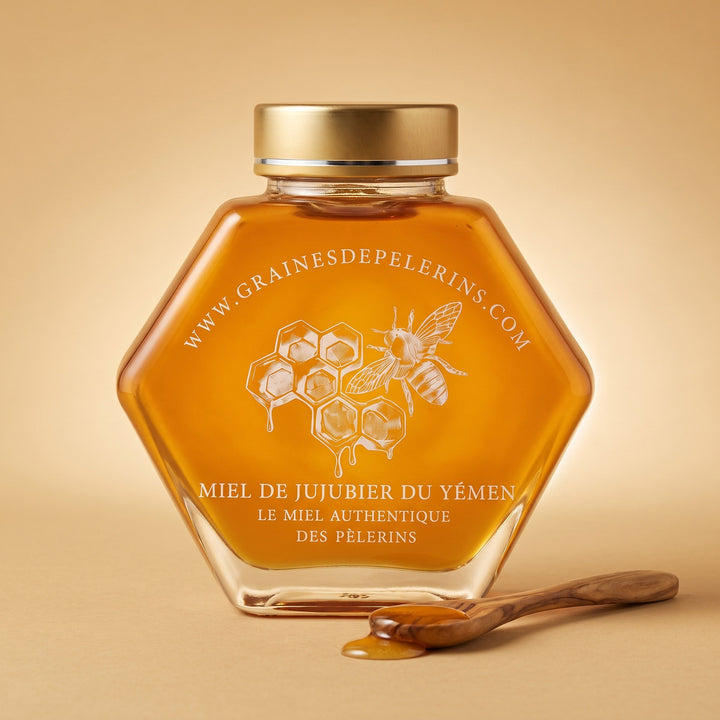
Our Yemeni Sidr honey from the Hadhramaut: amber, dense, caramelised. A rare alternative to Manuka, with a character all of its own.
Discover Yemeni Sidr Honey →In the same spirit: The complete Yemeni Sidr honey guide · The rarest honeys in the world
Editorial information. The content of this article is strictly informative, cultural and sensory. It describes the geographical origin, the botanical composition, the aroma profile and the traditional uses of rare honeys. It is not medical advice, a diagnosis, or a recommendation for treatment. Honey is a foodstuff. For any medical question, consult a qualified professional. Compliant with Regulation (EC) No 1924/2006.
Continue exploring
Pairings
The 13 desserts of Christmas in Provence: who counted to thirteen?
Mistral counted only eleven. Where does thirteen come from, what really sits on the table at Christmas in Provence, and how to set your o...
Read the article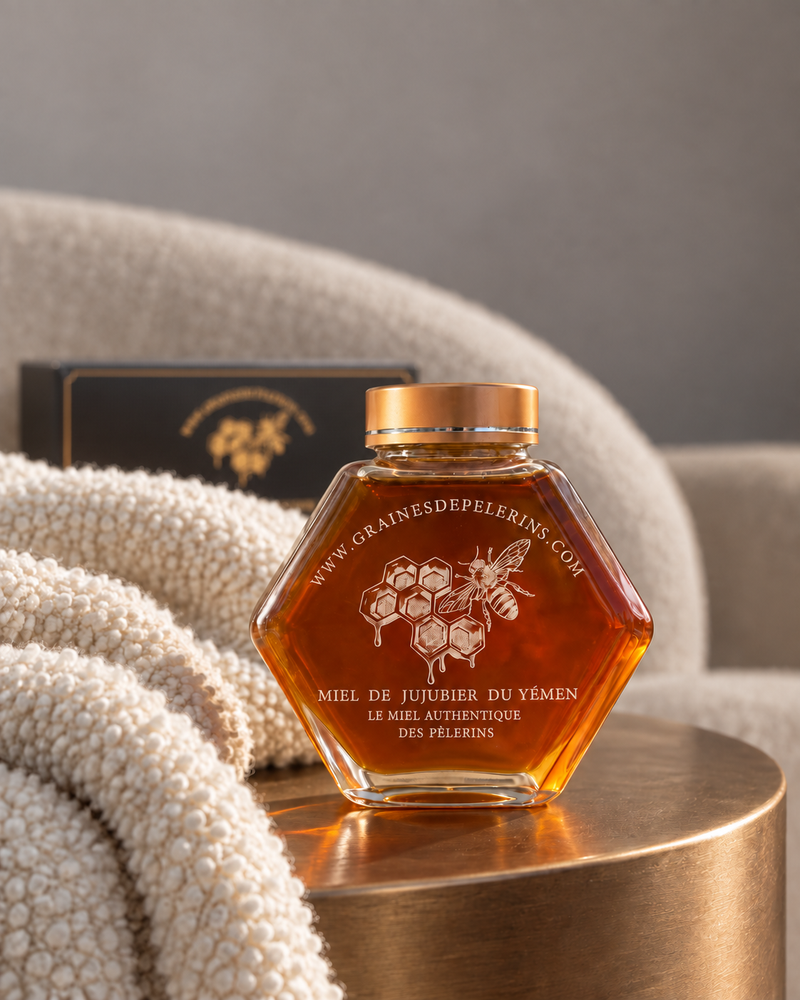
Guide
Pain d’épices: the story of French honey spice bread, and a real recipe
For centuries, pain d’épices was a loaf of honey and rye whose dough waited for weeks. From Reims to Nuremberg, its history, the part hon...
Read the article
Classements
The best honey in the world: what the rankings say, what really counts
In 2025, the world beekeeping congress gave up awarding a honey. What contests and rankings are really worth, and the five criteria that ...
Read the articleDiscover our rare honeys
Four exceptional origins, limited harvests, gift boxes made for giving and for tasting.
See the collectionAlso worth discovering: our Almonds of Distinction