
Rare honeys of the world: 7 discoveries and how to choose
Yemeni Sidr, White Honey from Kyrgyzstan, Black Seed, manuka… Explore six honeys and one honey-based speciality, with their origins, their differences and markers to choose.
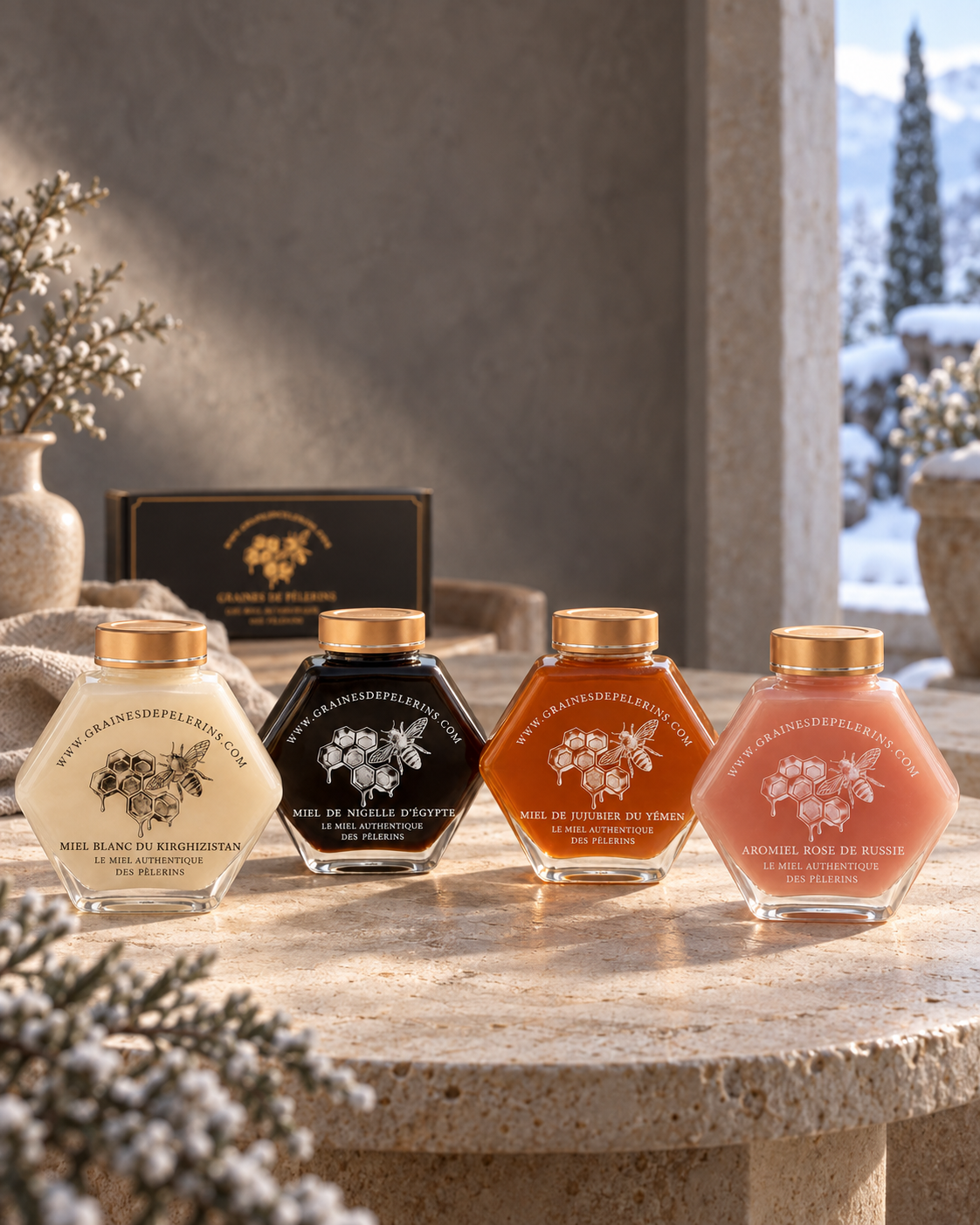
A rare honey is also chosen by the spoon: a creamy texture, an amber colour, a finish that is more or less intense. Here are seven discoveries to explore the honeys of the world and understand what their names cover. This selection brings together six honeys and one honey-based speciality, Rose Aromiel. It is not a world ranking of rarity: we do not have comparable production volumes to separate them.
Contents
Seven discoveries, from origin to tasting
Seven specialities to tell apart
| Name | Origin stated | The marker to remember |
|---|---|---|
| Yemeni Sidr | Yemen | Amber, dense, deep finish |
| White Honey | Kyrgyzstan | Sainfoin, creamy texture and delicate profile |
| Black Seed Honey | Egypt | Mahogany, dense, spiced notes |
| Rose Aromiel | Russia | A preparation of acacia honey and rosehip |
| Manuka | New Zealand | An origin framed by authentication criteria |
| Tualang | Malaysia | Multifloral honey associated with Apis dorsata bees |
| Ulmo | Chile | Honey associated with the flowers of Eucryphia cordifolia |
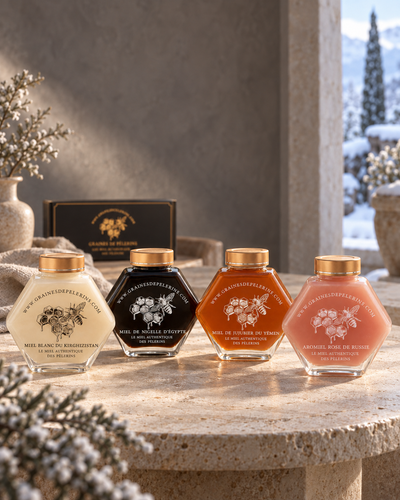
The profiles of the first four entries describe our selection. Manuka, Tualang and ulmo are presented to widen the discovery; they are not part of our current collection.
Yemeni Sidr Honey (jujube)
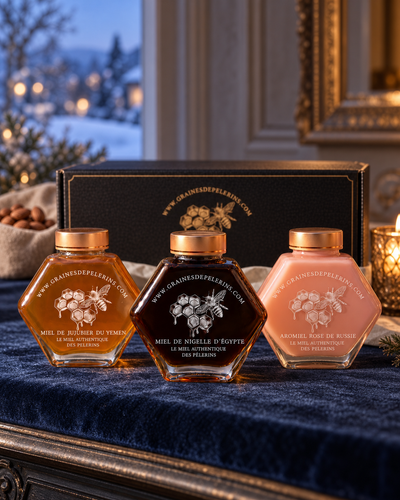
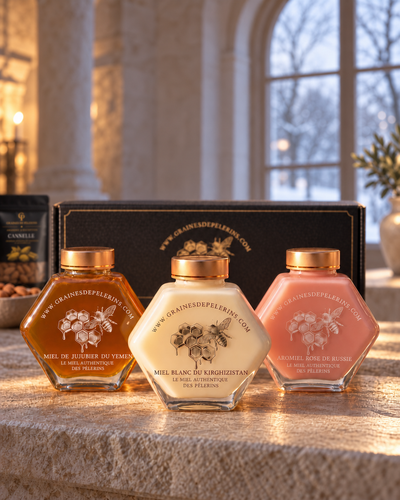
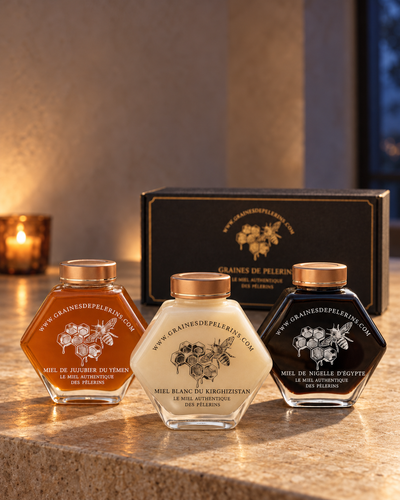
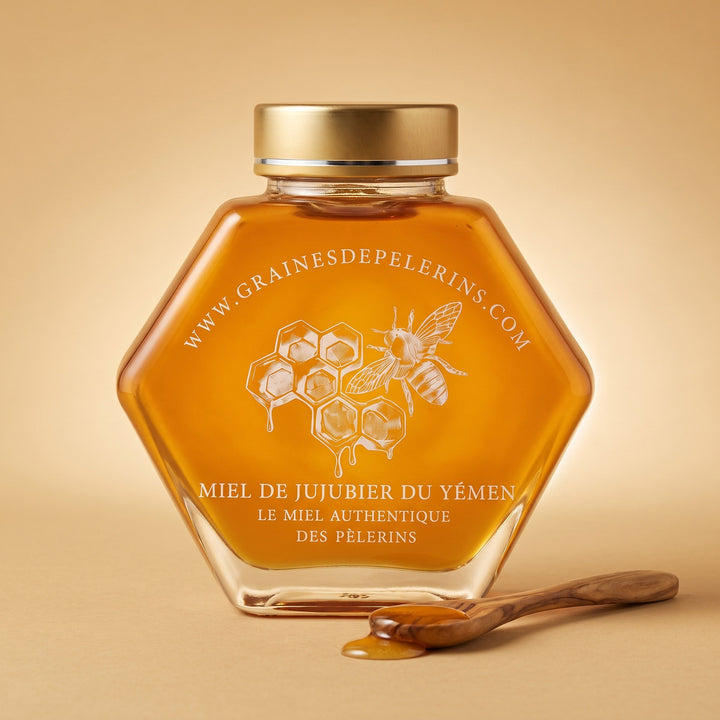
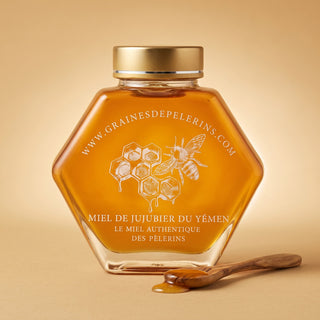
Its amber colour and its dense texture call for slow tasting. In our selection, Yemeni Sidr Honey stands out for a deep finish. To discover it, first taste a small amount on its own, then on a bread with a quiet flavour: you will compare the length in the mouth more easily.
White Honey from Kyrgyzstan
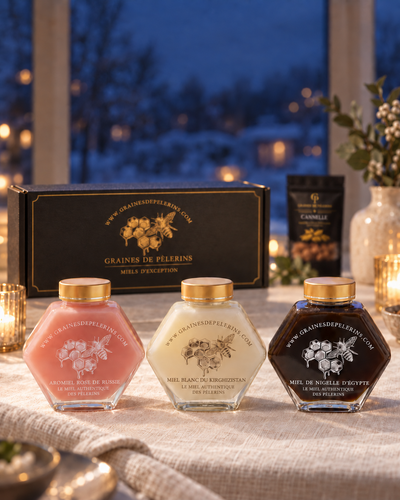
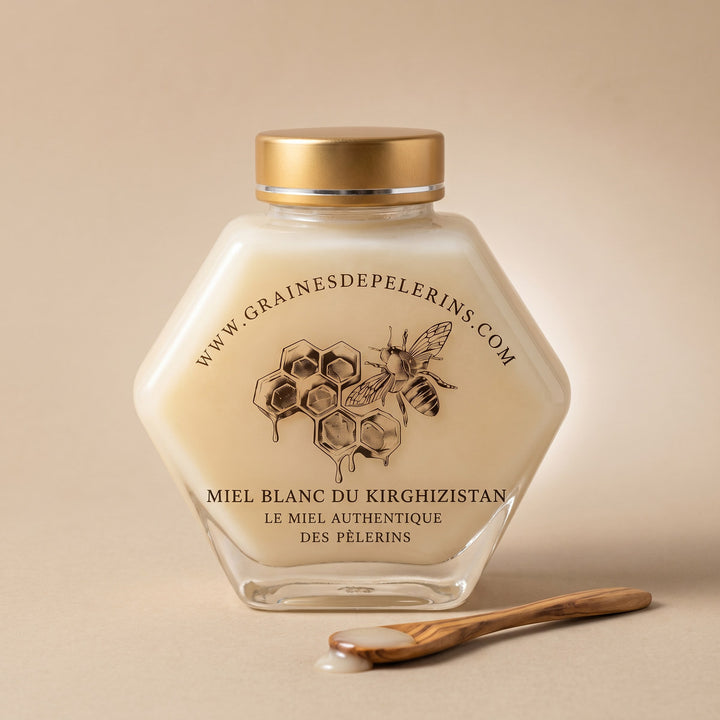
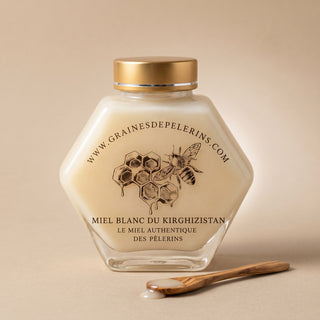
The White Honey from Kyrgyzstan in our selection is a sainfoin honey, also called esparcet, from the Tian Shan. Ivory and creamy, it shows a gentle floral profile, almost milky. It suits a slice of fresh bread, a brioche or a plain yoghurt. The name "white honey" describes an appearance: to compare two jars, look also at the flower and the country stated.
Egyptian Black Seed Honey (Nigella)
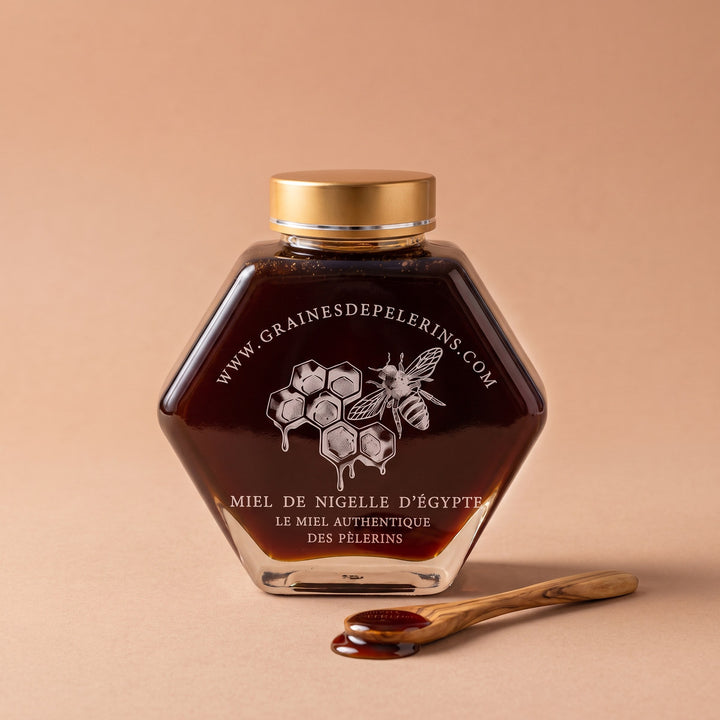
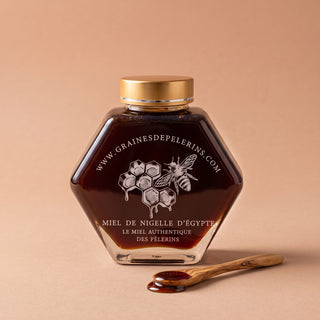
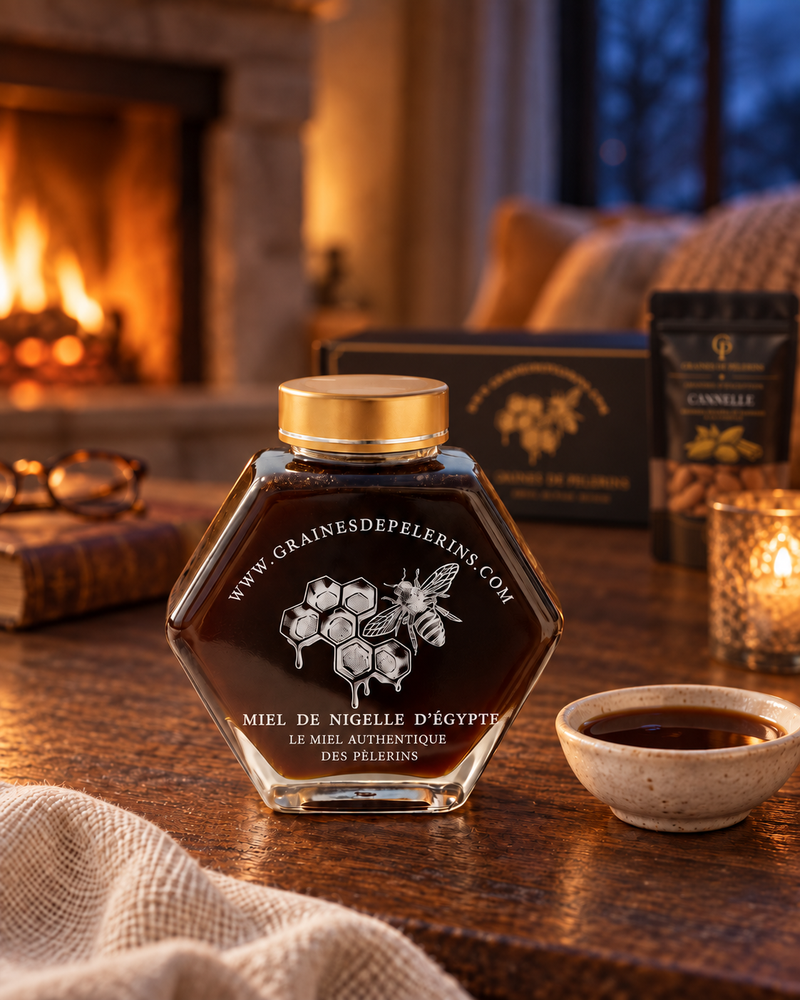
Our Egyptian Black Seed Honey offers a mahogany colour, a dense texture and spiced notes. It is a different tasting direction from the White: compare them in small amounts to feel the move from creamy gentleness to a more marked character. Black seed honey and black seed oil are different products; the choice presented here is a culinary and sensory one.
Rose Aromiel from Russia: a honey-based preparation
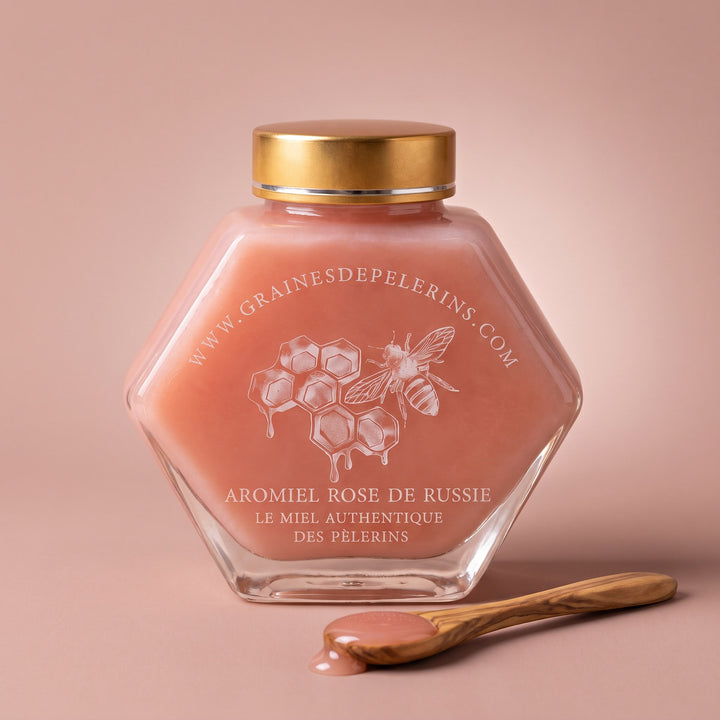
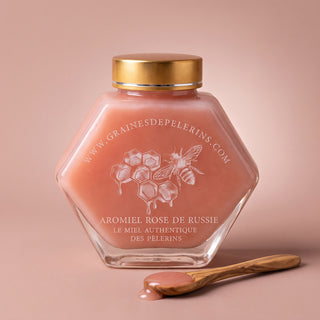
Often looked for under the name "Russian rose honey",Rose Aromiel from Russia in our selection combines a base of acacia honey with rosehip, the fruit of the wild rose. Its texture is creamy, its profile floral and fruity. It is not a monofloral rose honey. That distinction lets you choose with full knowledge of the facts: always check the composition of the item you are interested in.
Manuka honey from New Zealand
For New Zealand manuka intended for export, the New Zealand Ministry for Primary Industries defines scientific criteria for authentication. They distinguish, among other things, the monofloral and multifloral categories. That framework informs the identity of the product; it is not enough to establish a world ranking of rarity. See the official MPI criteria.
Tualang honey from Malaysia
Research describes Tualang as a wild multifloral honey produced by Apis dorsatabees. The name of the tree associated with the colonies should therefore not be read as proof of a single flower foraged. It is a good example of the difference between the name of a honey and its botanical origin. See the study on Malaysian honeys.
Ulmo honey from Chile
Ulmo, Eucryphia cordifolia, is among the botanical species identified in the honeys of central and southern Chile. For a precise reference, pollen analysis helps to document the dominant flower. The country, the name and the batch information are more useful than a superlative for understanding what is in the jar. Read the study on the botanical composition of Chilean honeys.
How do you choose a rare honey?
- Start with your own taste. Gentle and creamy: White Honey. Amber and deep: Sidr. Dense and spiced: Black Seed. Floral and fruity: Rose Aromiel, bearing its composition in mind.
- Read the name. A monofloral honey, a multifloral honey and a honey-based preparation do not describe the same thing.
- Look at the origin and the batch. An analysis concerns the sample analysed. See our lab analysis and traceability page and the documents available for the item chosen.
- Compare like for like. Check the net weight and the contents of the box on the product page as you choose.
For a more personal selection, carry on with our guide Which honey to choose for your taste?.
Tasting questions
Which rare honey should you choose to start?
If you like creamy textures and delicate flavours, White Honey from Kyrgyzstan is a starting point within our selection. If you are looking for a deeper finish, discover Yemeni Sidr Honey.
What is the rarest honey in the world?
We do not have a consistent world comparison of the volumes of each honey to name a number one. A precise origin, a documented harvest and batch information are more verifiable markers than an absolute ranking.
Is rose honey a honey made from rose flowers?
Our Rose Aromiel is a preparation of acacia honey and rosehip. It should be distinguished from a monofloral honey.
How do you compare several honeys at home?
Serve small amounts at room temperature with clean, dry spoons. Start with the gentlest profile, taste first with nothing alongside, then try each item on the same bread or the same plain yoghurt.
Discover our selection
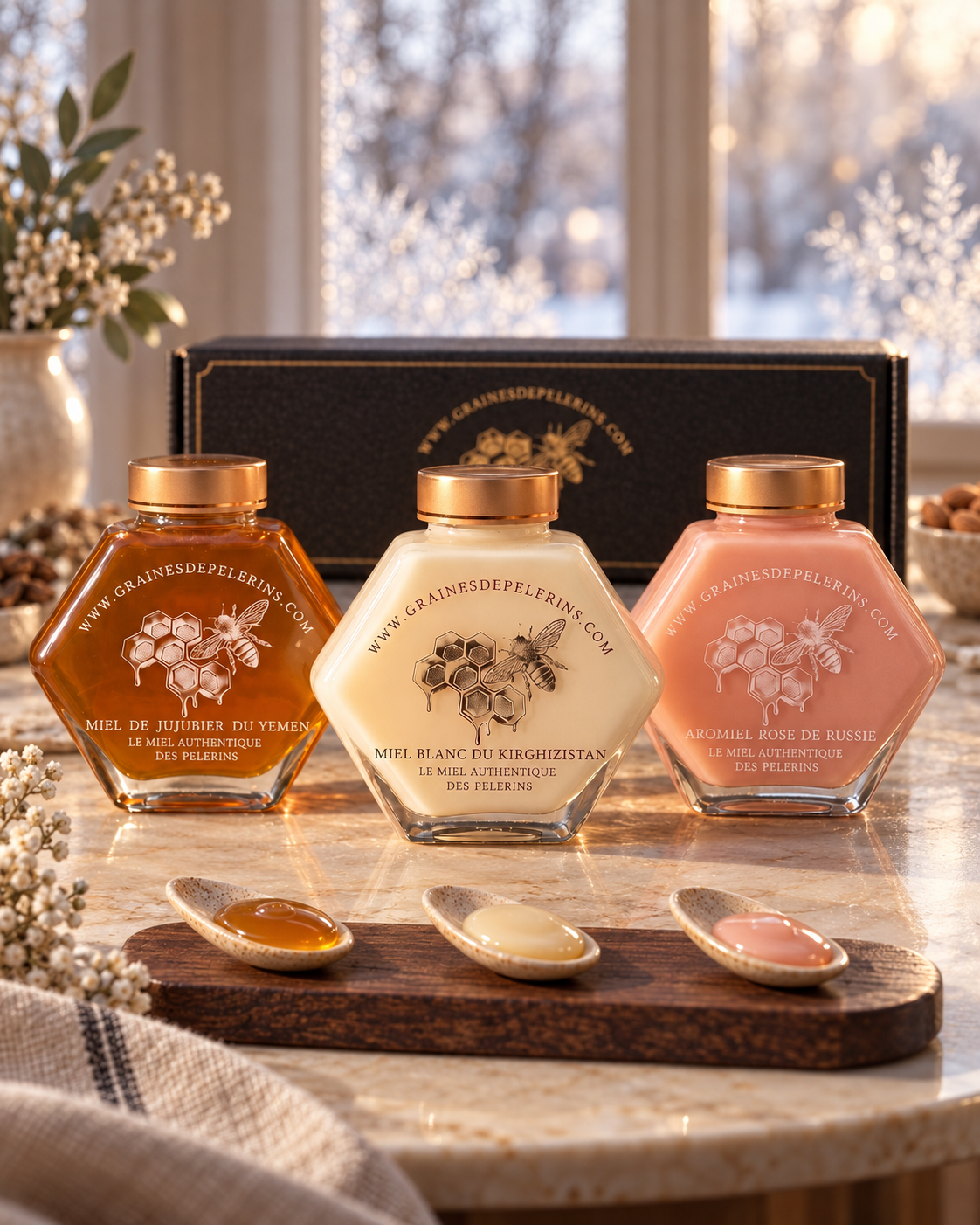
Explore our rare honeys and Rose Aromiel or our tasting gift boxes. To choose the items yourself, discover Build your own honey gift box. The compositions and formats offered are set out on each product page.
Article revised on 5 September 2026. The external sources above document the identity and the botanical origin of the honeys; they do not establish a ranking of rarity. The profiles of our selection refer to the product pages and to the documents available.
Editorial information. The content of this article is strictly informative, cultural and sensory. It describes the geographical origin, the botanical composition, the aroma profile and the traditional uses of rare honeys. It is not medical advice, a diagnosis, or a recommendation for treatment. Honey is a foodstuff. For any medical question, consult a qualified professional. Compliant with Regulation (EC) No 1924/2006.
Continue exploring
Pairings
The 13 desserts of Christmas in Provence: who counted to thirteen?
Mistral counted only eleven. Where does thirteen come from, what really sits on the table at Christmas in Provence, and how to set your o...
Read the article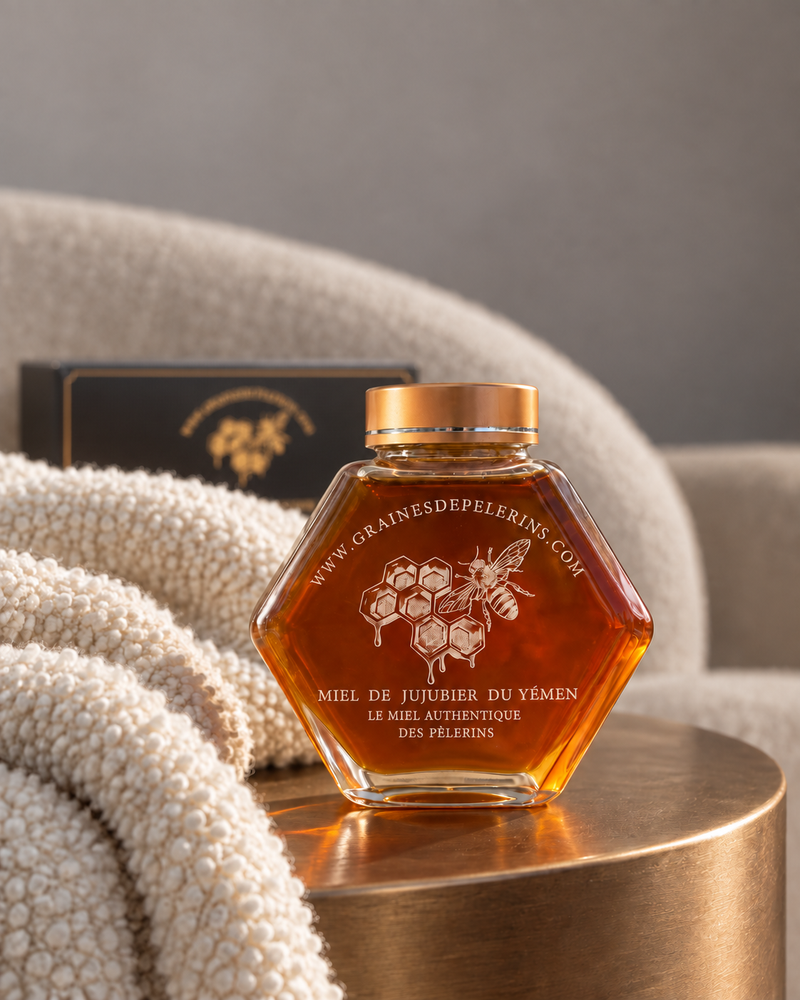
Guide
Pain d’épices: the story of French honey spice bread, and a real recipe
For centuries, pain d’épices was a loaf of honey and rye whose dough waited for weeks. From Reims to Nuremberg, its history, the part hon...
Read the article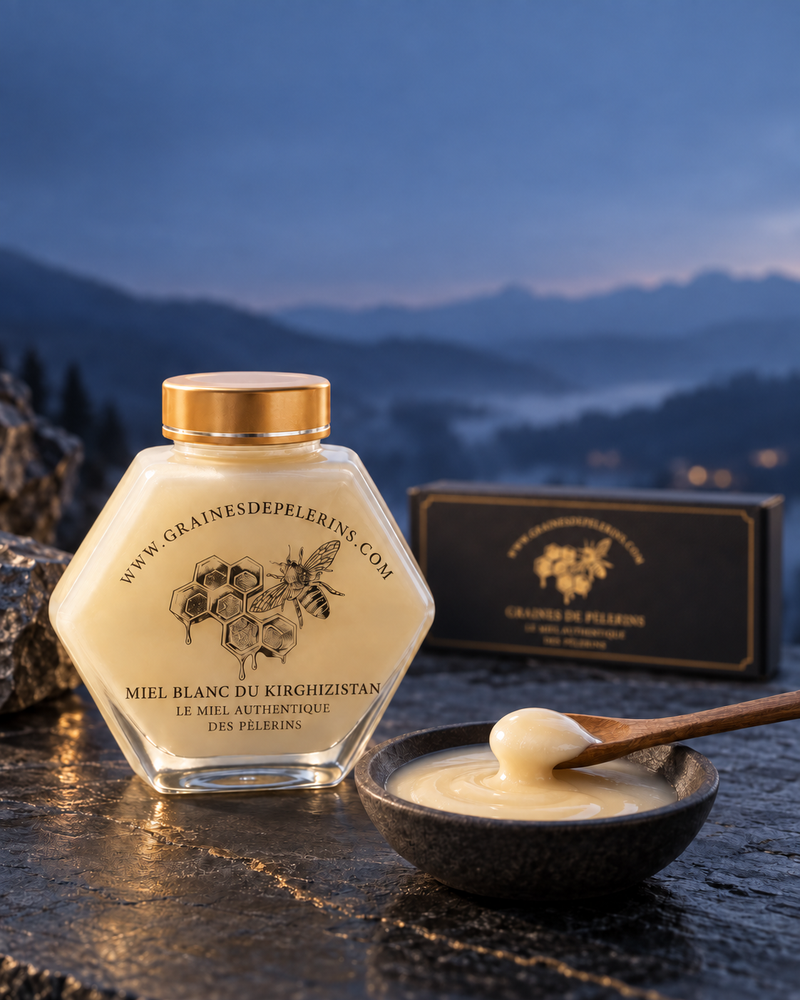
Classements
The best honey in the world: what the rankings say, what really counts
In 2025, the world beekeeping congress gave up awarding a honey. What contests and rankings are really worth, and the five criteria that ...
Read the articleDiscover our rare honeys
Four exceptional origins, limited harvests, gift boxes made for giving and for tasting.
See the collectionAlso worth discovering: our Almonds of Distinction