
The 13 desserts of Christmas in Provence: who counted to thirteen?
Mistral counted only eleven. Where does thirteen come from, what really sits on the table at Christmas in Provence, and how to set your own with honey and almonds.
In 1896, Frédéric Mistral, the great champion of Provençal customs, had a list drawn up of everything his museum in Arles, the Museon Arlaten, should collect. For the Christmas table it was to show, the list names eleven desserts. Not twelve. Not thirteen. The number that all of Provence now recites at Christmas, he never wrote down. So where does it come from? What actually goes on the cloth? And why does one sweet of honey and almonds outrank the rest? The investigation first, then your table.
Contents
The thirteen desserts, piece by piece
Where does the number thirteen come from?
The number thirteen first appears in writing in 1925, although the desserts themselves are on record from the seventeenth century. In between, witnesses count seven, count eleven, or do not count.
Start in Marseille in 1683. A priest, François Marchetti, sets down the Christmas customs of his city. Apples, grapes, figs, dates, walnuts and almonds “regale people for the last two days” before the feast. Thirteen is already on his table, but it is not desserts. It is bread: thirteen loaves, “twelve small ones” for the apostles and one “much bigger” for the Lord.
Between 1783 and 1787, the essayist Laurent Pierre Bérenger inventories the dessert of Marseille, from pyramids of oranges to a nougat of hazelnuts, pine nuts, pistachios and “Narbonne honey”. No number. In 1903 the American writer Thomas A. Janvier is invited to a gros souper at Saint-Rémy-de-Provence and learns that the vigil demands “not fewer than seven different sweets”. He is served so many that he pictures “such an explosion of sweets as might fly into space should a comet collide with a confectioner’s shop”.
Then, on 21 December 1925, Dr Joseph Fallen, a majoral of the Félibrige, the association of Provençal writers that Mistral helped to found, signs an article called “Lou gros soupa” in the paper La Pignato. “You need thirteen, yes thirteen; no more if you like, but not one fewer: our Lord and his apostles!” He then lists almost twice as many. His article finds little echo until 1934.
It is the museums that set the rule. The Musée du Terroir Marseillais, opened in 1928 at Château-Gombert, gives a room to the vigil meal, and the custom hardens there in the early 1930s. In 1946, Tounin Virolaste, a columnist of the Armana prouvençau, rereads Mistral’s list, supposes there were only eleven at the start, then makes up his mind.
“In the Comtat, the people want there to be thirteen; and surely elsewhere too. Thirteen it is!”
Tounin Virolaste, Armana prouvençau, 1946The number has a meaning, Christ and his twelve apostles, and very probably a forebear: according to the ethnologist Brigitte Brégeon-Poli, the desserts took the place of Marchetti’s thirteen loaves. Thirteen, then. But thirteen what?
What is really on the table
There is no official list of the thirteen desserts: it changes from family to family and from village to village. The most quoted, from the Musée du Terroir Marseillais, gathers apples, pears, the verdaù (a green winter melon kept in the grain), fresh grapes, sorbs (the fruit of the service tree), white nougat, black nougat, walnuts, almonds, hazelnuts, dried figs, the pompe à l’huile (a plump olive-oil cake) and raisins.
For the table before the numbers, open Mistral’s memoirs of 1906. At the family farm, three candles burn on a triple white cloth, with a plate of wheat sprouted on Saint Barbara’s Day at each end. After the meatless dishes come the treats saved for that night: olive-oil fouaces, raisins, almond nougat, paradise apples. The great Christmas loaf, the pain calendal, is cut only once a quarter of it has gone to the first poor person to pass.
None of it is bought luxury. It is the winter store. Grapes, winter melons, apples and pears waited for Christmas in cellars and lofts. The dried fruits, the four beggars (les quatre mendiants), each stand for a religious order: walnuts or hazelnuts for the Augustinians, dried figs for the Franciscans, almonds for the Carmelites, raisins for the Dominicans.
Then comes the detail that overturns everything. In the canton of Comps, in the Haut Var, people refused to serve at Christmas the figs bought by the kilo in Draguignan, or walnuts, or almonds: too ordinary. The feast was the orange and the date, rare goods.
The purists classify everything: obligatory desserts, “flagged” ones such as quince paste, village specialities such as Nice’s Swiss chard tart, “debated” ones such as chocolate, and forbidden ones: exotic fruit and the Yule log. One piece escapes every debate. It takes two ingredients.
Black nougat, white nougat: the king of the table
Black nougat cooks honey and almonds together until brittle, with no egg white; white nougat owes its pale colour and softness to egg white. Both are obligatory, and the black is held to be the king of the thirteen.
It was called “household nougat”: made at home, from the honey and almonds of the district. Janvier marvelled in 1903 that even the poor farms of the uplands kept almond trees and bees, the raw materials of this “necessary luxury”. And he offers a comparison any British reader will recognise: nougat is the sweet without which Christmas would be as barren in Provence as it would be in England without plum pudding. England sets out one pudding. Provence sets out thirteen plates, and still crowns a single king. At Avignon, he adds, the Christmas chimes were called “the nougat bells”.
The calendar follows the hive. At Signes, a village in the Toulon area, making began in mid-September, after the honey harvest, and stopped two or three days after Christmas. And the word hides one last surprise: “nougat” comes from the Old Provençal noga, the walnut. The king of almonds bears the name of another nut.

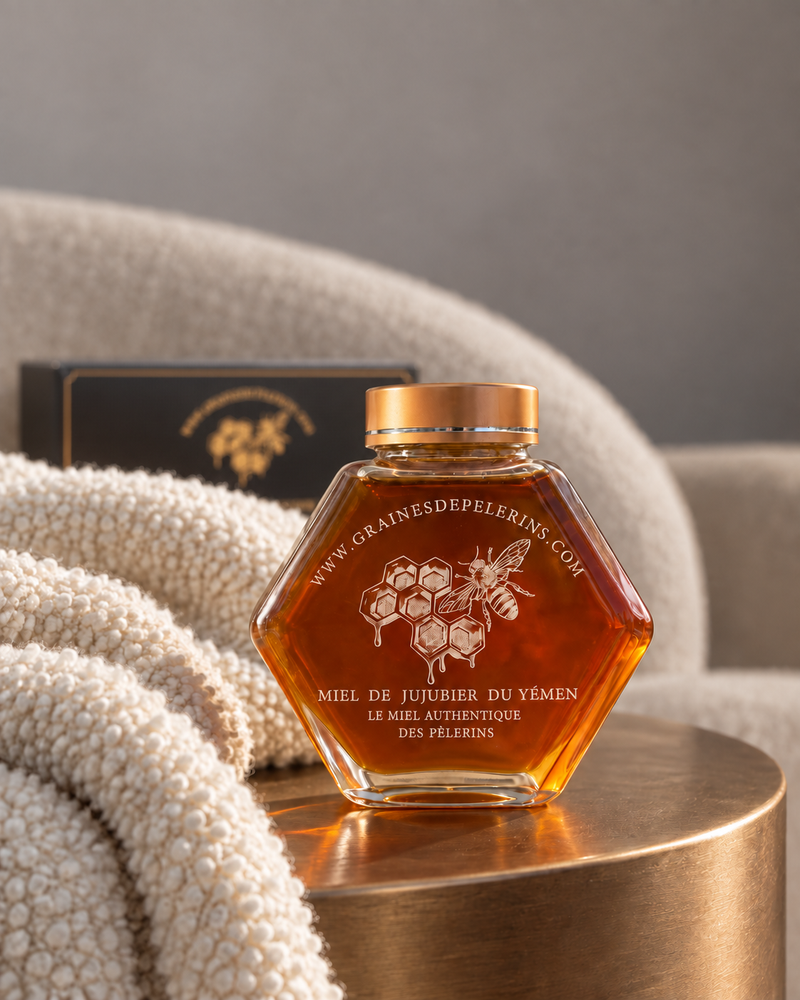
The amber of black nougat
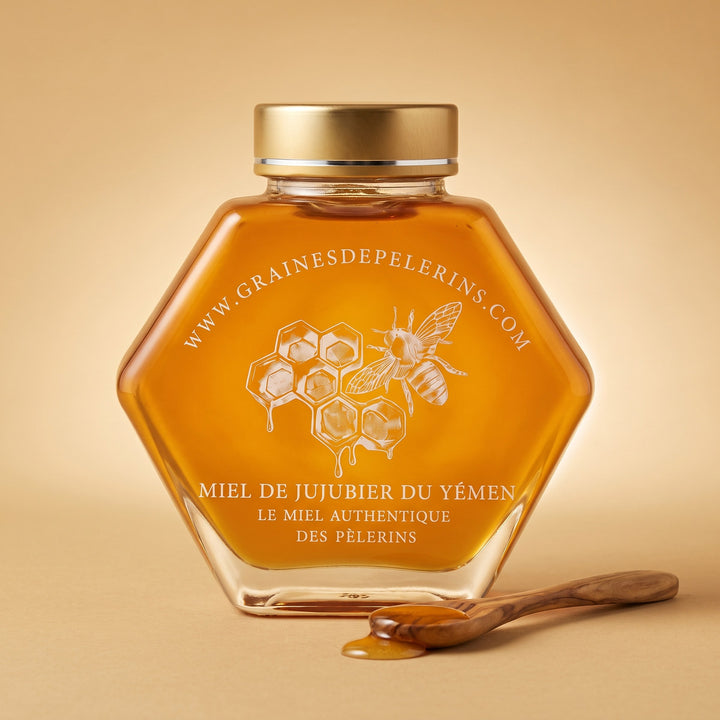
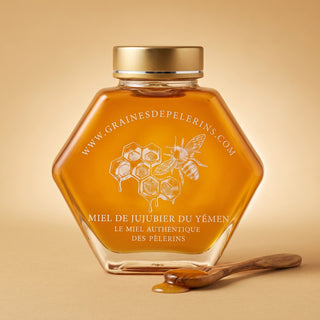
A dense honey that runs from the spoon: caramel first, then warm wood.
Jujubier Honey from Yemen · €47.90The specification for Label Rouge nougat, a French quality label, requires at least 55% almonds in black nougat and 35% in white, with Provence lavender honey (PGI) making up at least 40% of the sweeteners, all cooked in an open cauldron.
At Montélimar, the protected geographical indication describes a white nougat: a paste aerated by egg white alone, at least 30% roasted almonds, and honey making up at least 25% of the sweeteners. Everywhere, the same heart: honey for the fragrance, almonds for the crunch. If those two have ruled the table for more than two centuries, all that remains is to choose which.
Setting your table of thirteen desserts today
Keep the framework of the tradition, the fruits, the four beggars, the pompe and the two nougats, then put a spoonful of honey wherever the fruit asks for it. Thirteen plates at least: custom tolerates more, never fewer.
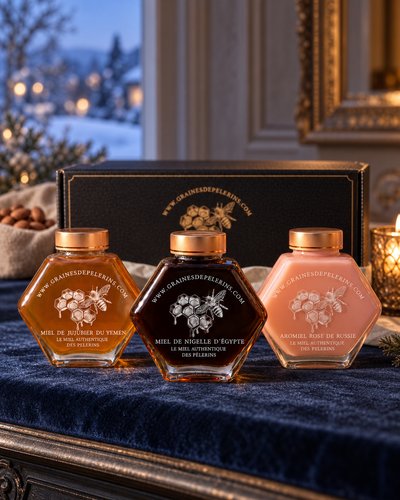
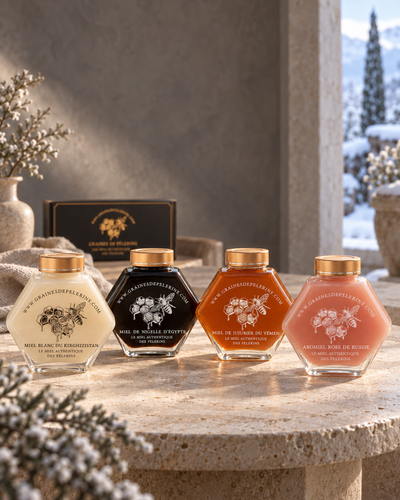
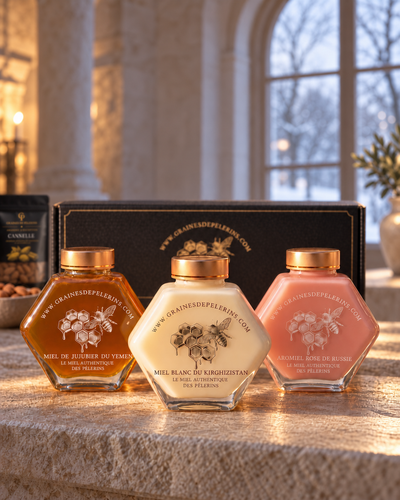
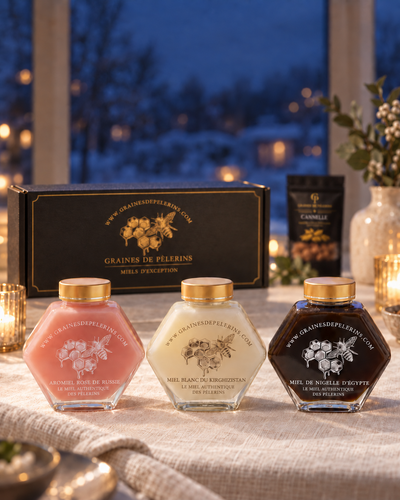
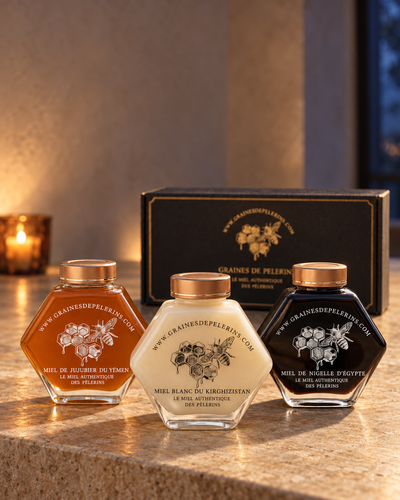
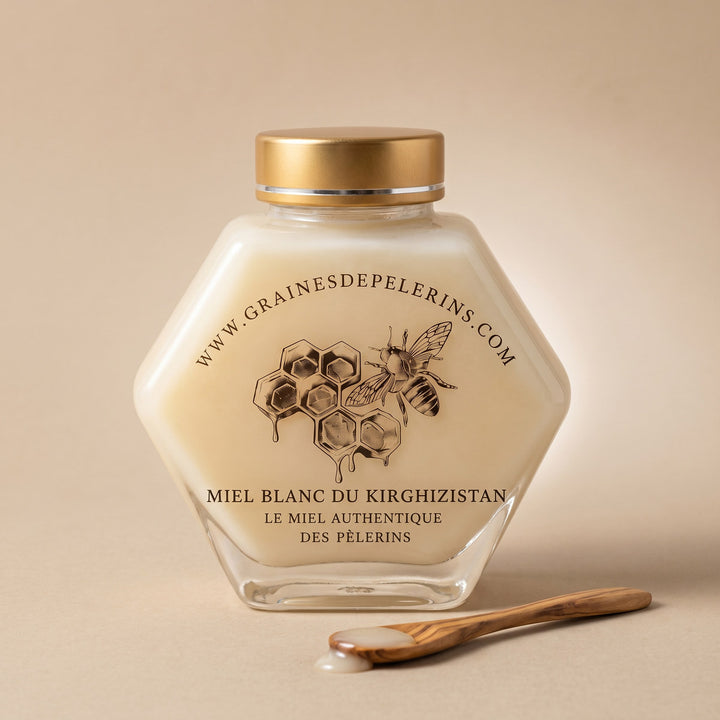
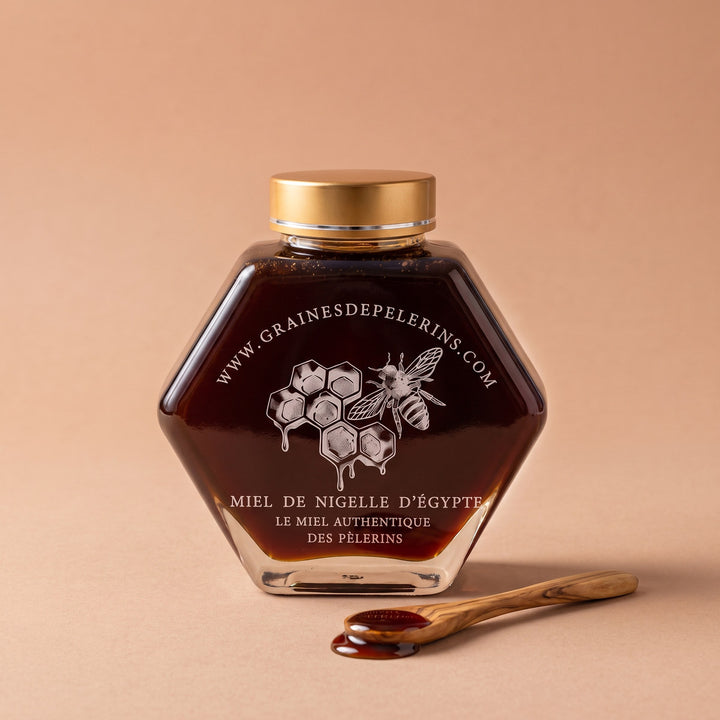
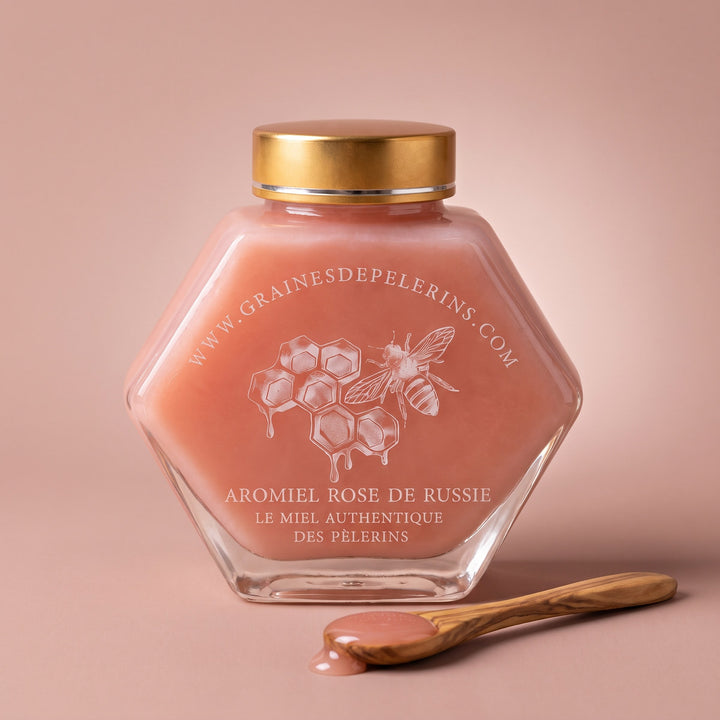
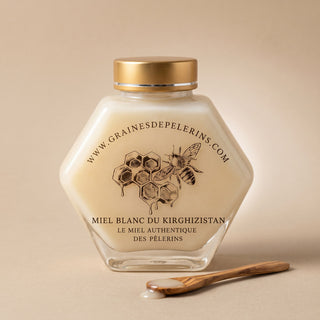
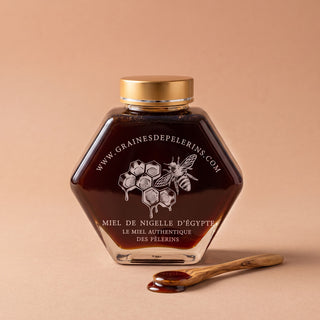
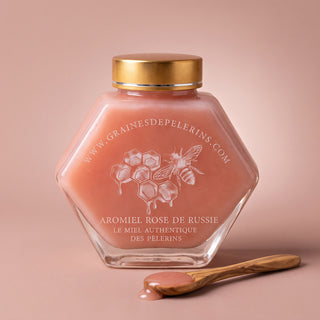
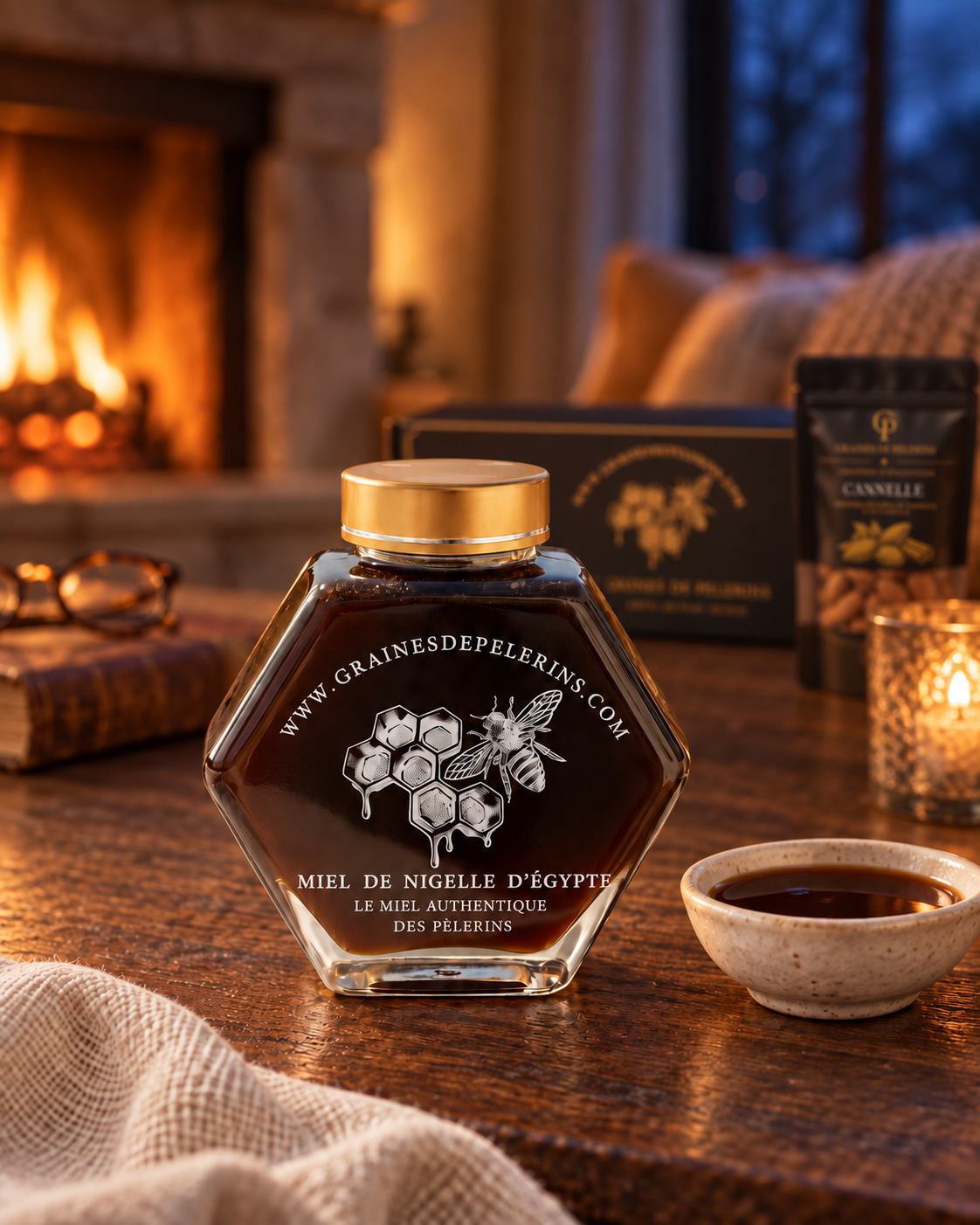
Four jars, four jobs. White Honey from Kyrgyzstan, creamy and almost milky, melts on a warm pompe à l’huile. Egyptian Black Seed Honey, mahogany brown with a peppery finish, joins the dried figs. Jujubier Honey from Yemen, caramel and warm wood, coats roast apples and pears. The Rose Aromiel from Russia, a honey-based preparation made with acacia honey and rosehip extract, brightens orange segments, added at the last moment and never above 40 °C.
The evening of the 24th · The menu
Thirteen plates,
one table.
Black nougat
Honey and almonds, cooked until brittle
Served alone: it is the king
White nougat
Aerated with egg white
In thin slices
Walnuts
The Augustinians
Cracked at the table
Hazelnuts
The Augustinians too
Plain
Raisins
The Dominicans
Plain
Pears
The reserve of the loft
Roasted, with a thread of Jujubier
Fresh grapes
Kept until Christmas
Plain
Verdaù
The green melon kept in the grain
In thin slices
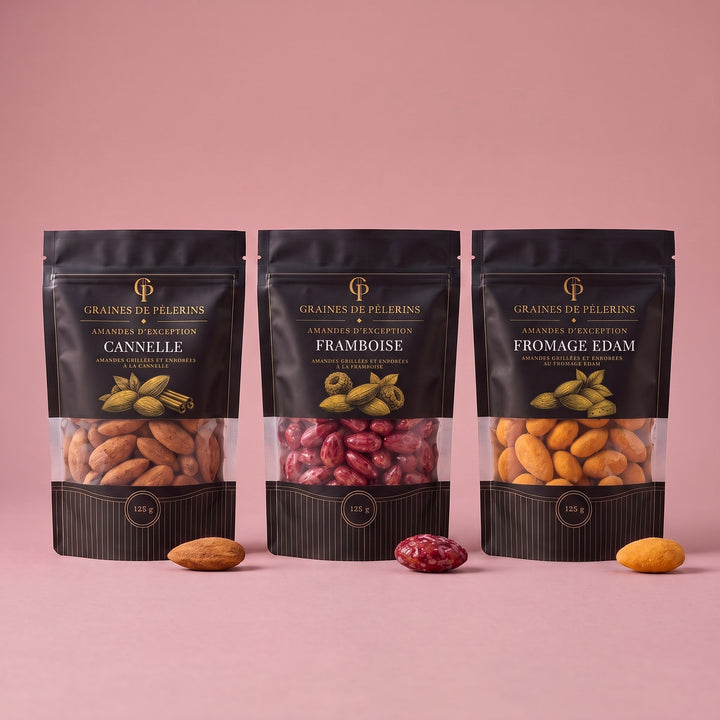
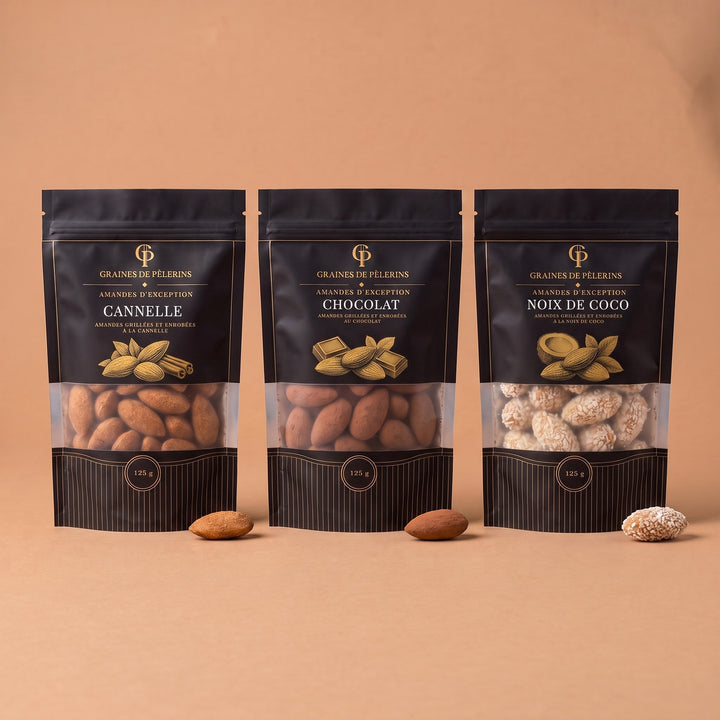
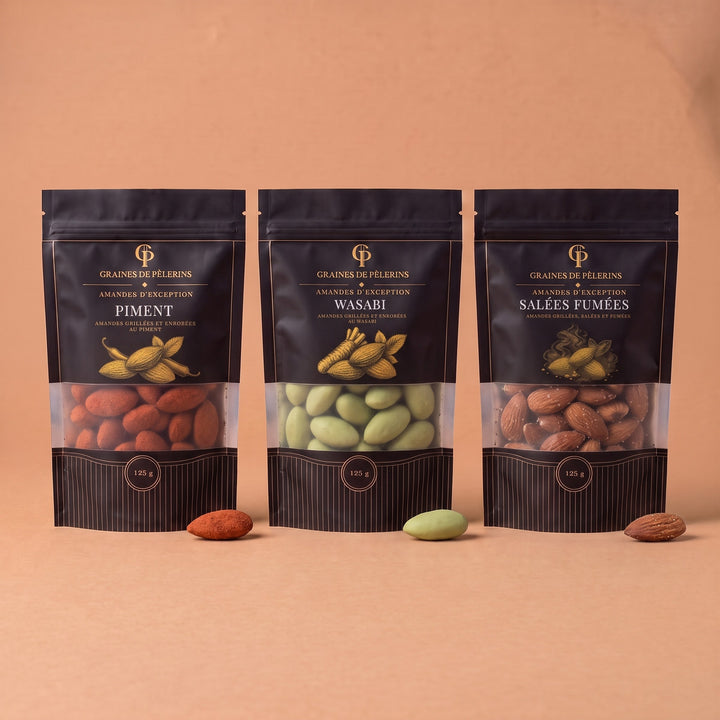
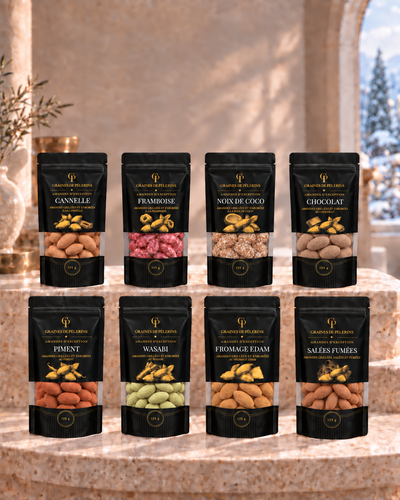
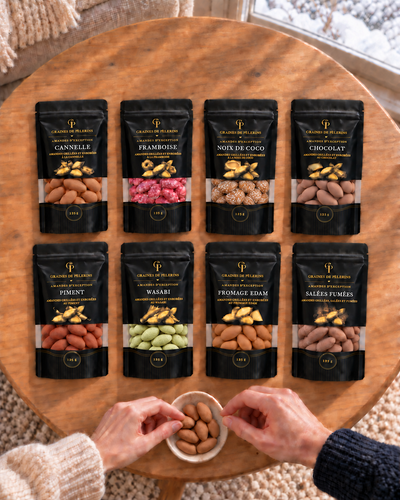
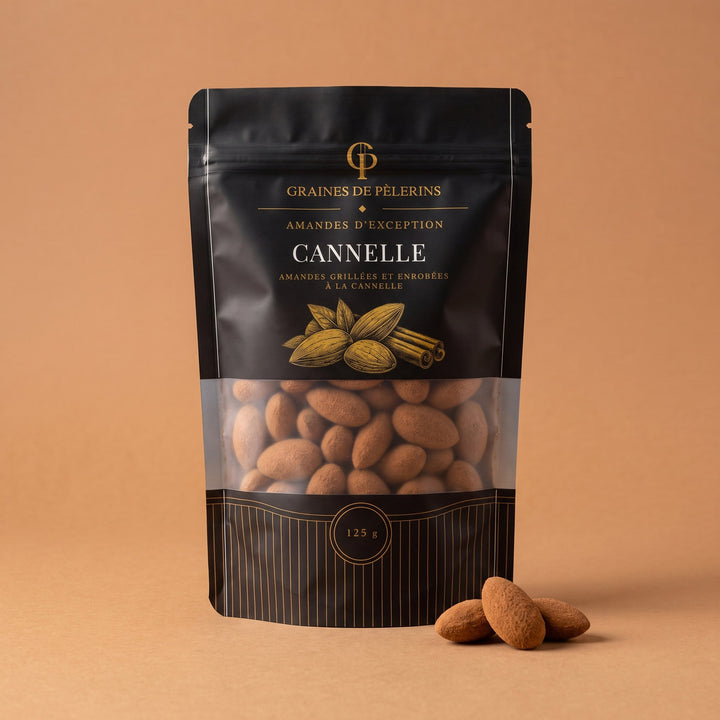
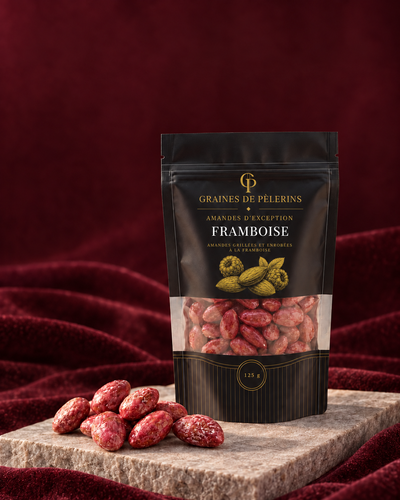
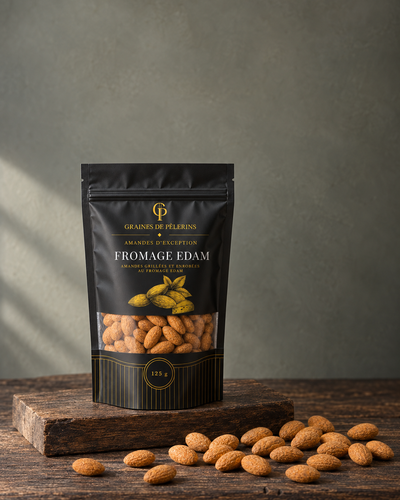
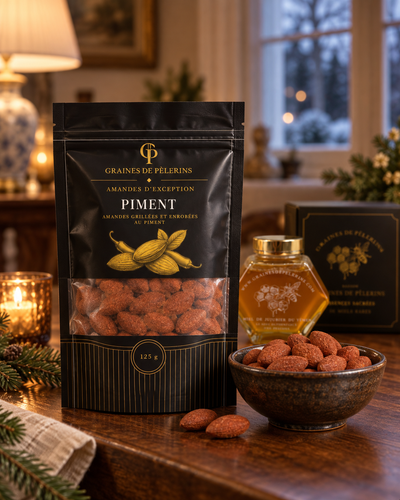
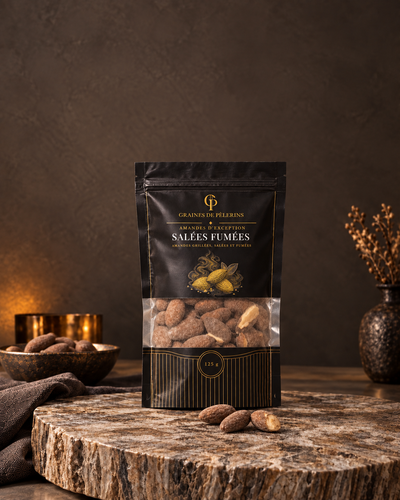
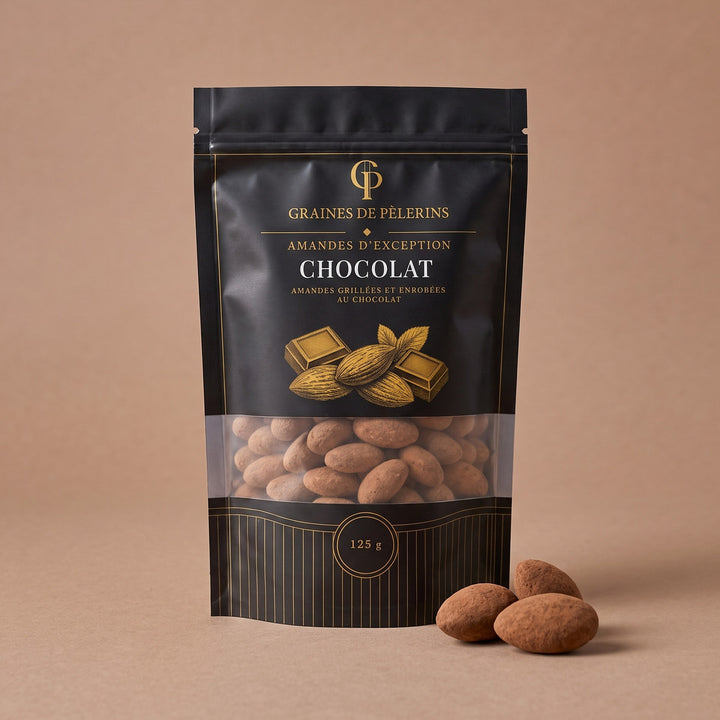
Beside the Carmelites’ plain almonds, the Cinnamon dish brings a fine coating and a spice warmth that never stings. And if a fourteenth plate turns up, take it from the “debated” list: the Chocolate Coated Almonds, a clean crunch and a round cocoa. To avoid choosing, The Complete Collection gathers all eight flavours. All our pairings: honey and almond pairings.

Gift box · Three honeys of your choice
You have set the table.
Now build the box.
Three honeys of 250 g, chosen from four
The signature box, spoons included
Free Mondial Relay delivery · France, Belgium and Luxembourg
★ 4.9 · 684+ independently verified reviews
Free Mondial Relay delivery · France, Belgium and Luxembourg. Orders are usually prepared within 48 working hours, then delivered within 3 to 5 working days in France and Belgium. To give rather than serve, our honey gift box guide compares the boxes.
One last detail: in his 1925 inventory, Fallen even slipped in cheese, so see our honey and cheese pairings. For winter’s other honeyed sweetness, read the story of pain d’épices, the French honey spice bread.
On the 24th, when the thirteen plates are down, tell your guests that Mistral counted only eleven. Then watch who reaches for the black nougat first: this table is made to last all week.
For the vigil
Mistral counted eleven.
Your table makes thirteen.
Amber and dense, the Jujubier is meant for the spoon: caramel first, then a woody warmth, and a finish that goes on and on.
Taste the Jujubier€47.90 a 250 g jar★ 4.9 · 684+ independently verified reviewsLaboratory reports published
In the same spirit: Pain d’épices, the honey spice bread · Honey and cheese: the festive board
Frequently asked questions
What are the 13 desserts of Christmas in Provence?
There is no official list; it varies by family and village. The most quoted, from the Musée du Terroir Marseillais, brings together apples, pears, green melon, fresh grapes, sorbs, white nougat, black nougat, walnuts, almonds, hazelnuts, dried figs, the pompe à l’huile and raisins.
Why are there thirteen desserts?
Thirteen stands for Christ and his twelve apostles. Yet the number appears in writing only in 1925, from the Félibrige member Joseph Fallen. It very probably took the place of the thirteen loaves set on the Christmas table in seventeenth-century Marseille.
What is the difference between black nougat and white nougat?
Black nougat cooks honey, sugar and almonds together, with no egg white: it is dark and brittle. White nougat is aerated with egg white, which gives it its pale colour and soft texture.
When are the thirteen desserts eaten?
Most often on the evening of 24 December, at the end of the gros souper, the meatless supper of Christmas Eve. The table is so abundant that it lasts all week.
Sources
- Brigitte Brégeon-Poli, “Va pour treize !”, Terrain, no. 24, 1995, pp. 145-152 (OpenEdition) (in French).
- Wikipedia, “Treize desserts” (in French; based on Brigitte Poli, Les 13 desserts provençaux. Une coutume en mouvement, 2002).
- Frédéric Mistral, Mes origines. Mémoires et récits, 1906: the Christmas vigil, on Lexilogos (in French).
- Thomas A. Janvier, The Christmas Kalends of Provence, 1903, Project Gutenberg: the seven sweets, the comet, the nougat bells, the plum pudding.
- Provence-Alpes-Côte d’Azur regional tourist board: “Ma liste de Noël : les Treize desserts” (in French): the four beggars, the pompes “à l’huile d’olive”.
- PAQ, defence and management body: “Nougat Label Rouge” no. LA 02/22 (in French).
- INAO: specification of the Label Rouge “Nougat” (version submitted to the national opposition procedure) (in French).
- French Ministry of Agriculture: specification of the protected geographical indication “Nougat de Montélimar” (in French).
- Wikipedia, “Nougat de Montélimar” (in French).
- Dictionnaire de l’Académie française, 9th edition: “nougat” (in French).
- Wikipedia, “Félibrige”: the literary and cultural association founded by Mistral and other Provençal writers.
- Wikipedia, “Cormus domestica”: the service tree, whose fruit is the sorb.
- The House’s product pages (descriptions, compositions and prices read on 2 October 2026) and the page Honey and almond pairings.
Editorial information. The content of this article is strictly informative, cultural and sensory. It describes the geographical origin, the botanical composition, the aroma profile and the traditional uses of rare honeys. It is not medical advice, a diagnosis, or a recommendation for treatment. Honey is a foodstuff. For any medical question, consult a qualified professional. Compliant with Regulation (EC) No 1924/2006.
Continue exploring
Guide
Pain d’épices: the story of French honey spice bread, and a real recipe
For centuries, pain d’épices was a loaf of honey and rye whose dough waited for weeks. From Reims to Nuremberg, its history, the part hon...
Read the article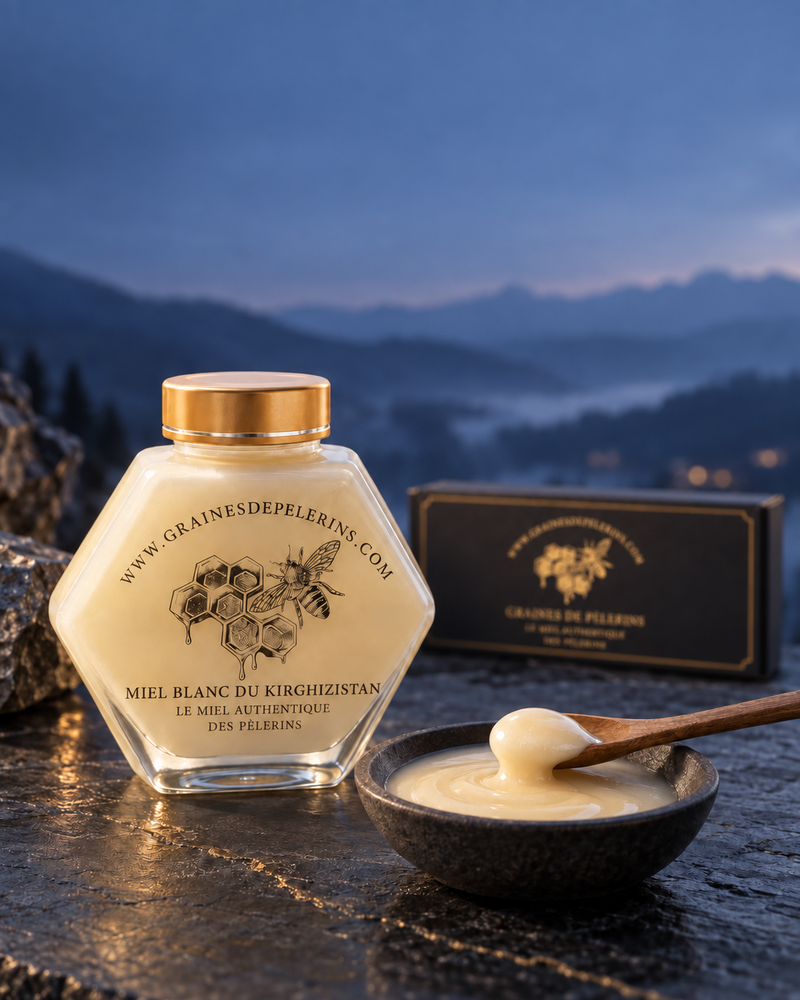
Classements
The best honey in the world: what the rankings say, what really counts
In 2025, the world beekeeping congress gave up awarding a honey. What contests and rankings are really worth, and the five criteria that ...
Read the article
Guide
How to store honey: how long it keeps, where and how
Honey does not go off like yoghurt, but it does not cross the centuries intact either. Best before date, open jar, fridge, crystallisatio...
Read the articleDiscover our rare honeys
Four exceptional origins, limited harvests, gift boxes made for giving and for tasting.
See the collectionAlso worth discovering: our Almonds of Distinction