
Pain d’épices: the story of French honey spice bread, and a real recipe
For centuries, pain d’épices was a loaf of honey and rye whose dough waited for weeks. From Reims to Nuremberg, its history, the part honey plays, and a real pure honey recipe, step by step.
In France, a cake can be sold as pain d’épices, literally “spice bread”, without a drop of honey in it. The manufacturers’ own code of practice allows it: invert sugar, sucrose or glucose syrup will do, and only the words “pure honey” promise otherwise. For centuries, though, this was a loaf of honey and rye, its dough left waiting for weeks before it ever saw an oven. How did it lose its honey? And what happens when you give it back?
Contents
From Reims rye to your oven

A word for British bakers. English-language recipes often call pain d’épices “French gingerbread”, and the two are cousins, not twins. The old base is rye flour, honey and spices. Richard Bertinet’s pain d’épices for Great British Chefs, for instance, uses 350 g of honey and 40 g of soft dark brown sugar to 250 g of flour, baked at 180 °C for 35 minutes. The recipe below takes 250 g of honey, no sugar at all, and a slower oven.
Reims: a loaf of honey and rye
The cradle of French pain d’épices is Reims, where sometime in the fourteenth century the pastry cooks began lifting their honey bread with spices.
In 1571, their heirs, the pain-d’épiciers, formed a guild of their own, apart from the bakers and the pastry cooks, which Henri IV recognised in 1596. Nobody joined without an apprenticeship and a masterpiece. Before the Revolution, the city counted only twelve masters.
In 1694, the first Dictionnaire de l’Académie française gave as its example the “pain d’espice de Rheims”, made of rye, “sugar foam, honey, spice”. Sugar was already sharing the place. In 1765, Diderot and d’Alembert’s Encyclopédie put it bluntly: “a loaf of honey and rye flour”.
In Paris, it was the treat of the streets. In 1814, the schoolboy Jules Michelet, too poor for a proper lunch, bought a figure of it “for two sous […] a superb man, a giant in height”, he recounts in Ma jeunesse. In class he snapped off an arm, then a leg, and nibbled them in secret. “What are you eating?” asked his neighbours. “My dessert.”
But another town is already eyeing the crown.
Dijon: the dough that waits
In the nineteenth century, Dijon took over, with wheat in place of rye and a method that begins with waiting.
Mulot & Petitjean traces its birth to 1796; in 1805, Barnabé Boittier set up his pain d’épices business in Place Bossuet, where the historic shop still opens its doors. In the twentieth century, Dijon counted as many as twelve houses. This is the last factory in the city.
The method starts with a mother dough of flour, honey and sweeteners, left to rest for a few weeks. Then comes the braquage: the dough is taken up again and receives egg yolks, raising agents and flavourings. The code of practice even allows already-baked pain d’épices to go in.
It is also the century in which honey, grown too expensive, gave way to molasses, notes a 2022 university study. Other people preferred to write down, in black and white, what this cake must contain.
Nuremberg: the almond rule
In Germany, the cousin of pain d’épices is called Lebkuchen, and Nuremberg is its capital. Its finest pieces follow written rules.
Since 1 July 1996, “Nürnberger Lebkuchen” has been a protected geographical indication: it guarantees the place, nothing else. Under the official German rules, an Elisenlebkuchen contains at least 25% almonds, hazelnuts or walnuts, no more than 10% flour, and no fat. A Honigkuchen, for its part, draws at least half of its added sugar from honey.
We tell the story of the forest beekeepers who supplied Nuremberg in our honey gift box guide. The real secret lies elsewhere: the “keeping dough”. Flour and honey, mixed alone, wait in the cool for weeks, sometimes months. Lutz Geißler, a German bread specialist, reconstructed a Honigkuchen from 1883: dough made on the first day, baked on the seventy-sixth. In between, lactic bacteria turn part of the sugars into acids; the aroma rounds out, and the raising agents find the acidity they need.
In Provence too, honey and almonds reign at Christmas: the king of the 13 desserts of Christmas is nougat, above all the black, made of honey and almonds.
Why honey is its soul
Honey plays three roles in a pain d’épices: it keeps the crumb soft, it browns the crust, it helps the dough rise.
Moisture first. Honey draws water from the air, the very property that obliges you to close the jar if you want to store honey well. A Lebkuchen left in dry air hardens; in damper air, it turns tender again.
Colour next. Honey browns and burns faster than sugar: the University of Missouri advises lowering the oven temperature when you use it. Hence our 160 °C (320 °F).
The rise last. A pinch of bicarbonate of soda balances the acidity of honey and improves the rise, notes the same document: what potash and months of waiting did, in their own way.
Which honey to choose
The honey decides the colour and the final note. One 250 g jar makes one loaf: choose it for its character, because the oven is hard on the finest nuances.
One 250 g jar, one recipe
Which honey
for which pain d’épices?
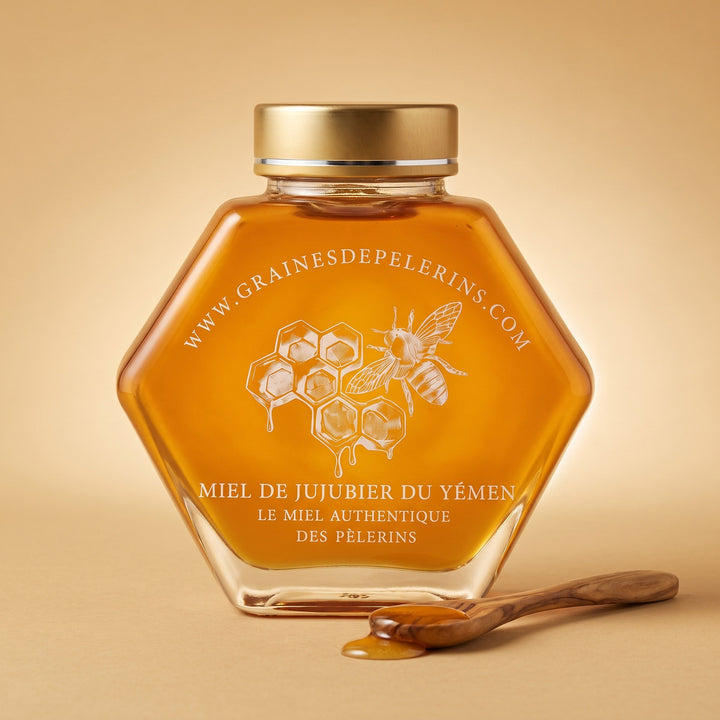
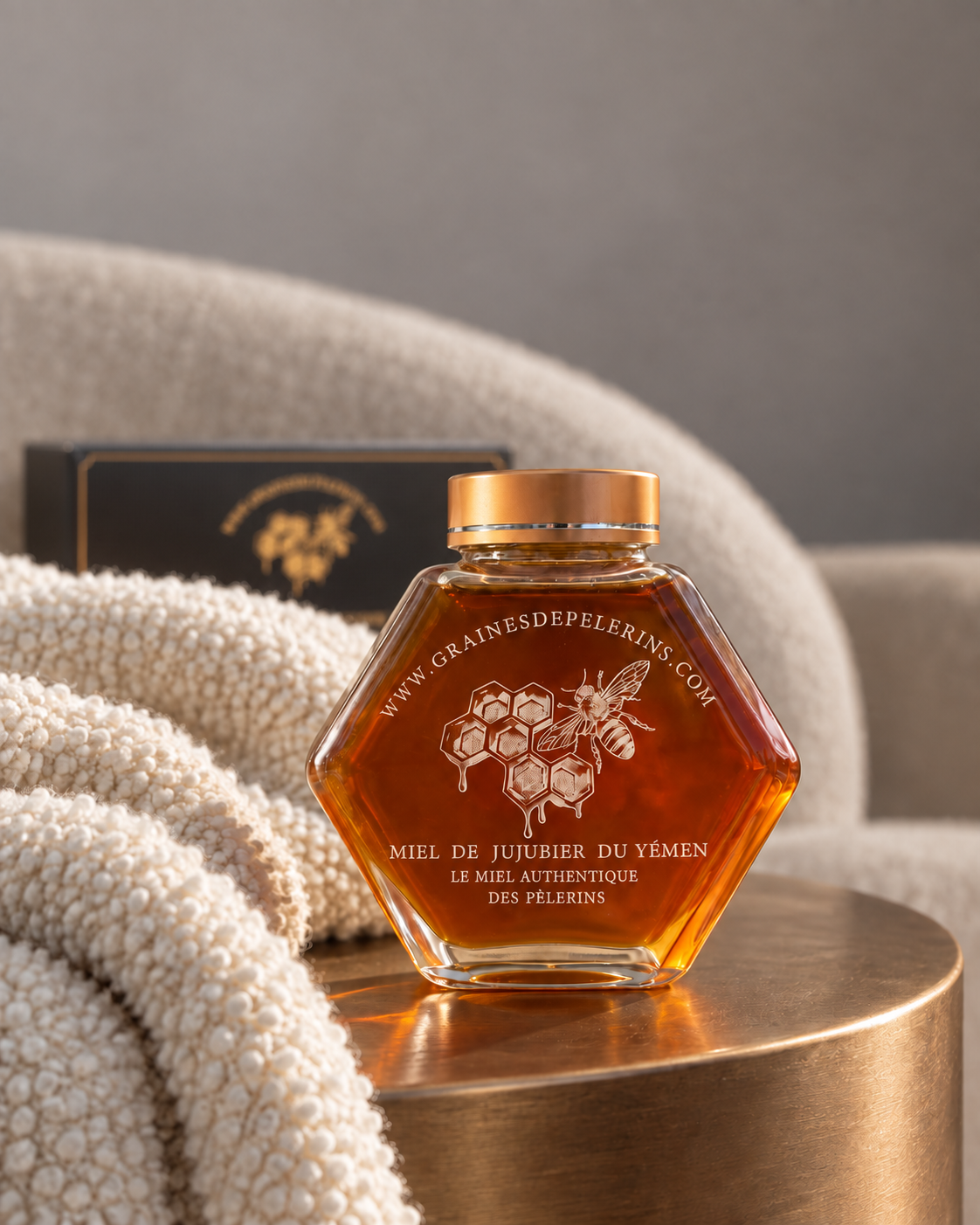
Jujubier Honey from Yemen €47.90
Caramel, then a woody warmth and a very long finish
If you like deep flavours
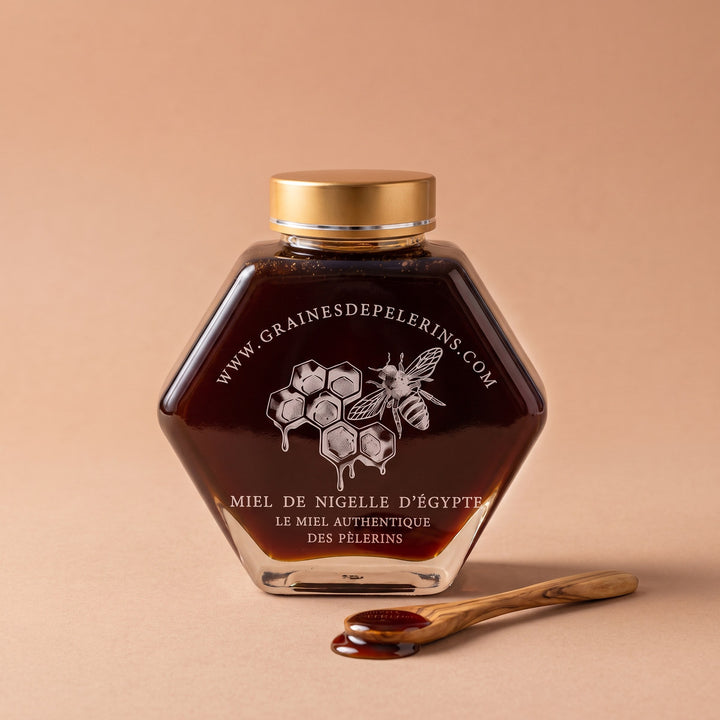
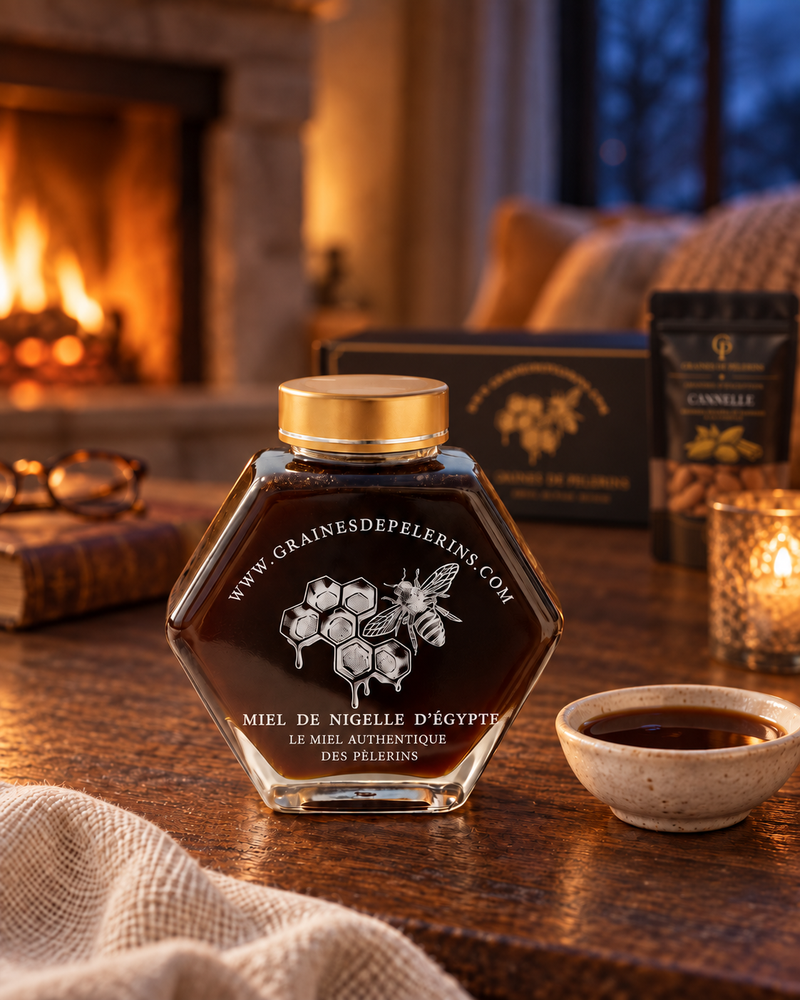
Egyptian Black Seed Honey €26.90
A dense sweetness, then a spiced warmth and a peppery edge
If you like character; in that case, leave out the pepper
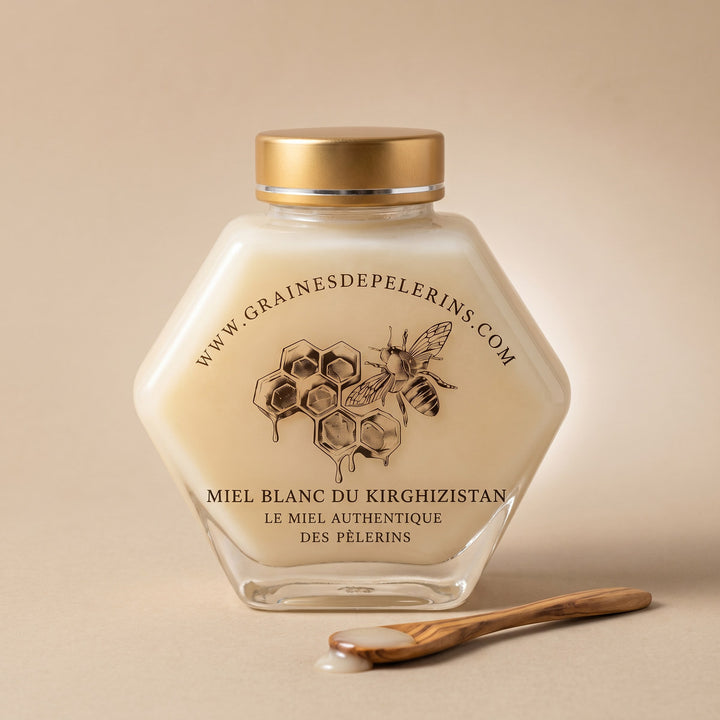
White Honey from Kyrgyzstan €26.90
A light flower, an almost milky note, no bitterness
If you want gentleness, with the spices in front
The White Honey arrives creamy: its natural crystallisation is no problem at all, because it melts in lukewarm water.
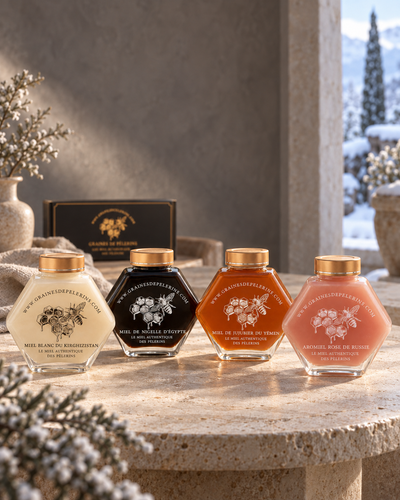
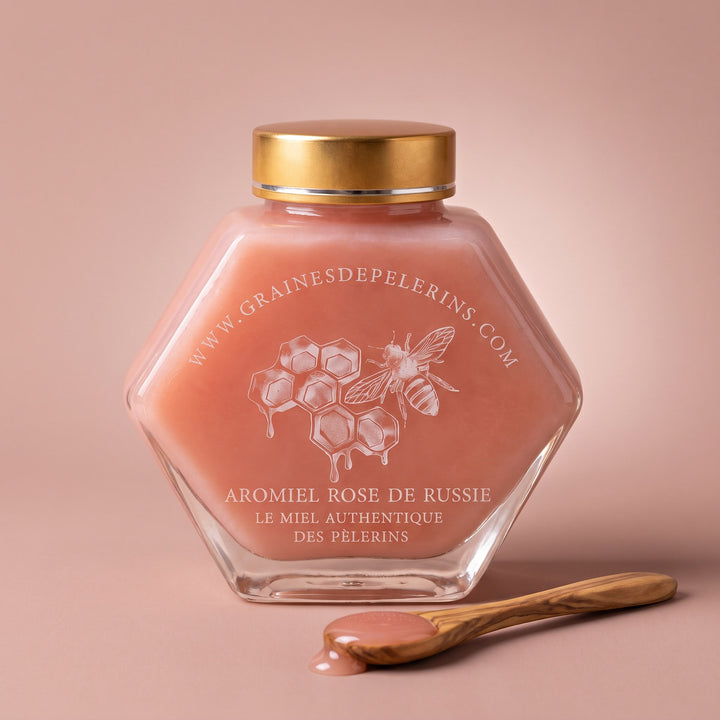
One exception: the Rose Aromiel from Russia, a honey-based preparation made with acacia honey and rosehip extract, whose fragrance will not stand more than 40 °C. It will not go in the oven, but onto a cooled slice.
To compare, nothing beats three loaves side by side, one per honey.

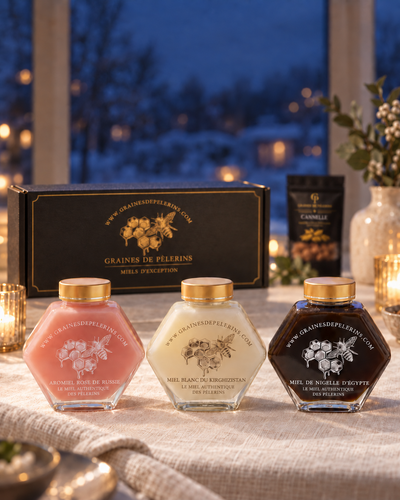
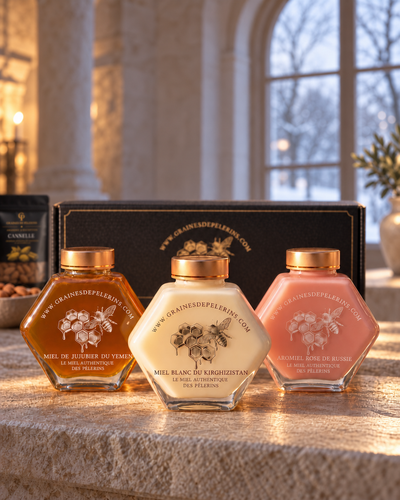
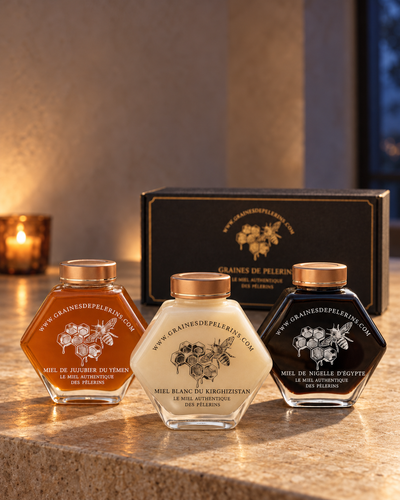
The Ritual Box · Three honeys
Three jars,
three pains d’épices.
Jujubier, Black Seed and White Honey, 250 g each
One jar per recipe: ours takes 250 g
The signature box, spoons included
★ 4.9 · 684+ independently verified reviews

The Jujubier from Yemen
Caramel and warm wood: the deepest version.
Jujubier Honey from Yemen · €47.90The pain d’épices recipe, with honey
One jar of honey, 250 g of half-rye, half-wheat flour, a night’s rest, an hour at 160 °C (320 °F) and a day of patience. Not a gram of sugar: this is a pure honey pain d’épices.
Proportions checked against the French reference recipes cited in the sources: as much honey as flour, a gentle bake, a final rest.
1 loaf, 24 to 26 cm (12 slices)
Preparation: 20 min · Dough rest: 12 h · Baking: 1 h at 160 °C (320 °F) · Cake rest: 24 h · Total time: 37 h 20
Ingredients
- 250 g honey (one jar)
- 125 g rye flour
- 125 g plain white flour (French T55)
- 100 ml water
- 2 eggs
- 50 g unsalted butter
- 1 level teaspoon bicarbonate of soda
- 2 teaspoons ground cinnamon
- 1 teaspoon ground aniseed
- 1 teaspoon ground ginger
- ½ teaspoon freshly grated nutmeg
- 1 pinch ground clove
- 1 pinch ground black pepper
- The zest of an unwaxed orange
- 1 pinch of salt
Method
- The day before, heat the water without letting it boil then, off the heat, melt the honey in it.
- In a large bowl, mix the flours, spices, zest and salt. Pour in the warm honey and mix to a thick, smooth dough.
- Cover and leave to rest for 12 hours at room temperature: this is your mother dough.
- The next day, preheat the oven to 160 °C (320 °F) and line a 24 to 26 cm loaf tin with baking parchment.
- Mix the beaten eggs into the dough, followed by the melted and slightly cooled butter.
- Sprinkle the bicarbonate of soda through a small sieve and mix just enough to make an even dough.
- Pour into the tin and bake for 1 hour. From 50 minutes, push a knife blade into the centre: it should come out dry. If the top darkens too quickly, cover it with baking parchment.
- Leave to cool slightly for 10 minutes, turn out onto a wire rack and let it cool completely.
- Wrap the pain d’épices in cling film or a clean cloth and wait 24 hours before slicing.
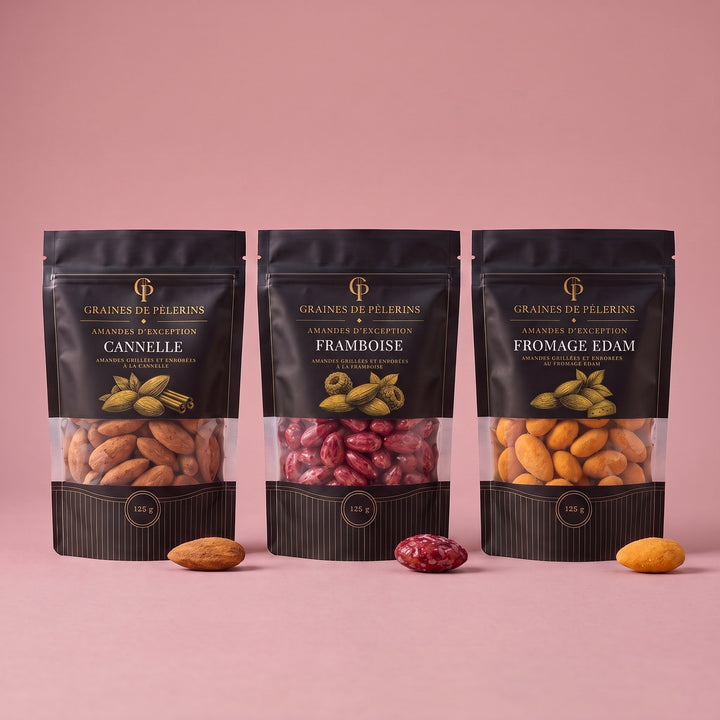
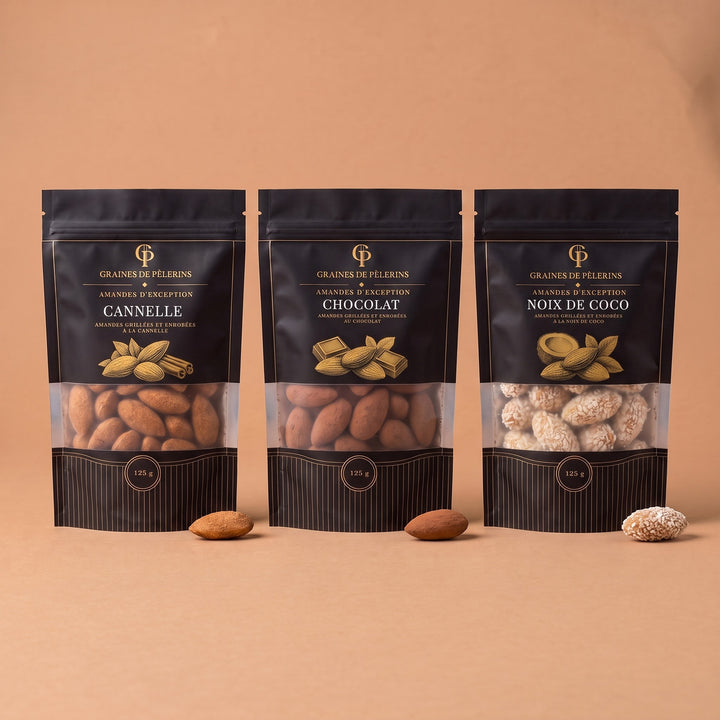
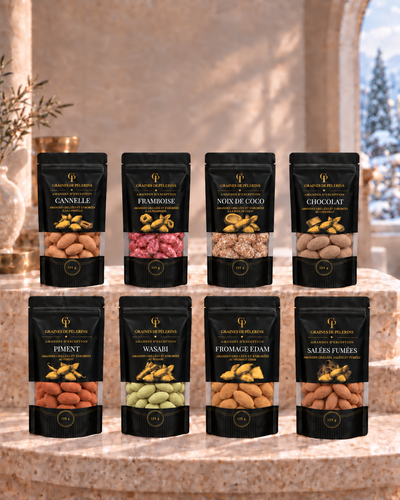
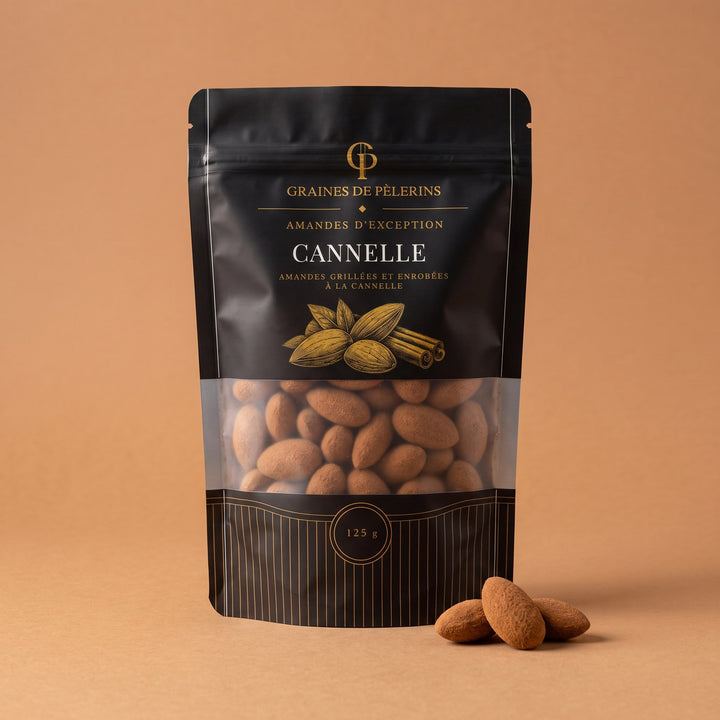
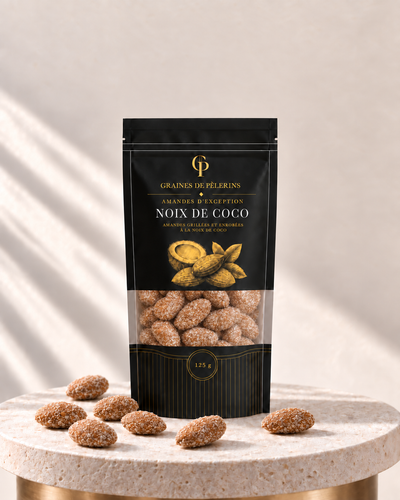
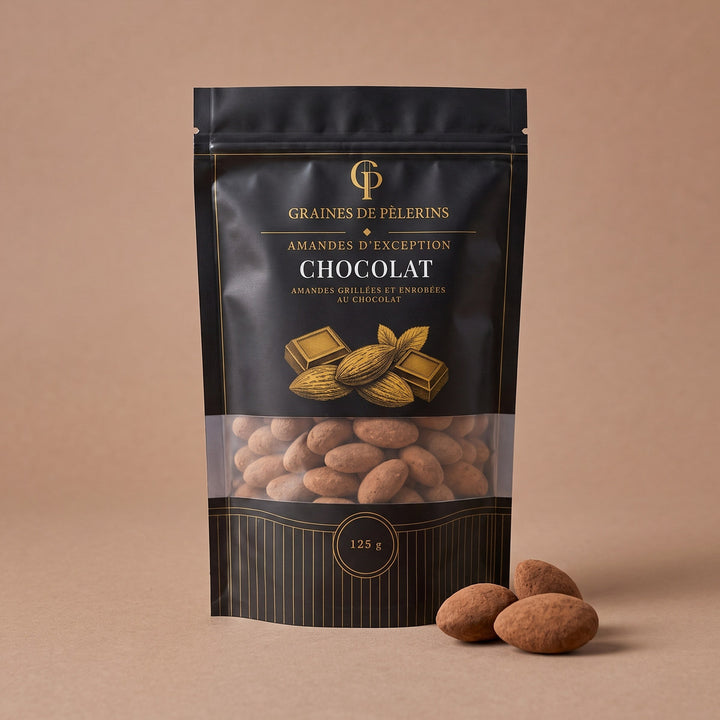
Serve it in thin slices, with a few Cinnamon Coated Almonds: the fine coating gives way under the tooth, and the spice settles in without ever stinging.

White Honey from Kyrgyzstan
Creamy in the jar, it makes the gentlest version.
White Honey from Kyrgyzstan · €26.90And if the wait feels long, think of the Honigkuchen of 1883: seventy-five days. Yours asks for only one.

Coated Almonds · 125 g
With the slice,
a handful of Cinnamon.
Roasted first, then coated, in small batches
The fine coating gives way under the tooth
The spice settles in without ever stinging
The honeys in this recipe
One jar,
one pain d’épices.
or all three, in The Ritual Box
★ 4.9 · 684+ independently verified reviewsLaboratory reports published
In the same spirit: The 13 desserts of Christmas · Jujubier, White, Black Seed: what are the differences?
Frequently asked questions
Which honey should I use for pain d’épices?
A honey with character gives a deep pain d’épices, a mild honey lets the spices speak: caramel and warm wood with the Jujubier Honey from Yemen, spiced warmth with the Egyptian Black Seed Honey, gentleness with the White Honey from Kyrgyzstan.
Why rest the dough and then the cake?
It is the legacy of the mother dough, which rests for a few weeks in Dijon. At home, one night is enough for the flours, honey and spices to bind. The cake itself slices better the next day.
Can you make pain d’épices without eggs or butter?
Yes, like the original Reims pain d’épices. A common base brings together 250 g of rye flour, 250 g of honey, 175 ml of water, a teaspoon of bicarbonate of soda and the spices. The crumb is then denser.
How long does homemade pain d’épices keep?
A few days, well wrapped and at room temperature: in dry air, its crumb hardens. It also freezes in slices.
Sources
- Biscuits et Gâteaux de France, code of practice for pain d’épices (2018) (in French).
- Wikipedia, “Pain d’épices de Reims”: guild, masters, original recipe (in French).
- S. Gondolle, “Le pain d’épice, une histoire multiculturelle”, RILEA, 2022 (in French).
- Dictionnaire de l’Académie française, 1694, entry “Pain” (in French).
- Encyclopédie, volume 11, 1765, entry “Pain d’épice” (in French).
- J. Michelet, Ma jeunesse, Flammarion, 1883, chapter XIV (in French).
- Mulot & Petitjean: history and know-how (in French).
- Nuremberg tourist office: Nürnberger Lebkuchen (in German).
- Wikipedia (de), “Nürnberger Lebkuchen”: a protected origin (in German).
- Leitsätze für Feine Backwaren, version of 9 January 2025 (in German).
- L. Geißler, Honigkuchen after a recipe of 1883 (in German).
- Wikipedia (de), “Lebkuchen”: keeping dough and moisture (in German).
- University of Missouri Extension, Honey Tips.
- Provence-Alpes-Côte d’Azur regional tourist board: the thirteen desserts (in French).
- Reference recipe: Chef Simon (in French).
- Reference recipe: Fine Dining Lovers (in French).
- Reference recipe: Jujube en cuisine (in French).
- Reference recipe: Christophe Felder (in French).
- Great British Chefs, “Pain d’épices” by Richard Bertinet: quantities and oven settings quoted in the note for British bakers.
- Wikipedia, “Pain d’épices”: rye flour, honey and spices; gingerbread listed among similar dishes.
- The Good Life France, “Recipe for French gingerbread, pain d’épices”: an example of the English name.
Editorial information. The content of this article is strictly informative, cultural and sensory. It describes the geographical origin, the botanical composition, the aroma profile and the traditional uses of rare honeys. It is not medical advice, a diagnosis, or a recommendation for treatment. Honey is a foodstuff. For any medical question, consult a qualified professional. Compliant with Regulation (EC) No 1924/2006.
Continue exploring
Pairings
The 13 desserts of Christmas in Provence: who counted to thirteen?
Mistral counted only eleven. Where does thirteen come from, what really sits on the table at Christmas in Provence, and how to set your o...
Read the article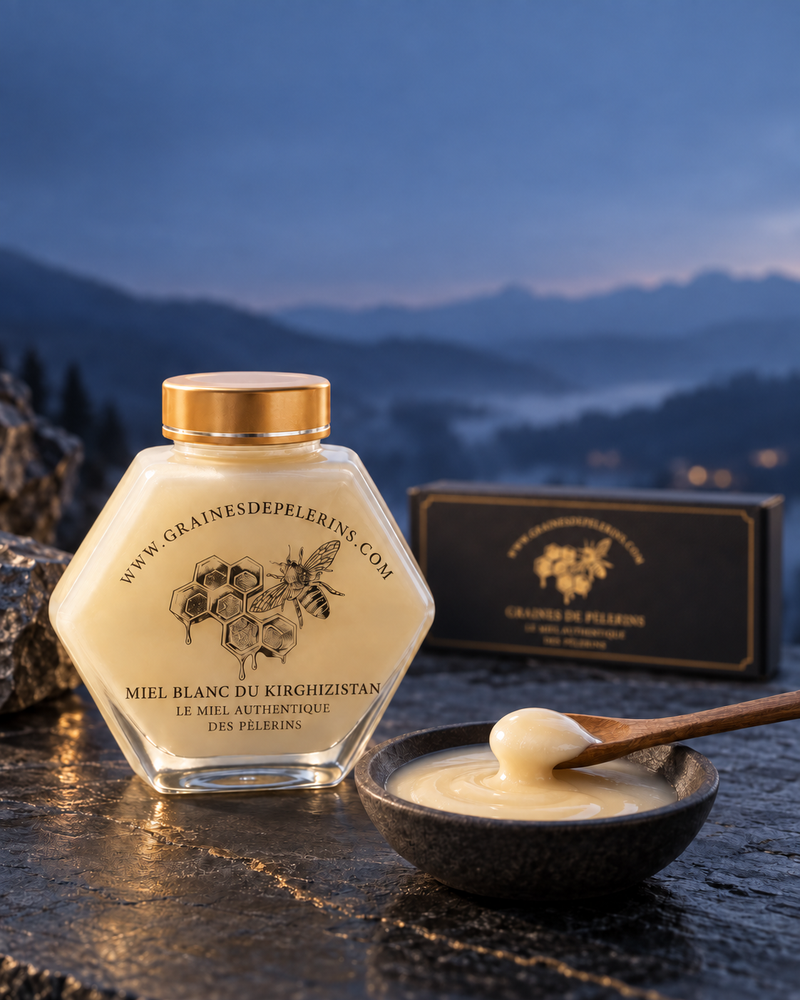
Classements
The best honey in the world: what the rankings say, what really counts
In 2025, the world beekeeping congress gave up awarding a honey. What contests and rankings are really worth, and the five criteria that ...
Read the article
Guide
How to store honey: how long it keeps, where and how
Honey does not go off like yoghurt, but it does not cross the centuries intact either. Best before date, open jar, fridge, crystallisatio...
Read the articleDiscover our rare honeys
Four exceptional origins, limited harvests, gift boxes made for giving and for tasting.
See the collectionAlso worth discovering: our Almonds of Distinction