
White Honey from Kyrgyzstan: texture, taste and tasting
An ivory colour, a creamy texture and a floral profile: the markers for discovering White Honey from Kyrgyzstan and choosing your jar.
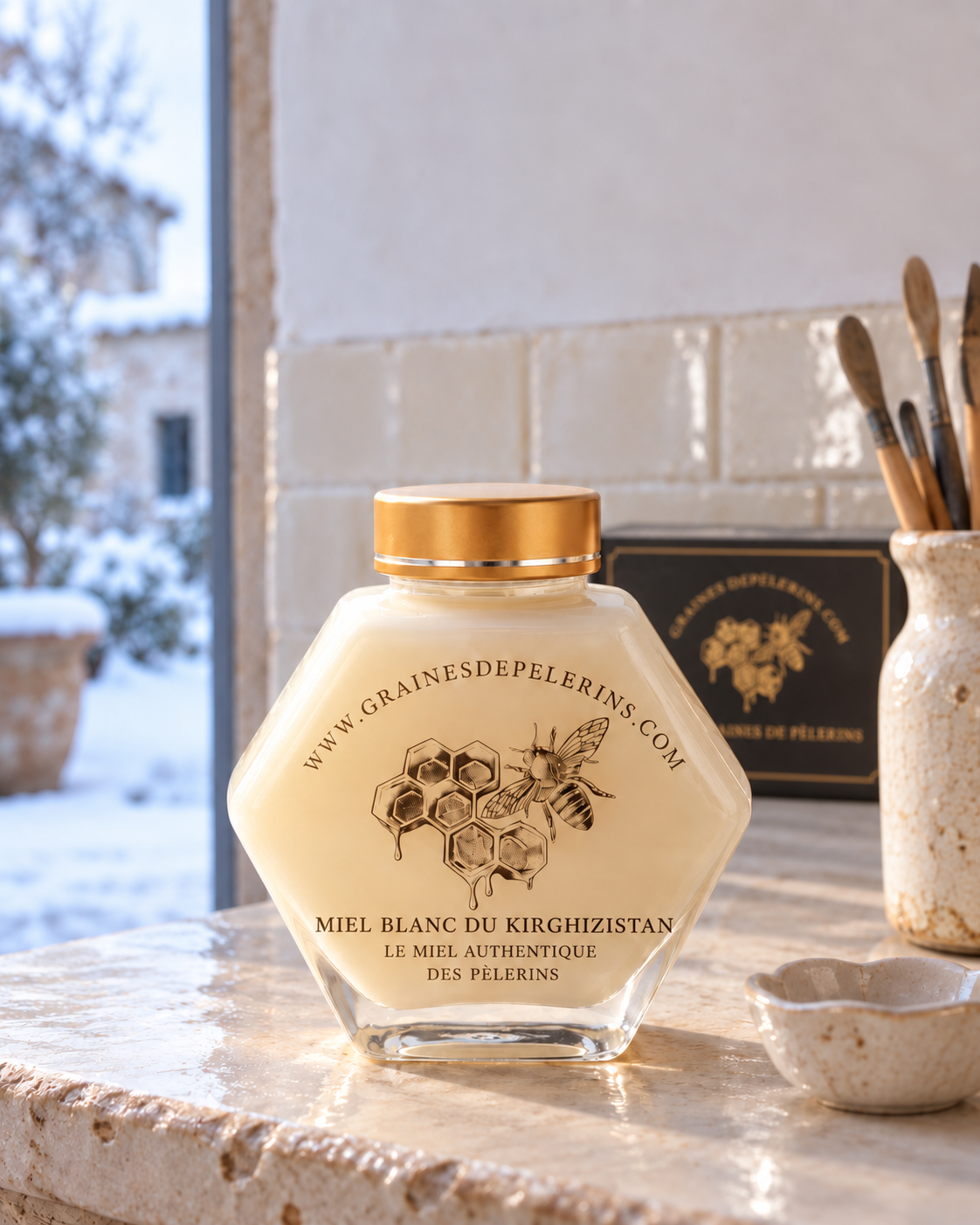
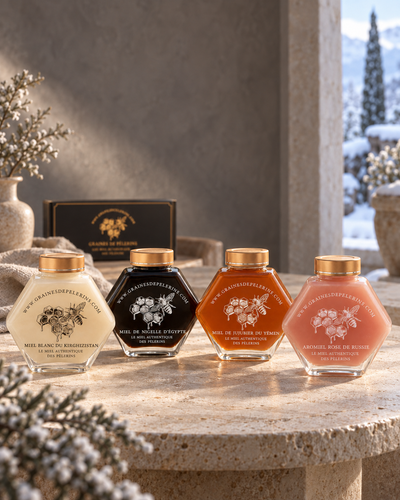
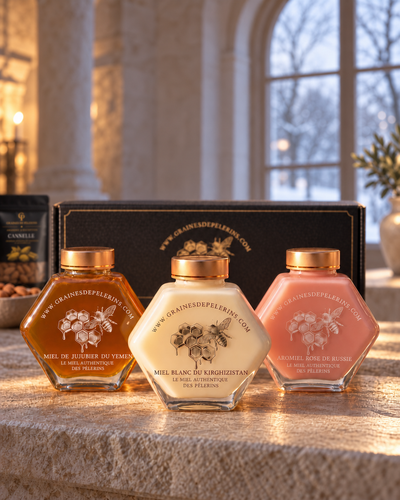
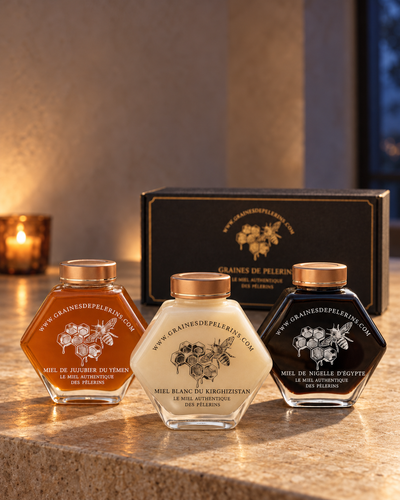
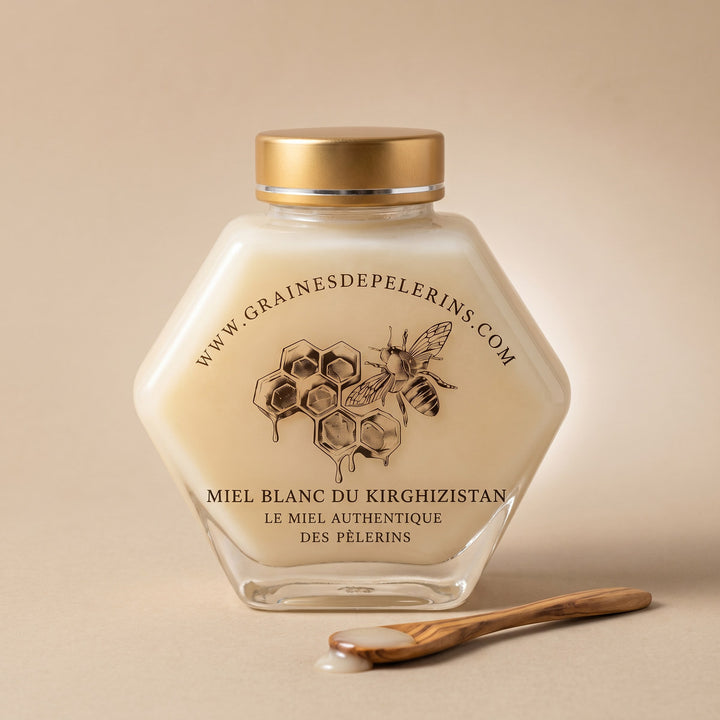
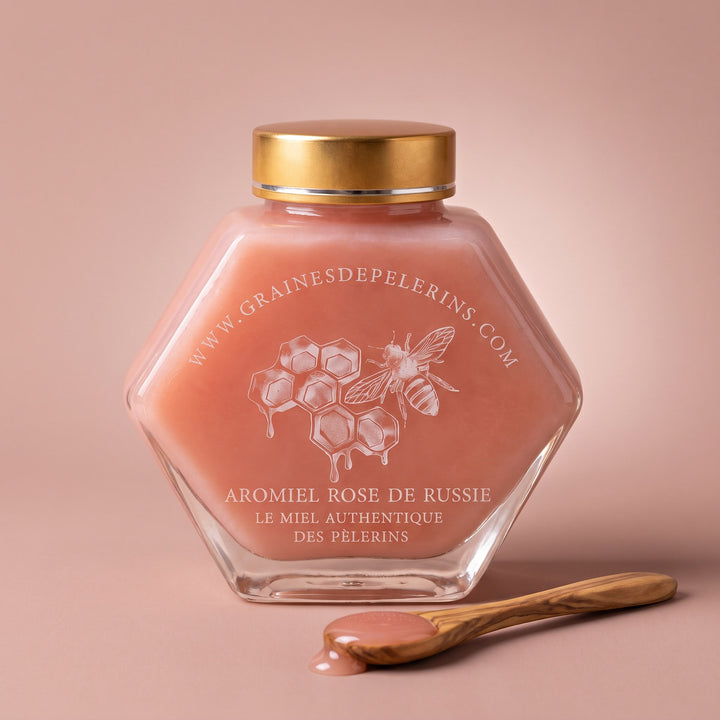
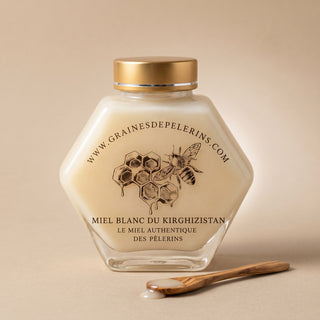
White Honey from Kyrgyzstan stands out for its ivory colour and its creamy texture. In the Graines de Pèlerins selection it is a sainfoin honey, also called esparcet, from the Tian Shan. Its floral, gentle, almost milky profile makes it worth exploring if you like honeys that are taken by the spoon and spread easily.
Before you choose, here are the useful markers: what this honey refers to, how to appreciate its texture and what information to check on the product you buy.
Which honey are we talking about?
"White honey" first describes an appearance. To identify a jar, go beyond its colour: look at the country of origin, the floral origin stated and the traceability information available. Our White Honey from Kyrgyzstan is presented as a monofloral sainfoin honey from the Tian Shan.
The name of the flower and the name of the country give you two different markers. The first describes the botanical origin stated; the second places the geographical origin. Neither of them can be replaced by a simple photograph of a pale honey.
Why is its texture creamy?
Crystallisation is a natural change in honey. Agroscope, the Swiss centre for agricultural research, points out that it depends in particular on temperature conditions. A firmer texture therefore does not, on its own, mean the honey has been spoiled. Read Agroscope's explanations on honey and its storage.
Our product page describes this White Honey as having fine crystallisation, a melting texture and an ivory colour. These are tasting markers: colour and consistency are not enough to establish the authenticity, the origin or the treatment history of a jar. For those questions, the batch information and the matching documents are more useful than an improvised visual test.
What flavour can you expect from White Honey from Kyrgyzstan?
The profile described by the House is gentle and floral, with an almost milky impression. "Milky" here refers to an aromatic sensation, in the way you would speak of a woody or fruity note. Take the time to separate the texture, what you pick up at the start of the mouthful, and the flavour that stays.
- To the eye: a pale colour, from cream white to ivory.
- On the spoon: a creamy texture that lifts rather than pours.
- In the mouth: a floral, gentle register, best enjoyed on its own before choosing a pairing.
These descriptions are there to compare profiles, without promising an identical experience for every palate. If you are hesitating between several characters, our guide to choosing your honey points you by texture and by the moment you have in mind.
Three simple ways to taste it
- On its own, to start. Take a small spoonful with a clean, dry utensil. Let the texture melt before deciding what might go with it.
- On a slice of bread. A bread with a quiet flavour makes it easier to compare the crunch of the bread and the texture of the honey. Use as much as you like.
- Beside a plain preparation. Try a touch on a yoghurt or a fresh cheese if those ingredients suit you. Add the honey as you serve, so the contrast stays visible.
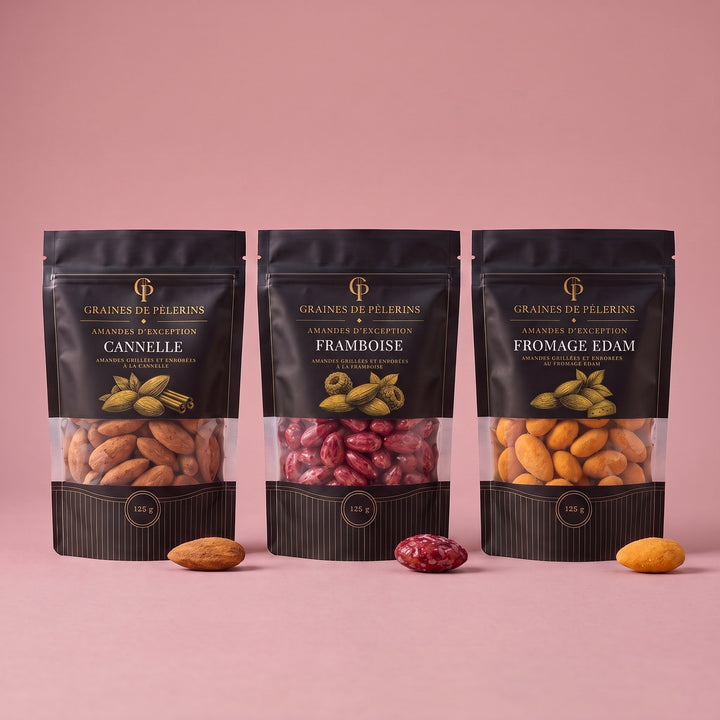
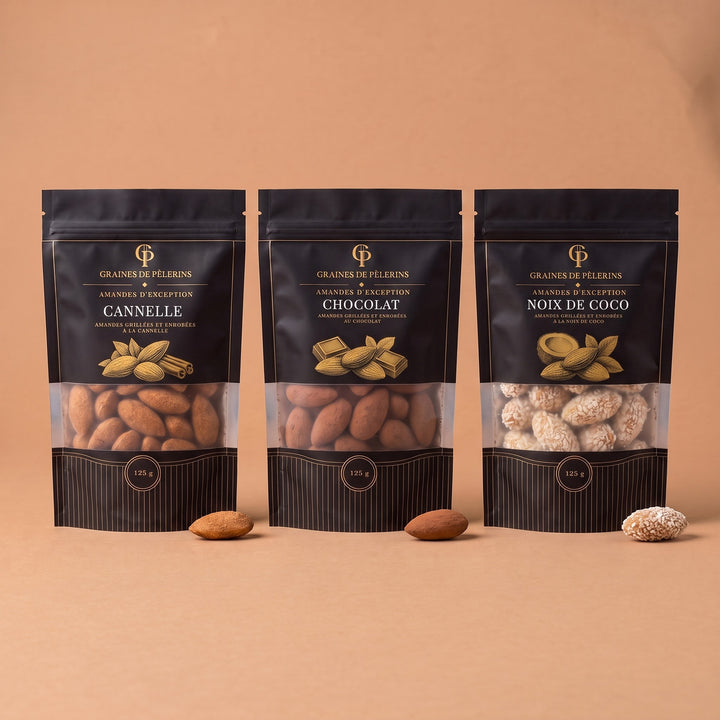
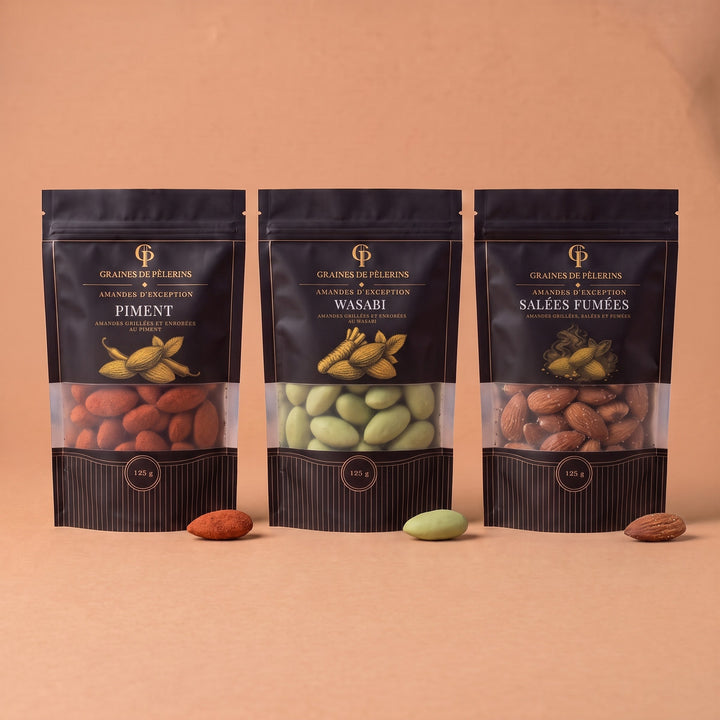
For a tasting that also plays on crunch, see our pairings of honeys and almonds. The almond recipes have their own ingredients and allergens: check their product page before building your board.
What to check before buying
- The origin and the name: the country and the floral origin stated should be legible.
- The product actually offered: weight, number of jars and any accessories are those of the offer selected.
- Traceability: read the documents available and check which batch they relate to.
- Storage: follow the indications on the jar and its best-before date.
The DGCCRF sets out the wording to examine in its guidance on honey labelling. For our selection, the Lab analysis and traceability page lets you consult the information made available by the House.
How to keep it once opened
Close the jar again after use, keep it dry and away from light, following the indications on its packaging. Agroscope recommends an airtight container and cool storage. The texture may change over time: let the consistency guide how you serve it, rather than trying to turn a honey chosen for its creaminess back into a liquid every time.
Discover White Honey from Kyrgyzstan and its current formats.
Editorial information. The content of this article is strictly informative, cultural and sensory. It describes the geographical origin, the botanical composition, the aroma profile and the traditional uses of rare honeys. It is not medical advice, a diagnosis, or a recommendation for treatment. Honey is a foodstuff. For any medical question, consult a qualified professional. Compliant with Regulation (EC) No 1924/2006.
Continue exploring
Pairings
The 13 desserts of Christmas in Provence: who counted to thirteen?
Mistral counted only eleven. Where does thirteen come from, what really sits on the table at Christmas in Provence, and how to set your o...
Read the article
Guide
Pain d’épices: the story of French honey spice bread, and a real recipe
For centuries, pain d’épices was a loaf of honey and rye whose dough waited for weeks. From Reims to Nuremberg, its history, the part hon...
Read the article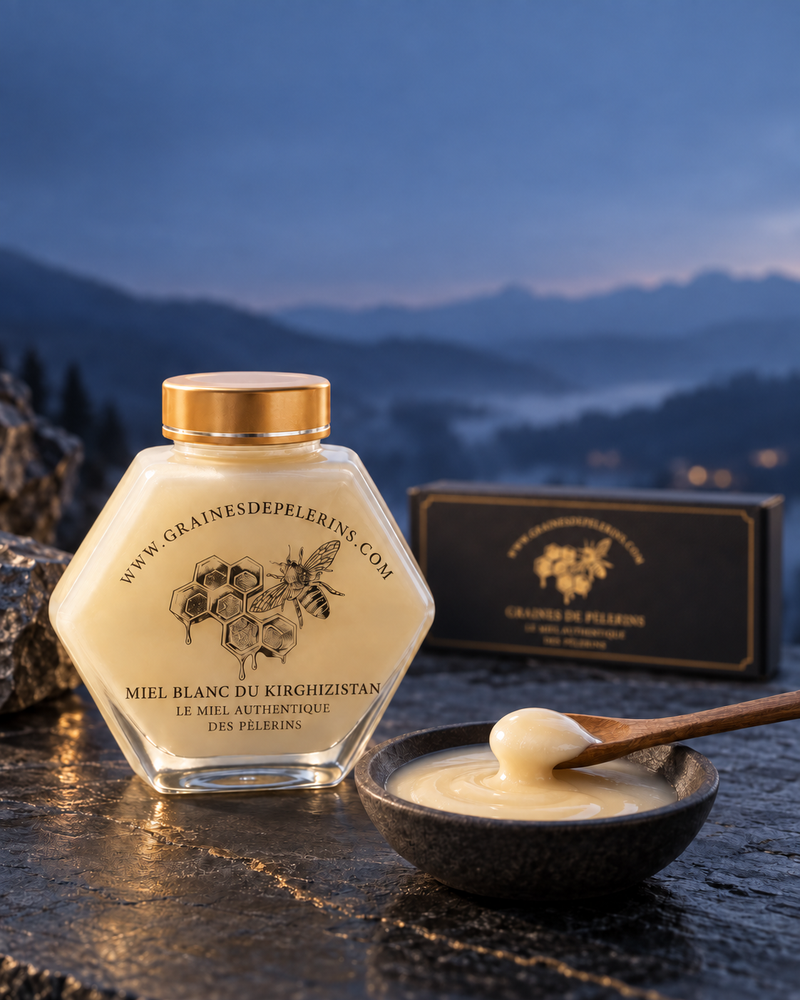
Classements
The best honey in the world: what the rankings say, what really counts
In 2025, the world beekeeping congress gave up awarding a honey. What contests and rankings are really worth, and the five criteria that ...
Read the articleDiscover our rare honeys
Four exceptional origins, limited harvests, gift boxes made for giving and for tasting.
See the collectionAlso worth discovering: our Almonds of Distinction