
How to store honey: how long it keeps, where and how
Honey does not go off like yoghurt, but it does not cross the centuries intact either. Best before date, open jar, fridge, crystallisation: how to keep each jar at its best.

In 1954, archaeologists uncovered bronze jars at Paestum, in southern Italy, left in a Greek sanctuary of the sixth century BC. Three successive teams analysed the sticky orange-brown substance inside without recognising honey: it took Oxford chemists, in 2025, to prove it. Honey does not go off like yoghurt, but it does not cross the centuries intact either. Between the legend and the reality, there is your cupboard.
Contents
Storing a rare honey, jar by jar

Does honey go off?
Not in the sense of a deadline. A jar of honey carries a best before date, not a use by date.
A best before date tells you how long a food keeps its appearance, smell, taste and texture. GOV.UK is plain: use-by dates relate to the safety of food, best before dates to quality, and after a best before date food is usually safe to eat but may not be of the same quality. On our jars, the best before date is printed on every label, as our frequently asked questions recall.
And the Paestum jars? After twenty-five centuries, nothing remained of the honey but a chemical signature: sugars, organic acids, royal jelly proteins. Honey changes slowly: storing it well means slowing that change.
Open jar: the three rules
An open jar is kept closed, dry, and sees nothing but a clean, dry spoon. Three gestures are enough, because honey’s main enemy is water.
Honey is highly hygroscopic: it takes up moisture from the air. According to the Swiss Bee Research Centre, it starts doing so once the air exceeds 60% relative humidity, a level most cellars exceed.
Why such rigour? Because water opens the door to fermentation. In England, honey must not have begun to ferment: the only honey the regulations allow to do so is baker’s honey, meant to be used as an ingredient.
Closed: screw the lid back on as soon as you have served. Dry: keep it away from the sink, the kettle and the dishwasher. Clean spoon: never the one that has just come out of the tea or the yoghurt, never a buttery knife that leaves crumbs.
Fridge, cupboard, kitchen: where to keep it
In a dark cupboard, at room temperature, away from the oven, the hob and the window. Never in the fridge: this is the instruction on each of our product pages.
Here is the paradox few people know: it is not deep cold that sets honey, it is coolness. Crystallisation is fastest between 10 and 18 °C, with a constant 14 °C ideal. In the freezer, on the contrary, honey stays liquid longer.
The fridge adds nothing: the cold thickens honey, and the spoon struggles. Heat, for its part, spoils in silence. The Swiss Bee Research Centre recommends a cool, dry place with no strong smell, and its trials show that honey stored in light and warmth darkens: a sunny windowsill is the worst place in the kitchen.
Crystallisation: normal, reversible, no strong heat
Honey that hardens or turns pale is not spoiled: it is crystallising, and that is natural. The process is reversible, provided you never heat it hard.
It all comes down to glucose, more or less abundant depending on the flower: read why honey crystallises. Two details often surprise. Above 25 °C, honey crystallises slowly, but in coarse crystals. And the fine white marbling that sometimes appears against the glass has a name, frosting: air lodged between the crystals, a natural phenomenon.
To get a runnier honey back, a lukewarm water bath is enough, never above 40 °C, stirring gently. Never the microwave: Agroscope, the Swiss agricultural research centre, advises against it because it alters the honey. English law points the same way: honey must not have been heated so that its natural enzymes are destroyed or significantly inactivated.

What really spoils honey
Three things spoil honey: water, heat and light. Time acts slowly when the jar is well kept.
Water first. When a too-damp honey crystallises, it sometimes separates into two layers. The upper one, more watery, is where yeasts can multiply and start fermentation. The regulations cap water content at 20% for most honeys.
Heat next. It raises HMF, a compound whose high level signals, in the words of the Michel Bocquet laboratory, “ageing or heating of the honey”. The legal limit is 40 mg/kg. According to the values published by the Swiss Bee Research Centre, it takes several years to reach it at 20 °C, and one to two months at 40 °C.
And our jars? The published analyses give the figures.
| Honey | Water measured | What the laboratory notes |
|---|---|---|
| White Honey from Kyrgyzstan | 17.4% | Very fine, very supple crystallisation; HMF 2.7 mg/kg |
| Jujubier Honey from Yemen | 14.2% | Thick liquid |
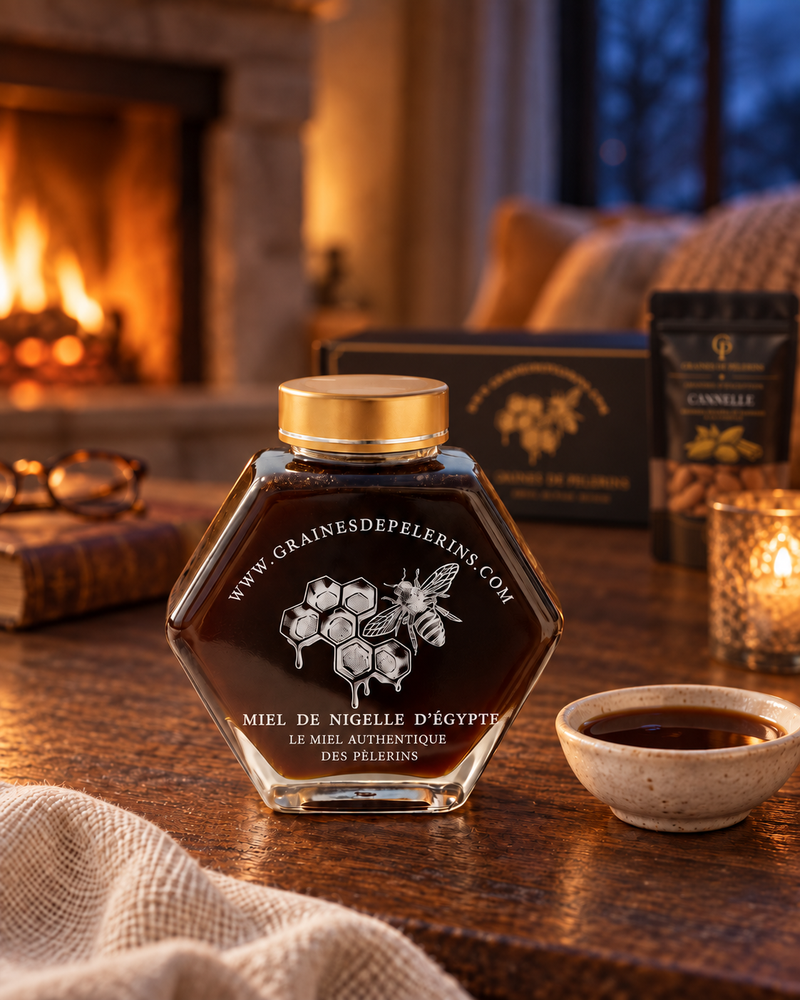
| Egyptian Black Seed Honey | 18.3% | Moisture within the norm; HMF 4.6 mg/kg |
CETAM reports M251998 and M253022, Michel Bocquet analysis of 3 February 2026. The Rose Aromiel from Russia, a honey-based preparation, is not in this table. All the documents are gathered on our page lab analysis and traceability.
Closed, dry, a clean spoon. Honey takes care of the rest.
The House’s storage ruleThe case of our four jars
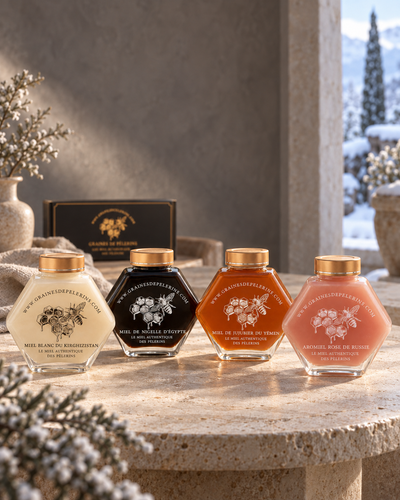
The House’s four jars are kept in the same way: closed, dry, away from light, never in the fridge. What changes is how each one evolves.
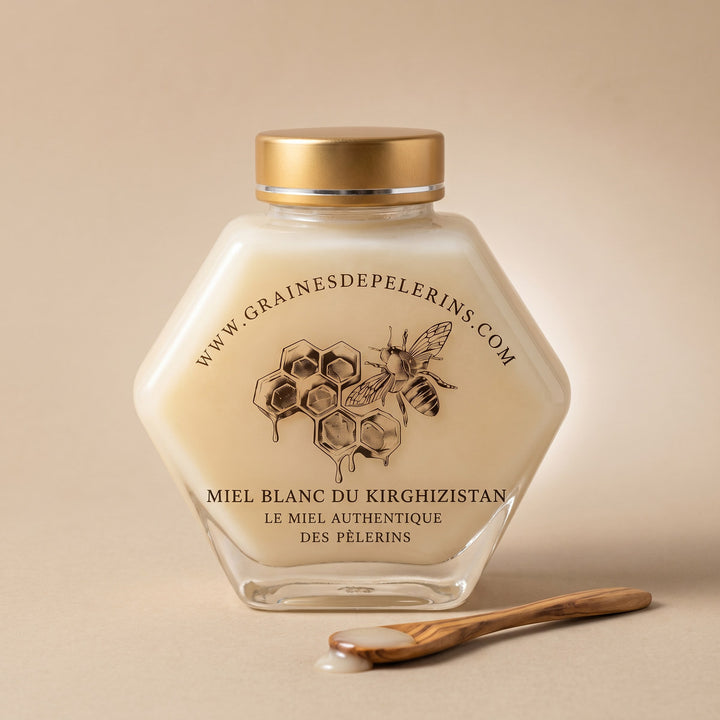
White Honey from Kyrgyzstan: the cream that forms by itself
The White Honey from Kyrgyzstan is a sainfoin honey, and sainfoin crystallises naturally into a very fine grain. Nothing is heated or whipped: the ivory cream forms by itself, in the jar. The laboratory noted a “very fine and very supple crystallisation”.
Do not try to make it runny: you would take away its signature. At room temperature, the spoon enters the cream and the trace closes behind it.
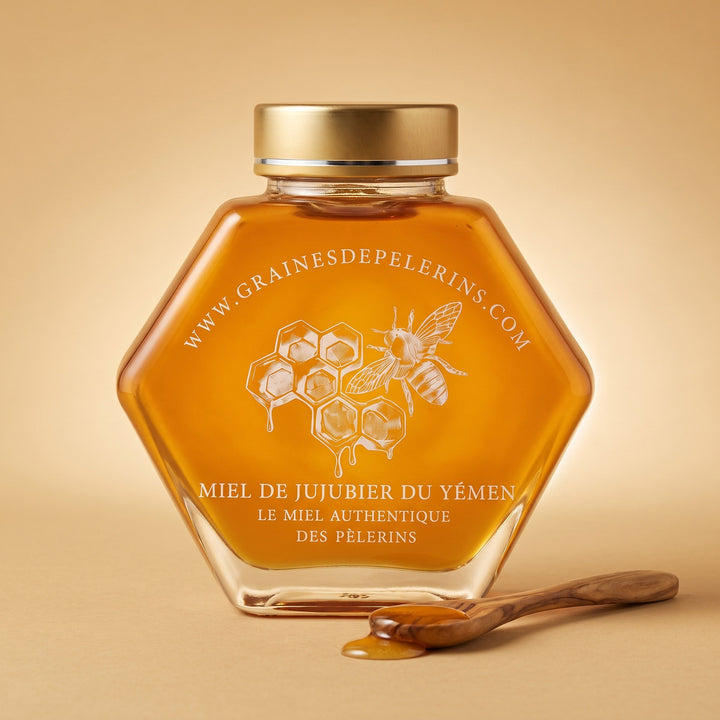
Jujubier Honey from Yemen: thick liquid, long finish
Our Jujubier Honey from Yemen is described by the laboratory as a “thick liquid”. With 14.2% water, it is the driest of our three analysed honeys. When it crystallises, slowly, its taste does not change.
One small spoonful at a time, then the lid back on at once: its finish of caramel and warm wood deserves it. On a mature blue cheese it takes its full measure; our festive honey and cheese board gives the pairings.
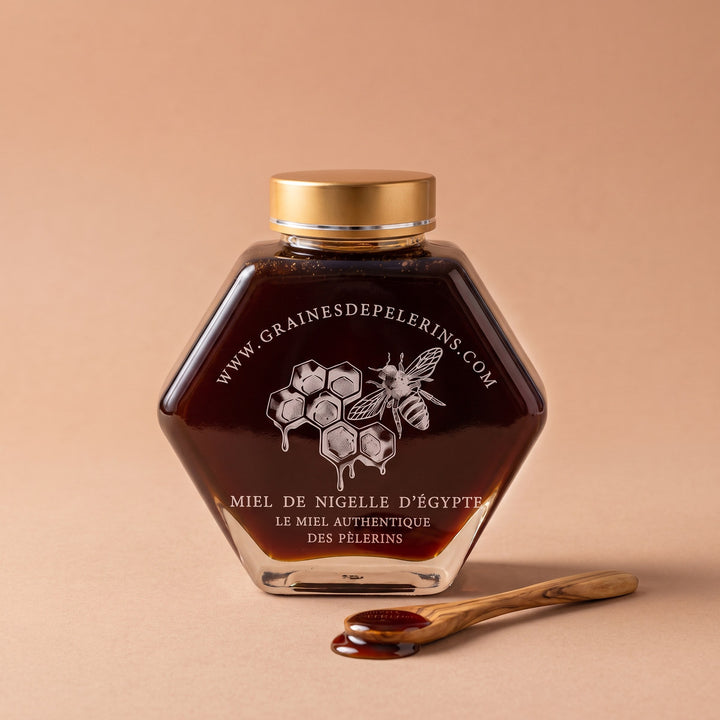
Egyptian Black Seed Honey: the dry spoon above all
The Egyptian Black Seed Honey pours thick and takes a moment to leave the spoon. Its analysis measures 18.3% water, a value the laboratory judges within the norm. It is also the highest of our three analysed honeys: for it, the dry spoon is not a precaution, it is a rule.
Raw, never heated or pasteurised, it may crystallise in time, at its own pace. Keep it away from the cooker and the kettle: its peppery finish, which comes from the flower, will wait for you.
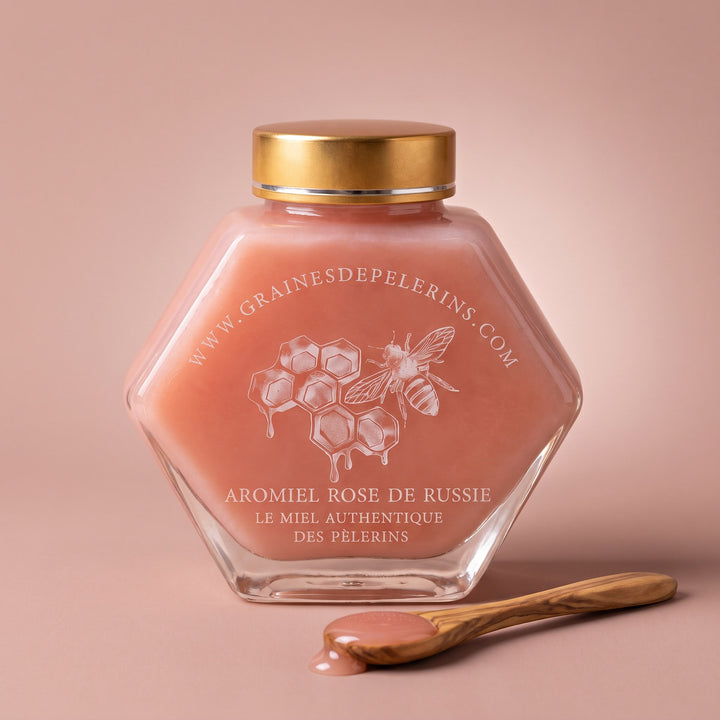
Rose Aromiel from Russia: a fragrance to protect from heat
The Rose Aromiel from Russia is not a honey but a preparation: acacia honey worked cold with a rosehip extract, the fruit of the dog rose. Its acacia base crystallises very slowly, and its creamy texture stays stable for a long time.
Its sensitive point is heat, because its fragrance is volatile: never above 40 °C, never in the microwave, and in tea, add it at the end. To understand what people call “rose honey”, read our explanation of the Rose Aromiel.

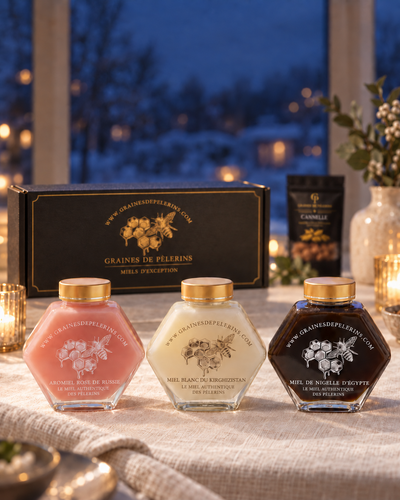
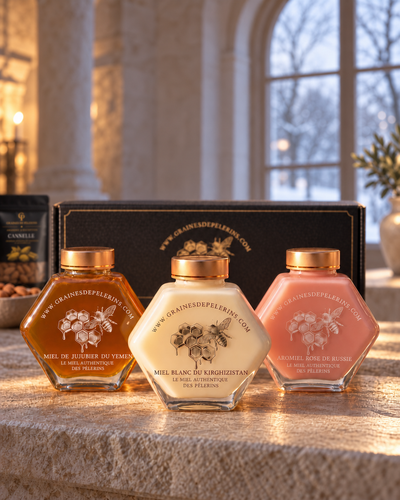
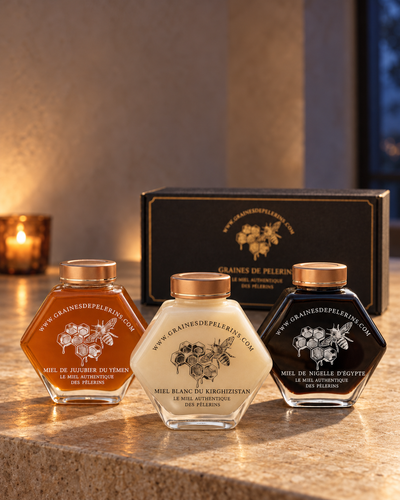
One last rule for those who like jars in reserve: open only one at a time, and let the others wait, closed, in the dark of their box. That is the logic of the 3-month ritual offered on each honey’s page, and of the box that brings three origins together.

Gift box · 3 origins together
The Ritual Box
Discover the gift boxFrequently asked questions
Does honey go off?
A honey carries a best before date, not a use by date. GOV.UK explains that use-by dates relate to the safety of food, whereas best before dates relate to quality. Keep the jar closed, dry and away from heat, and judge it by its appearance and smell.
How long can I keep an open jar of honey?
No regulatory period applies to an open jar: the reference remains the best before date printed on the jar. Close it after each use, take from it with a clean, dry spoon and keep it away from light and heat.
Should honey go in the fridge?
No. Cold thickens it and makes it hard to spoon, without adding anything. A dark cupboard at room temperature suits it better: that is the instruction on our product pages, never in the fridge.
My honey has hardened or turned pale: is it spoiled?
No, it is crystallising: a natural and reversible phenomenon. The white marbling against the glass, called frosting, is natural too. To make it runnier, a lukewarm water bath is enough, never above 40 °C and never in the microwave.
Sources
- University of Oxford, 30 July 2025: honey offering in a 2,500-year-old shrine (Journal of the American Chemical Society).
- Oxford Department of Chemistry: earlier analyses and composition of the residue
- GOV.UK: best before and use-by dates
- The Honey (England) Regulations 2015, Schedule 1: fermentation, enzymes, water content, HMF, baker’s honey.
- S. Bogdanov, Storage, crystallisation and liquefaction of honey (Agroscope) (in French).
- Agroscope: honey (in French).
- S. Bogdanov, Physical properties of honey: hygroscopy and viscosity.
- CETAM Lorraine, reports M251998 (14 October 2025) and M253022 (31 December 2025); Michel Bocquet laboratory, analysis of 3 February 2026: full documents on each product page.
The honeys in this article
Four jars, one rule
Creamy White Honey, amber Jujubier, peppery Black Seed, floral Rose Aromiel: four ways to taste an origin, by the spoonful, at room temperature.
Discover the rare honeys →In the same spirit: Is there a best honey in the world? · The gift box guide
Editorial information. The content of this article is strictly informative, cultural and sensory. It describes the geographical origin, the botanical composition, the aroma profile and the traditional uses of rare honeys. It is not medical advice, a diagnosis, or a recommendation for treatment. Honey is a foodstuff. For any medical question, consult a qualified professional. Compliant with Regulation (EC) No 1924/2006.
Continue exploring
Pairings
The 13 desserts of Christmas in Provence: who counted to thirteen?
Mistral counted only eleven. Where does thirteen come from, what really sits on the table at Christmas in Provence, and how to set your o...
Read the article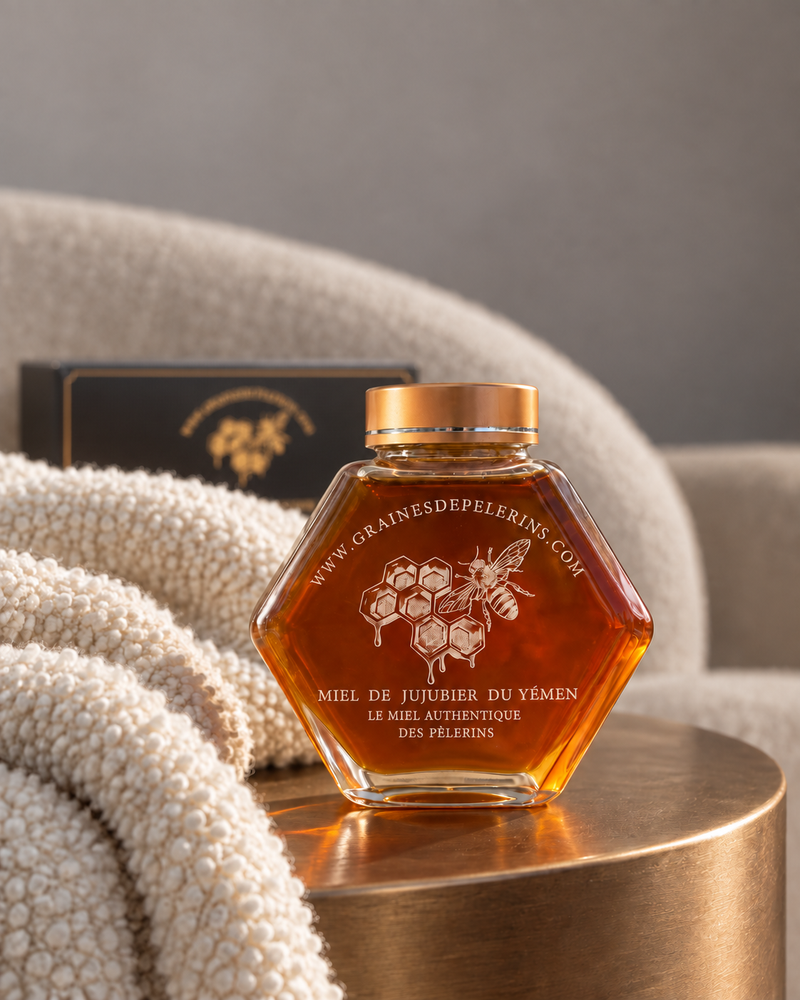
Guide
Pain d’épices: the story of French honey spice bread, and a real recipe
For centuries, pain d’épices was a loaf of honey and rye whose dough waited for weeks. From Reims to Nuremberg, its history, the part hon...
Read the article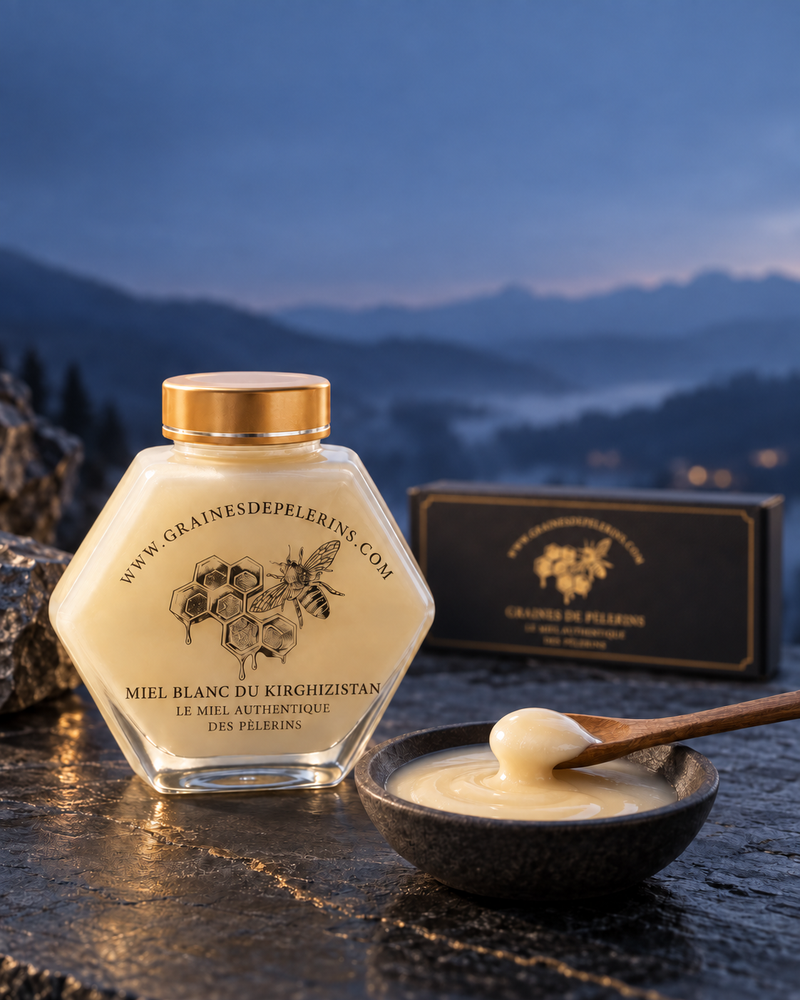
Classements
The best honey in the world: what the rankings say, what really counts
In 2025, the world beekeeping congress gave up awarding a honey. What contests and rankings are really worth, and the five criteria that ...
Read the articleDiscover our rare honeys
Four exceptional origins, limited harvests, gift boxes made for giving and for tasting.
See the collectionAlso worth discovering: our Almonds of Distinction