
Sidr, white or black seed: which of our three rare honeys should you choose?
Three rare honeys, three origins, three profiles. Here are the factual differences between Yemeni Sidr honey, White Honey from Kyrgyzstan and Egyptian Black Seed Honey, and how to choose for your own taste or for a gift.

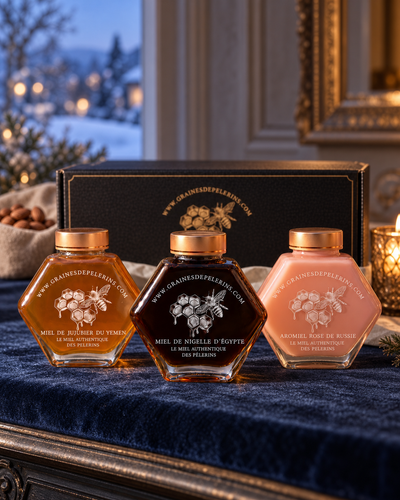
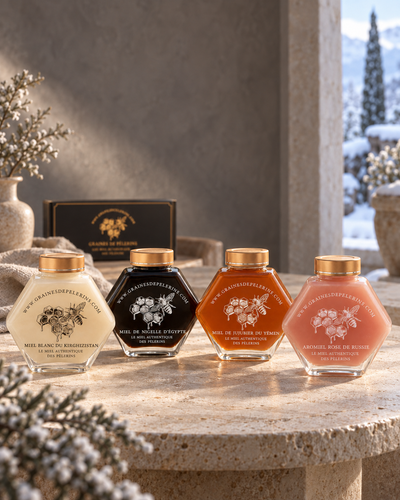
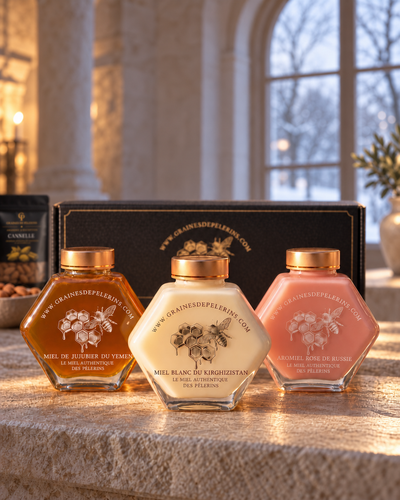
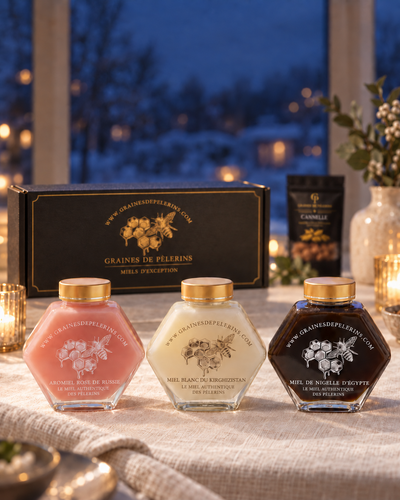
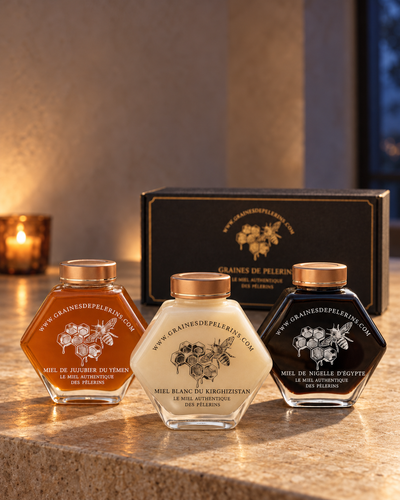
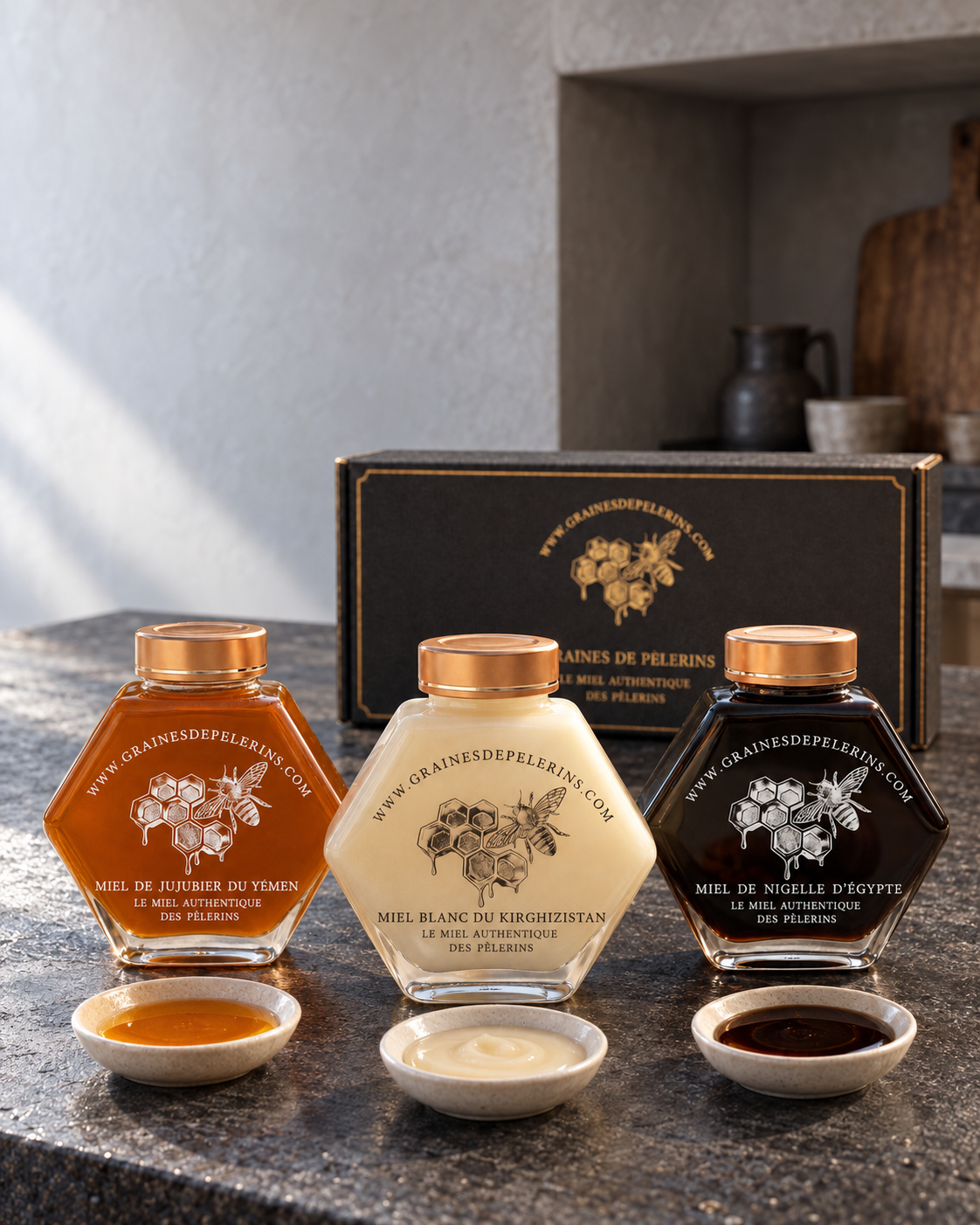
Three honeys, three worlds, three moments. Yemeni Sidr honey (jujube) comes from the desert; White Honey from Kyrgyzstan (sainfoin) from the high plateaux; Egyptian Black Seed Honey (Nigella) from the Nile Delta. Those three origins make up our Ritual Box, and bring together in one presentation box three sensory profiles that do not overlap. Here is what sets them apart, and how to choose the one that suits you.
Contents
Our three rare honeys compared
The comparison table
| Measure | Yemeni Sidr | White Honey, Kyrgyzstan | Black Seed, Egypt |
|---|---|---|---|
| Origin | Hadhramaut | Tien Shan, 2,200 to 3,000 m | Nile Delta |
| Botany | Ziziphus spina-christi | Onobrychis viciifolia | Nigella sativa |
| Flowering | Oct. to Nov. | June to Aug. | Feb. to Mar. |
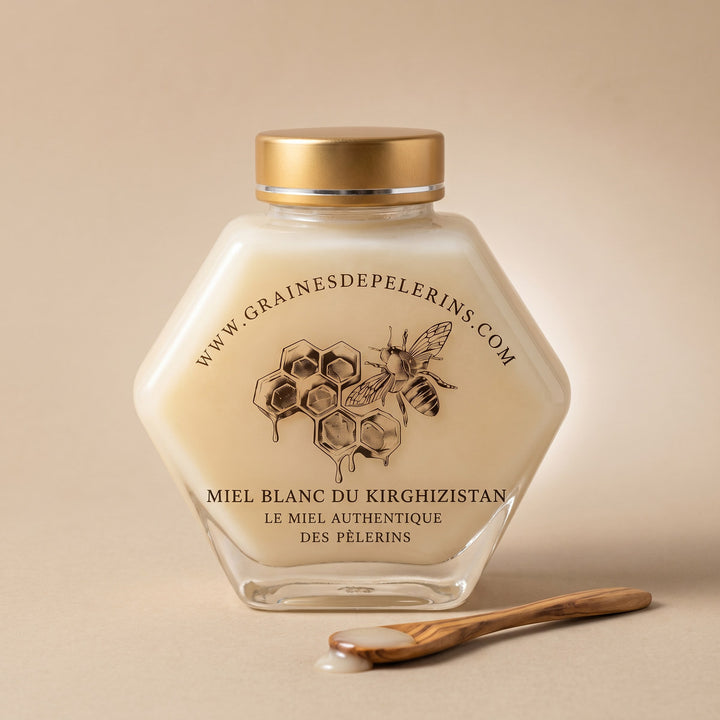
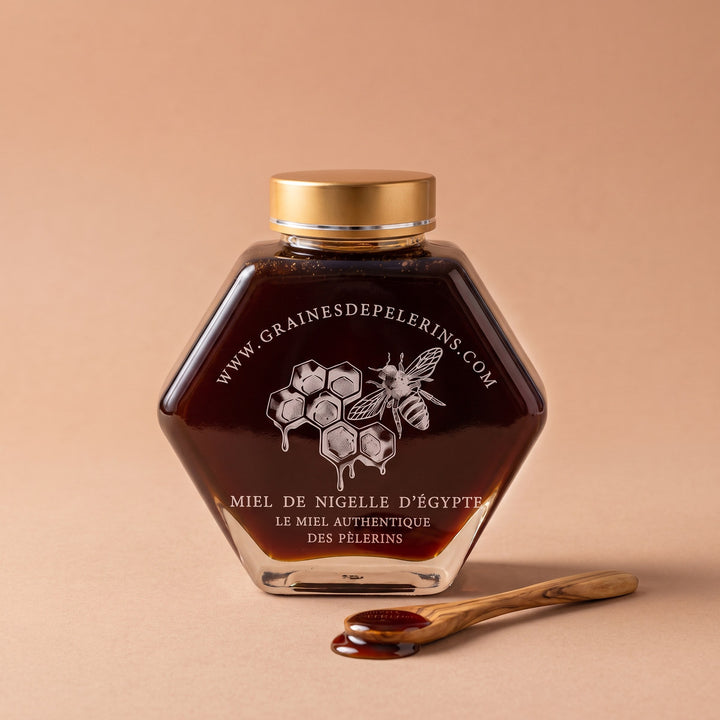
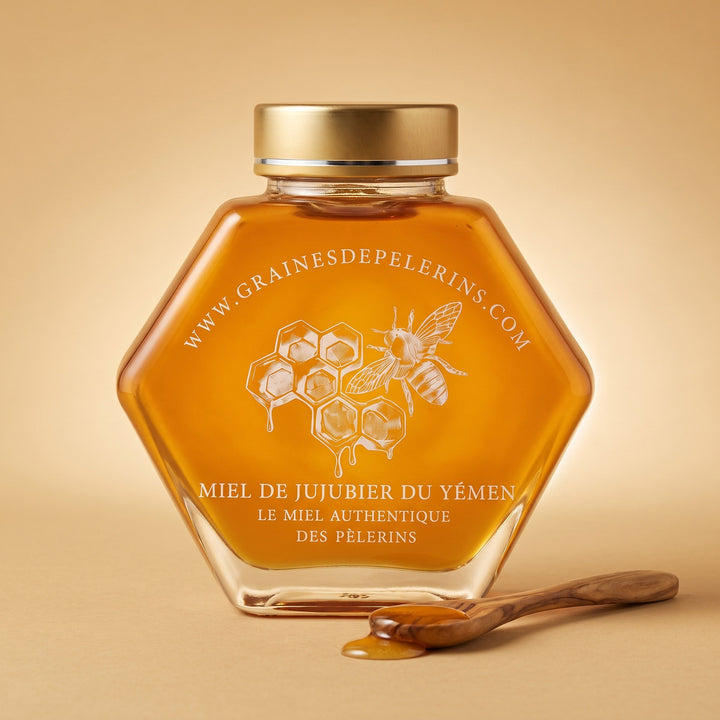
| Colour | Mahogany amber | Creamy ivory | Golden amber to brown |
| Texture | Dense and smooth | Fine and creamy | Dense |
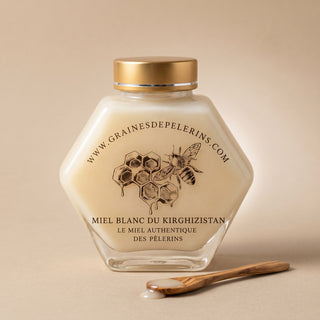
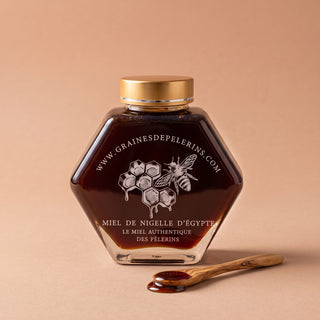
| Aromas | Woody and resinous | Milky and floral | Spiced and caramelised |
Origins: three regions of the world
Yemeni Sidr honey is born in the semi-desert valleys of the Hadhramaut, in south-east Yemen, during the October and November flowering. The White Honey is born on the Kyrgyz high plateaux of the Tien Shan, between 2,200 and 3,000 metres, in the Naryn Valley, before the snow closes the slopes in September. The Black Seed Honey is born in the Egyptian Nile Delta, during the short flowering of Nigella sativa in February and March. Our article on the producing regions covers each of them in detail.
Sensory profiles compared
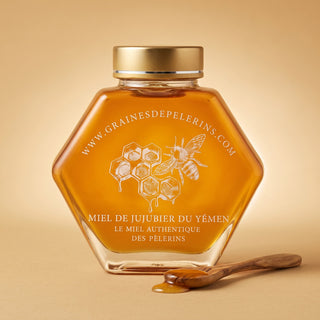
Yemeni Sidr honey opens on woody, resinous notes, a noble bitterness and a long finish. It is the most complex of the three, the one that asks for a palate already trained to hear all of its depth. The White Honey is all creamy softness, milky and floral: universally liked, with no risk of surprise. The Black Seed Honey starts on a spiced attack, a caramelised body and a woody finish, the most distinctive profile of the three and the one that always catches people out.
Three rare honeys, three taste memories. None of them resembles another, and that is exactly what makes them irreplaceable.
The Graines de Pèlerins doctrineWhich honey for which moment
First thing in the morning: all three, one after the other, to explore. With a black Earl Grey or a Lapsang Souchong: Yemeni Sidr honey. With a delicate green tea or a white tea: White Honey from Kyrgyzstan. With an arabica coffee: Egyptian Black Seed Honey, whose spiced and woody contrast sets off an aromatic explosion. On cheese: Sidr honey with blue, Black Seed Honey with Comté, White Honey with fresh goat's cheese. In Greek yoghurt: the White Honey, whose creamy texture finds its best match there.
How to taste all three
To compare them properly, set up a horizontal tasting: three teaspoons, three glasses of water to rinse the mouth between each, and a neutral plate such as sourdough bread or a cracker. Begin with the White Honey, the most delicate, so as not to saturate the palate. Then Yemeni Sidr honey, the middle profile. Finish with the Black Seed Honey, the most intense. That order lets each profile speak fully.
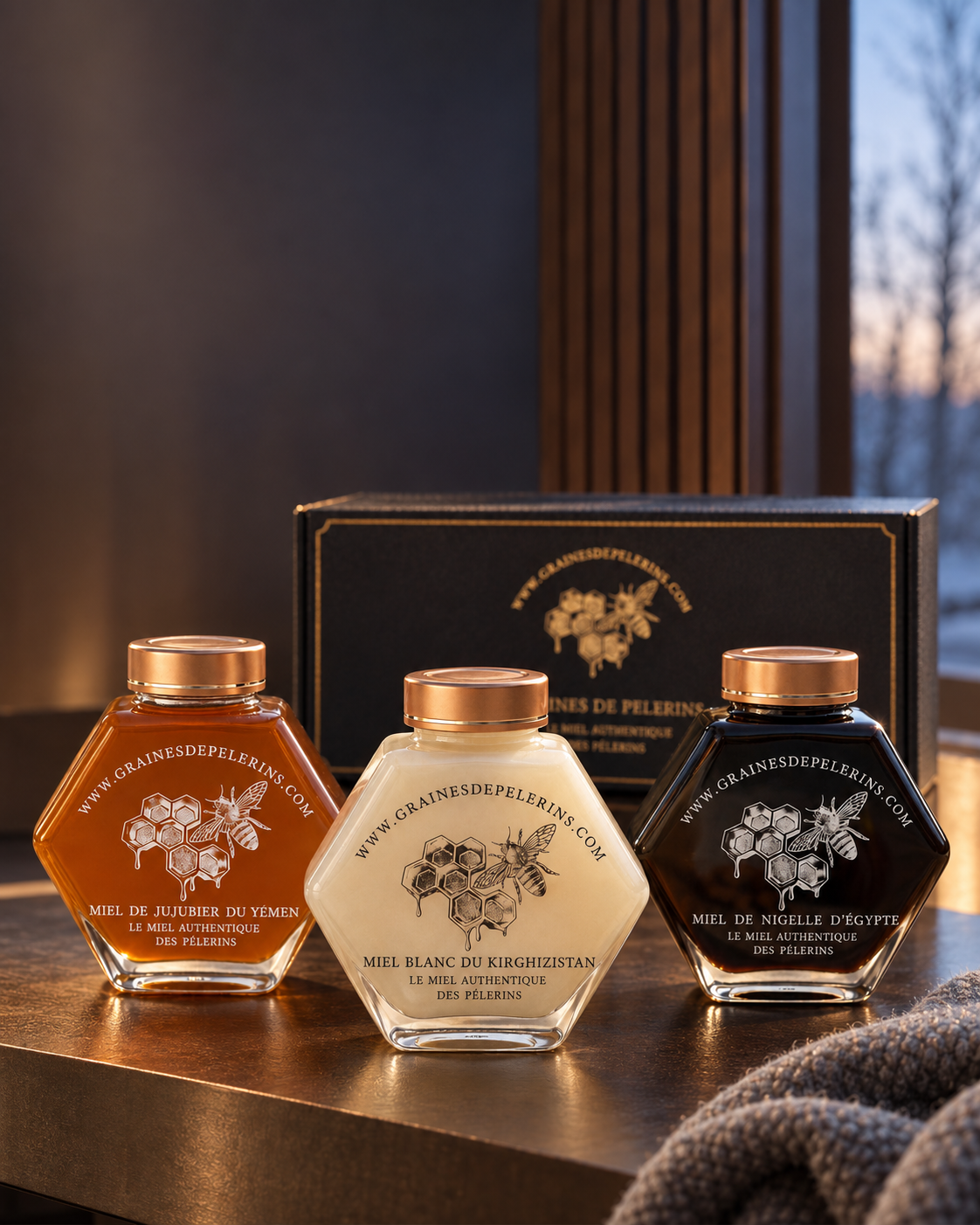
Gift box · All three together
The Ritual Box
Discover the gift boxGo further
- Yemeni Sidr honey: the complete guide
- Why White Honey from Kyrgyzstan is unlike any other
- The black seed honey ritual
- The seven rarest honeys in the world
Sources & References
- Al-Khalifa M. & Al-Arifi A. Ziziphus spina-christi: physico-chemical characterization. Saudi J Biol Sci, 2007.
- Mavromoustakos T. et al. Onobrychis viciifolia botanical profile. Apidologie, 2014.
- Aboubakr H.A. et al. Nigella sativa: traditional uses. Asian Pacific J Trop Biomed, 2017.
Discover
Discover all three in one gift box
Yemeni Sidr, White from Kyrgyzstan, Black Seed from Egypt: three origins to taste side by side.
See the gift boxes →In the same spirit: Which honey should you choose? · The complete guide to Yemeni Sidr honey
Editorial information. The content of this article is strictly informative, cultural and sensory. It describes the geographical origin, the botanical composition, the aroma profile and the traditional uses of rare honeys. It is not medical advice, a diagnosis, or a recommendation for treatment. Honey is a foodstuff. For any medical question, consult a qualified professional. Compliant with Regulation (EC) No 1924/2006.
Continue exploring
Pairings
The 13 desserts of Christmas in Provence: who counted to thirteen?
Mistral counted only eleven. Where does thirteen come from, what really sits on the table at Christmas in Provence, and how to set your o...
Read the article
Guide
Pain d’épices: the story of French honey spice bread, and a real recipe
For centuries, pain d’épices was a loaf of honey and rye whose dough waited for weeks. From Reims to Nuremberg, its history, the part hon...
Read the article
Classements
The best honey in the world: what the rankings say, what really counts
In 2025, the world beekeeping congress gave up awarding a honey. What contests and rankings are really worth, and the five criteria that ...
Read the articleDiscover our rare honeys
Four exceptional origins, limited harvests, gift boxes made for giving and for tasting.
See the collectionAlso worth discovering: our Almonds of Distinction