
Crystallised honey: why it happens, is it still good, what to do
Is crystallised honey still good? Yes. Why it sets, how to soften it without strong heat, and how to keep an open jar.
In short: yes, crystallised honey is still good. Crystallisation is the natural evolution of a raw honey; it changes neither its taste nor its quality. To soften it, stand the closed jar in a lukewarm water bath, below 40 °C, for a few minutes. Avoid the microwave and keep the jar closed, away from moisture.
A honey can move from a runny texture to a crystallised one. On its own, this natural change proves neither that the honey is genuine, nor that it is raw, nor that it has not been heated. Above all, it helps you understand the texture you see in your jar.
Contents
Why honey crystallises

A natural chemical process
Honey is made up mainly of fructose and glucose, in varying proportions. Part of the glucose can form crystals: their size and number shape the texture. The composition of the honey and the way it is stored both play a part in this change.
What texture does not prove
Crystallisation can be a normal change. It is not a certificate of authenticity: some honeys naturally stay runny for a long time, and appearance alone does not reveal their history. If you have doubts about a product, look at the batch information and the relevant documents.
A crystallised texture tells of a change in the honey. It does not replace proof of origin or authenticity.
The Graines de Pèlerins doctrineWhy some honeys crystallise fast and others slowly
The speed of crystallisation depends notably on the balance of sugars, the water content and storage conditions. A honey richer in glucose may crystallise faster; some compositions stay runny longer. No fixed timetable can be promised for every batch of a given honey.
Textures to observe, with no guaranteed timetable
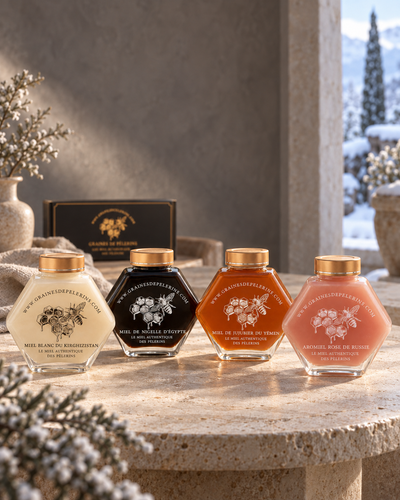
| Honey | How it changes | Tasting note |
|---|---|---|
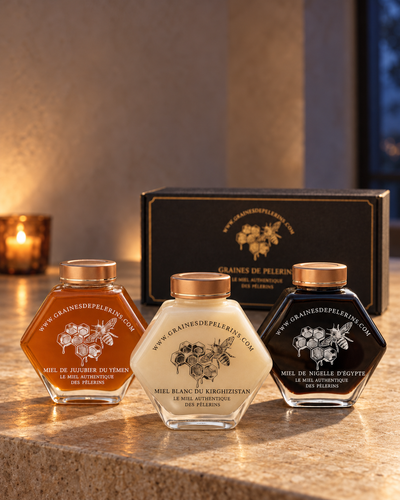
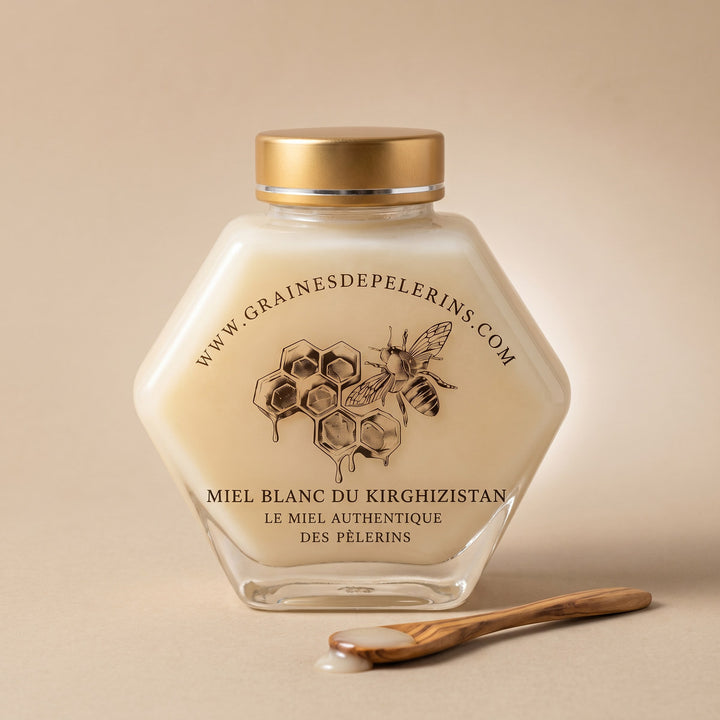
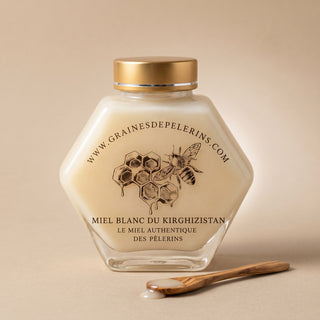
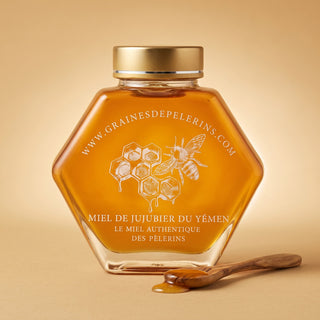
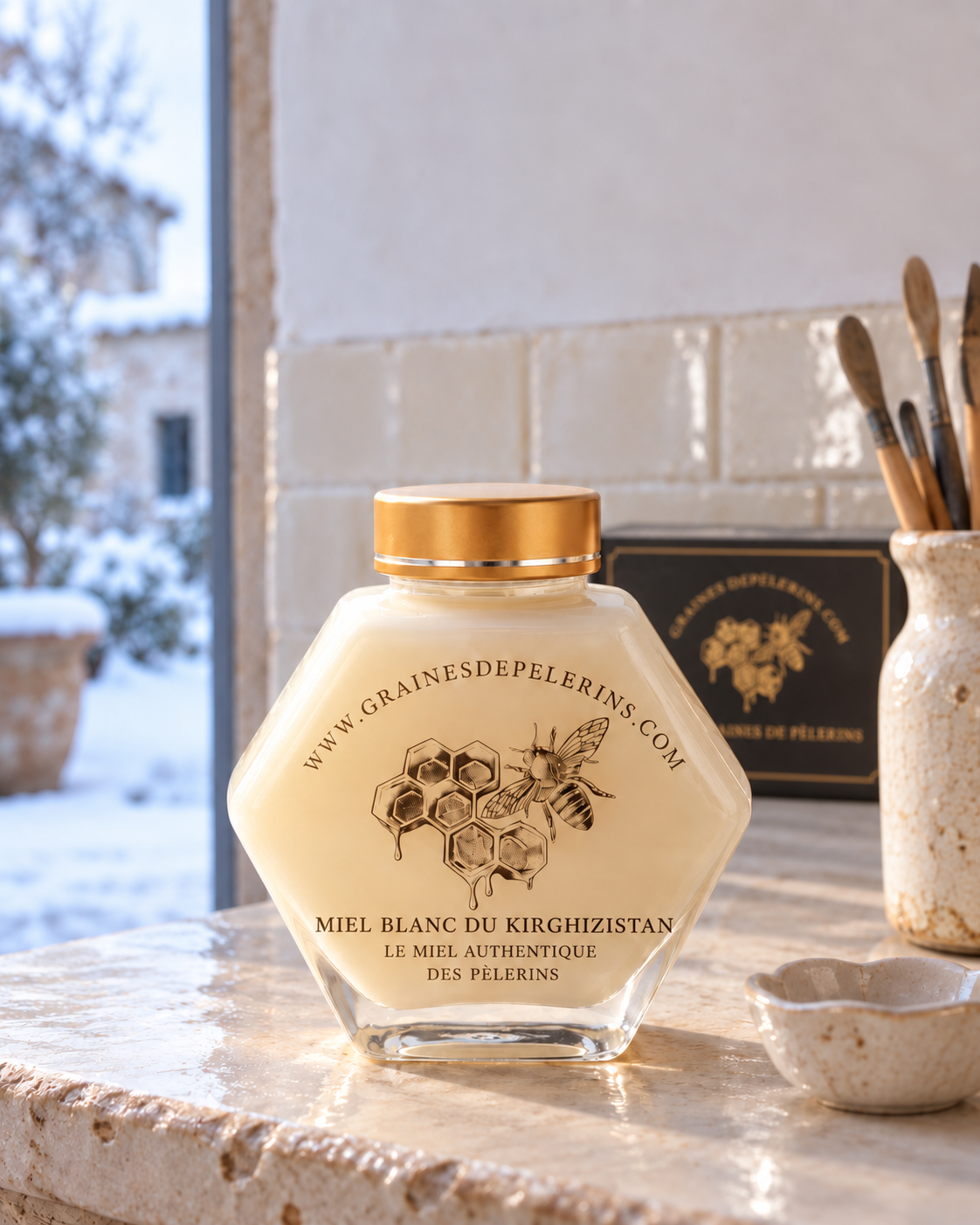
| White Honey from Kyrgyzstan | Varies with the batch and storage | Creamy ivory texture |
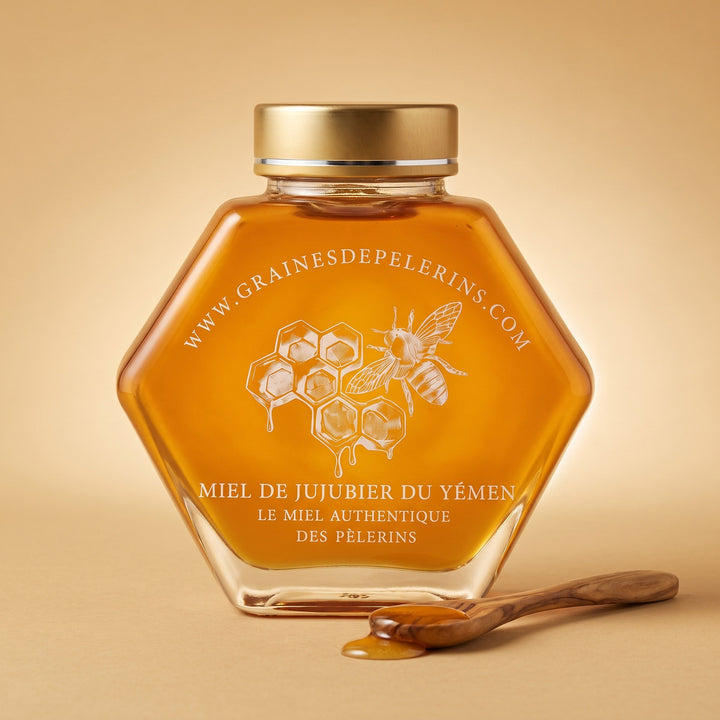
| Yemeni Sidr Honey | Varies with the batch and storage | Dense texture |
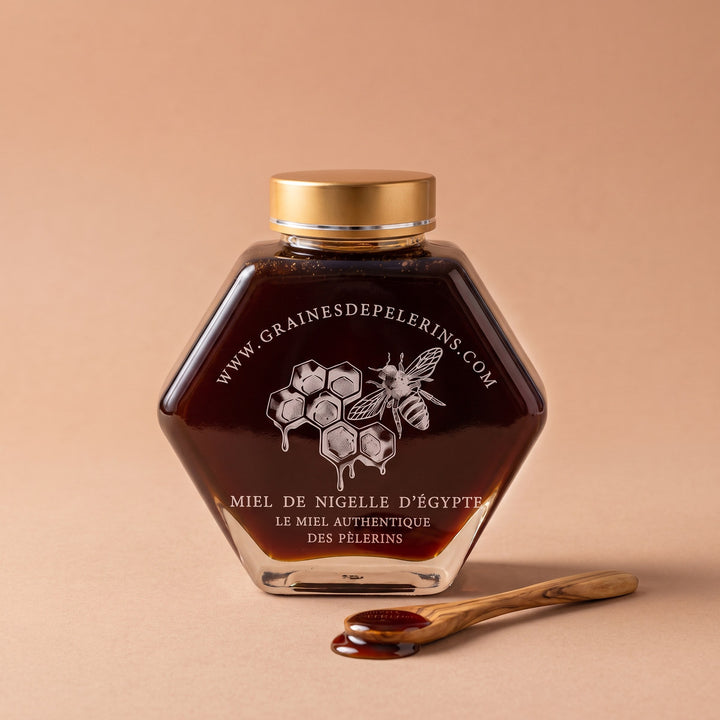
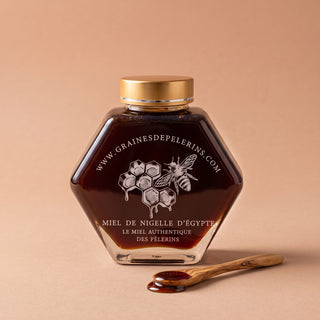
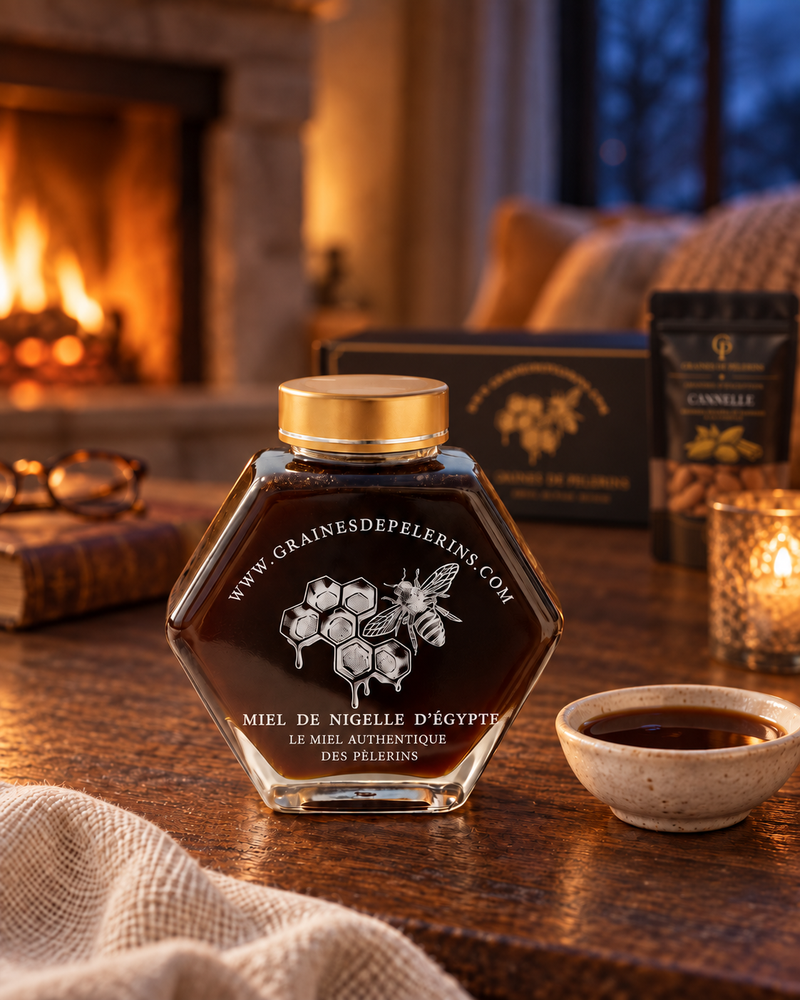
| Egyptian Black Seed Honey | Varies with the batch and storage | Dense, peppery profile |
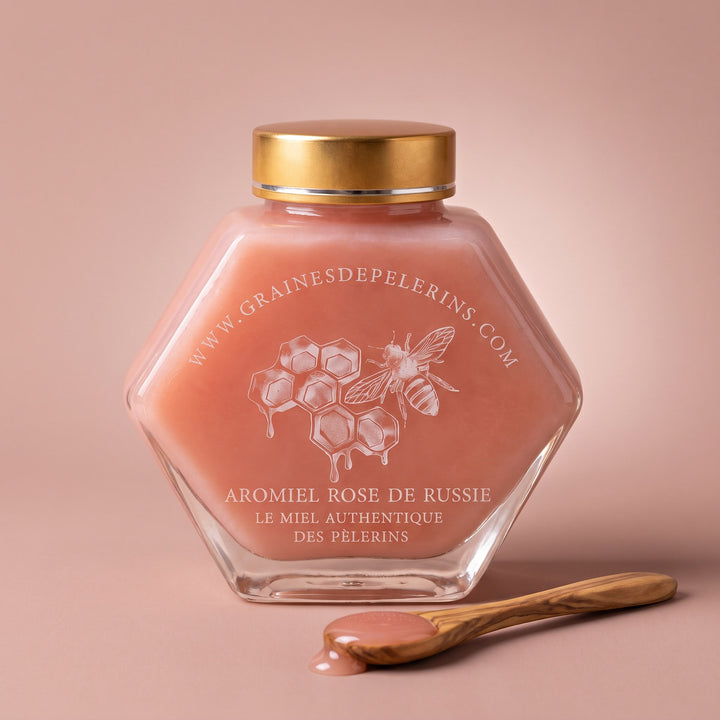
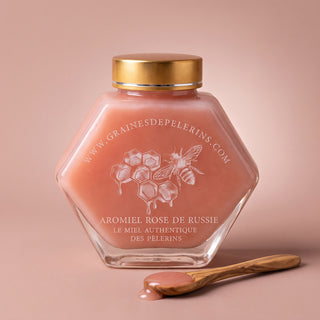
| Rose Aromiel | A honey-based preparation: a separate category | Creamy pink texture |
How to bring honey back to liquid
If you prefer a softer texture, you can gently warm the jar in a lukewarm water bath, with no direct contact with a strong source of heat. Stir with a clean, dry spoon. Avoid boiling water and strong or prolonged heating; the time needed varies with the jar and its state.

Creamy texture
White Honey from Kyrgyzstan 26,90 €
Discover the honeyGo further
- How to spot a genuine raw honey
- How to choose honey
- Why White Honey from Kyrgyzstan is unlike any other
- Our three rare honeys compared
Sources & References
The honey in this article
White Honey from Kyrgyzstan
An ivory, creamy, melting texture to discover. The documents available on the product page state their own scope.
Discover the White Honey →In the same spirit: How to spot a genuine honey · Why the White Honey stands apart
Editorial information. The content of this article is strictly informative, cultural and sensory. It describes the geographical origin, the botanical composition, the aroma profile and the traditional uses of rare honeys. It is not medical advice, a diagnosis, or a recommendation for treatment. Honey is a foodstuff. For any medical question, consult a qualified professional. Compliant with Regulation (EC) No 1924/2006.
Continue exploring
Pairings
The 13 desserts of Christmas in Provence: who counted to thirteen?
Mistral counted only eleven. Where does thirteen come from, what really sits on the table at Christmas in Provence, and how to set your o...
Read the article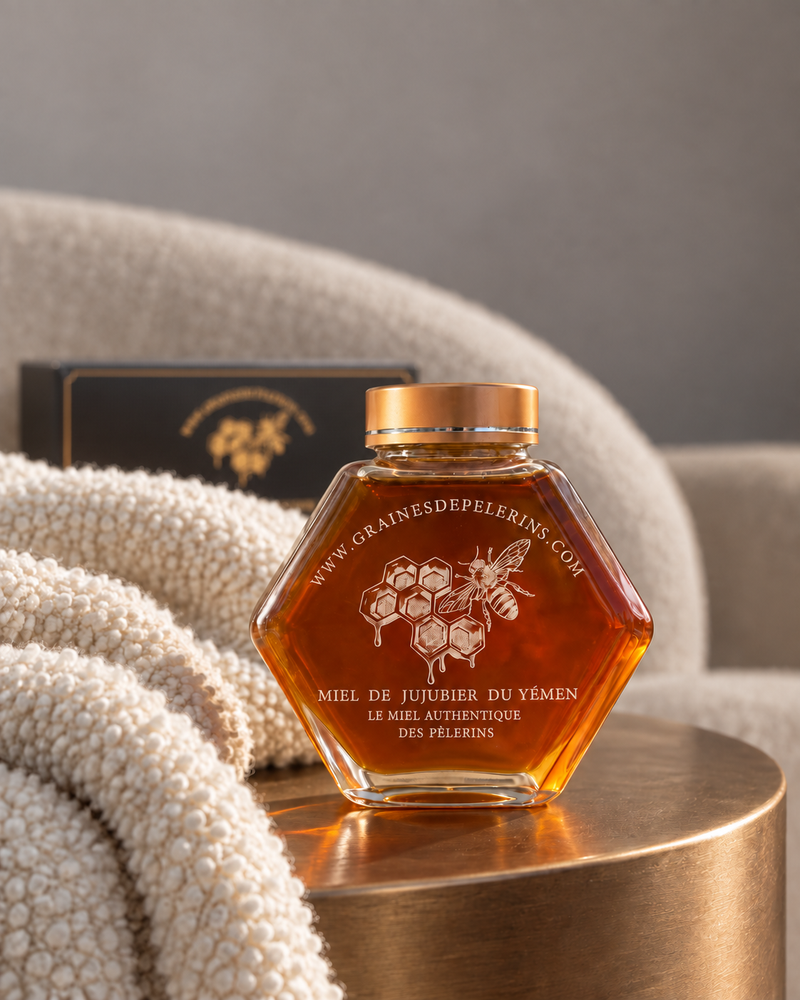
Guide
Pain d’épices: the story of French honey spice bread, and a real recipe
For centuries, pain d’épices was a loaf of honey and rye whose dough waited for weeks. From Reims to Nuremberg, its history, the part hon...
Read the article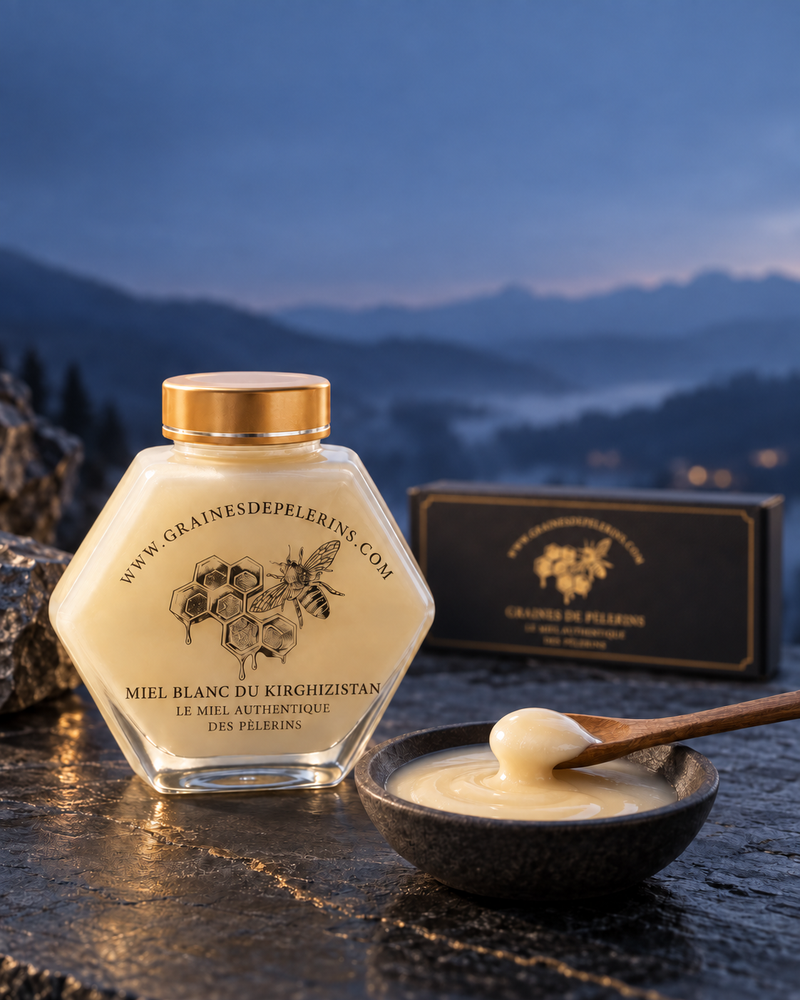
Classements
The best honey in the world: what the rankings say, what really counts
In 2025, the world beekeeping congress gave up awarding a honey. What contests and rankings are really worth, and the five criteria that ...
Read the articleDiscover our rare honeys
Four exceptional origins, limited harvests, gift boxes made for giving and for tasting.
See the collectionAlso worth discovering: our Almonds of Distinction