
Rose honey: what the Rose Aromiel from Russia really is
What people call rose honey owes nothing to petals: its colour comes from the fruit of the dog rose. The Rose Aromiel from Russia explained, from hedgerow to spoon.
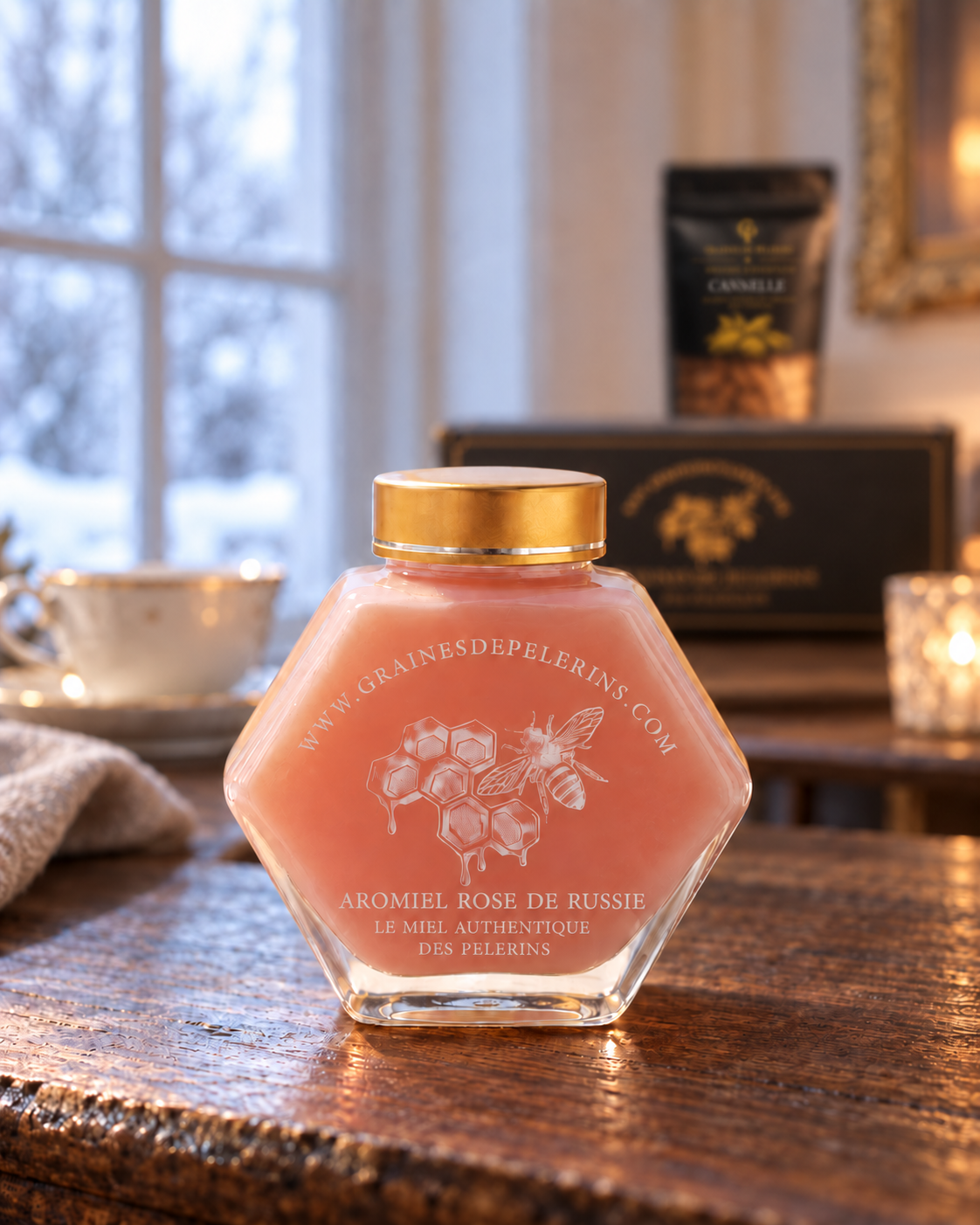
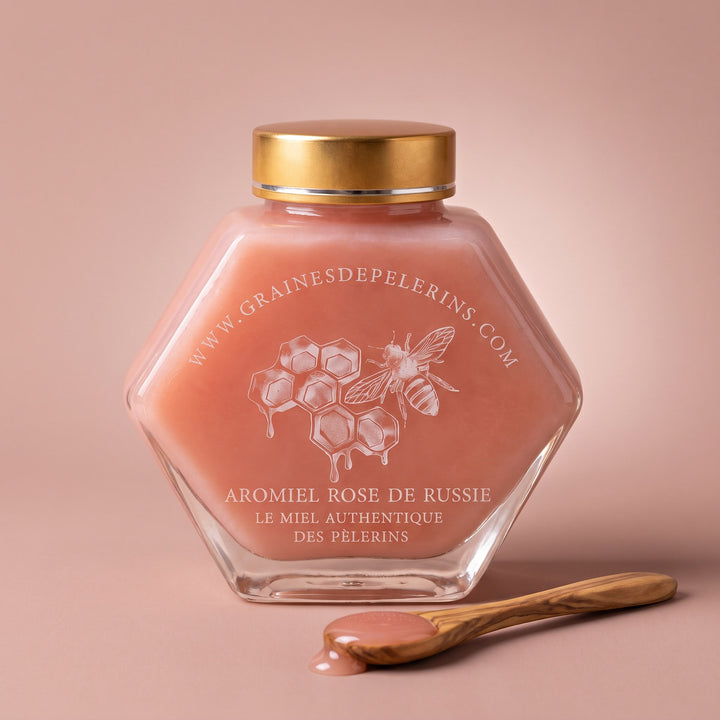
The colour of what people call “rose honey” comes from no petal at all. It comes from a small red fruit of the hedgerow, whose inner hairs are what we know as itching powder. That fruit is the rosehip. Worked cold into an acacia honey, following a Russian beekeeping tradition, it gives the Rose Aromiel from Russia. Here is what it really is, where its colour comes from, and how to serve it.
Contents
The Rose Aromiel, from hedgerow to spoon

Why do people say “rose honey”?
Because its colour is rose, quite simply: we name what we see. But behind the nickname sits a honey-based preparation, not a honey made from rose blossom.
The word is right on colour and silent on the recipe. To understand, go back to the source of that pink.
A colour from the fruit, not the flower
The rosehip is the fruit of the dog rose, the wild rose of the hedgerow. To a botanist it is even a false fruit: the red-orange flesh you pick grows from the base of the flower, and the true fruits are the small hairy achenes hidden inside. Their hairs are the itching powder that gave the French rosehip a nickname, gratte-cul, literally “scratch-bottom”.
That flesh is rich in carotenoids, the pigments of coloured fruit. Researchers measure lycopene there in abundance, the red pigment of the tomato. Melted into a pale acacia honey, that orange-red turns powder pink. The composition fits in two ingredients, acacia honey and rosehip extract: the colour is entirely natural.
Honey, aromiel, honey-based preparation: the right words
In France the rule is plain: as soon as an ingredient is added to honey, the product can no longer legally be called honey. It takes a descriptive name, such as “honey-based preparation”. The logic is the same in England: under the Honey (England) Regulations 2015, honey is a product to which no food ingredient has been added, apart from other honey.
That is exactly the case here. The Rose Aromiel from Russia is a honey-based preparation; “rose honey” is a search-box shorthand, not a name. In “aromiel” you can hear both halves at once: miel, the French for honey, and the aroma of a fruit that joins it. Our selection of seven discoveries among the rare honeys of the world sets it apart for this reason.
Why the dog rose, then, and why Russia?
How the Rose Aromiel from Russia is made
It is born of an acacia honey and a rosehip extract, worked cold in a Russian beekeeping tradition. No essential oil, no synthetic flavouring.
The dog rose and the autumn harvest
The dog rose, Rosa canina, is a shrub of rare toughness. Against the apse of Hildesheim Cathedral, in Germany, grows a rose that tradition dates back to 815, presented as the oldest living rose in the world. In March 1945 the cathedral was destroyed and the rose burned. Eight weeks later, twenty-five new shoots rose from its roots, buried under the rubble.
Its fruit ripens in autumn, in October and November, and often hangs in the hedgerows all winter. Patient pickers wait for the first frosts, which soften it. Its scientific name comes from the Greek kunorhodon: the “dog rose”.
In Russia, the wild rose is called shipovnik, from a word meaning thorn. And honey is written into the language itself: the bear, medved, is literally “the one who eats honey”. In that country, marrying the fruit of the hedgerow to the sweetness of the hive feels obvious.
Worked cold
The rosehip is worked cold with the honey. The choice is not trivial: the fragrance of the Aromiel is volatile, and we recommend never taking it above 40 °C.
Acacia honey keeps a surprise of its own: it does not come from an acacia. It comes from the black locust, or false acacia, a tree of the Appalachians. In 1601 Jean Robin, herbalist to Henri IV, planted one in Paris: the locust in the Square René-Viviani is today the oldest tree in the city. Its honey is pale and crystallises very slowly, an ideal canvas on which to let a fruit speak.
The pink does not come from the flower. It comes from the fruit.
Worth rememberingThe taste: powder pink, floral, a fruity finish
First the acacia blossom, then the tender fruitiness of rosehip, never overpowering. A sweetness that accompanies rather than covers.
The rosy cream coats the spoon. Let it melt on the tongue, mouth closed. The floral note opens first, round and clean. Then the fruit arrives, discreet, like the memory of autumn berries in a hedgerow.
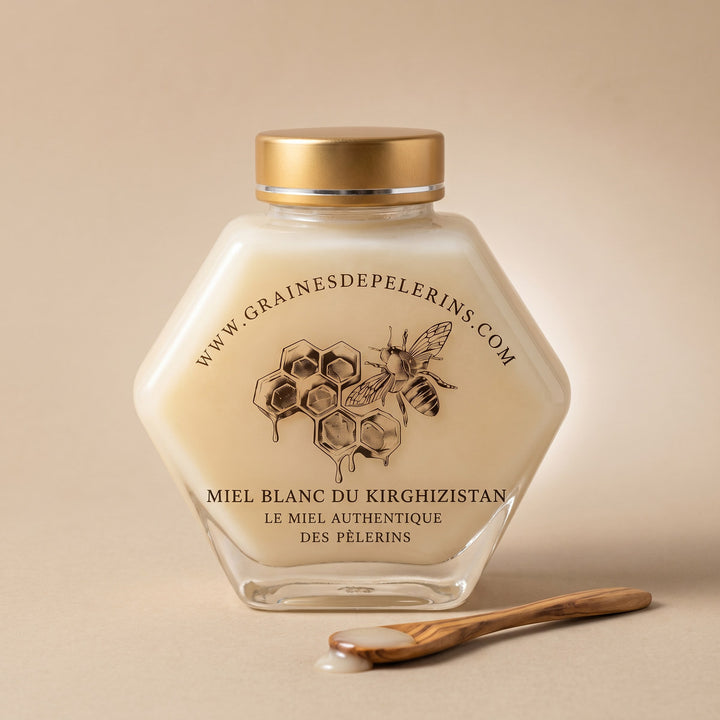
For lovers of delicate creams, the natural comparison is the White Honey from Kyrgyzstan, a sainfoin honey with an ivory cream: the same delicacy, another flower, and no preparation.

Rose honey, rose blossom honey, Russian honey: telling them apart
Three expressions, three realities. “Rose honey” describes a colour, “rose blossom honey” suggests a flower, “Russian honey” names an origin.
| The expression | What it means | Our Aromiel? |
|---|---|---|
| Rose honey | A colour, the one you see in the jar | Yes: it is how people search for it |
| Rose blossom honey | A honey that would come from rose flowers | No: its colour comes from the fruit |
| Russian honey | Any honey harvested in Russia, in every colour | In part: a preparation in the Russian tradition |
The right reflex: read the name and the ingredients on the label. They tell you whether it is a honey or a honey-based preparation, long before the colour does.
Three ways to serve it
In a pale tea, on yoghurt, or on a festive board with fresh goat’s cheese. Always at the end, never above 40 °C.
At teatime. Let a pale tea cool for a moment, then slip in a spoonful of Aromiel at the last second. Its fragrance is volatile: too much heat would lose it before the first sip.
At breakfast. On sheep’s milk yoghurt, with a few red berries or citrus segments. Or simply on toasted brioche.

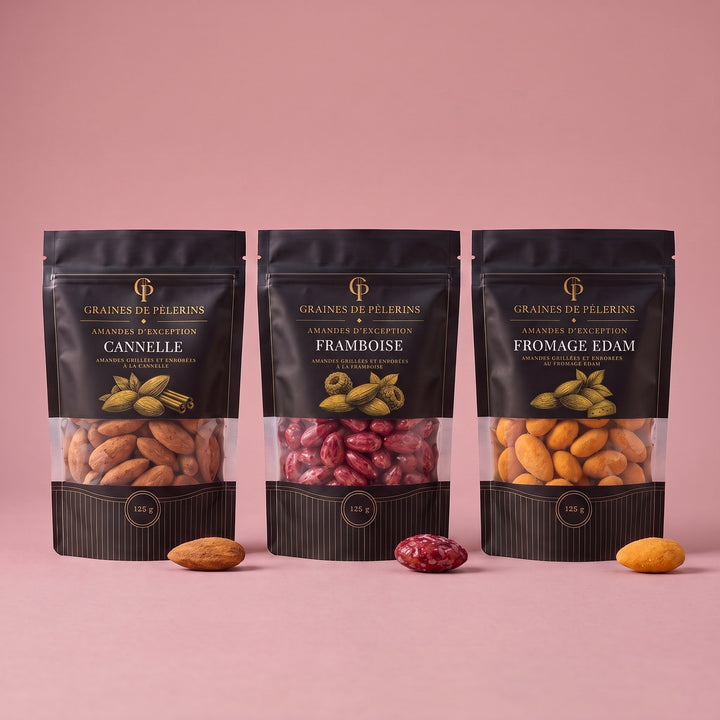
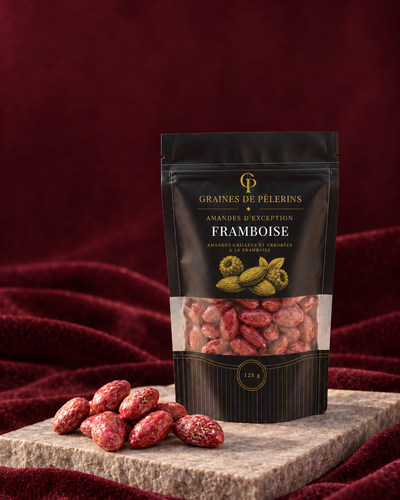
On the festive board. Fresh goat’s cheese, a panna cotta, and beside them a small dish of Raspberry Coated Almonds: the flower, then the red fruit, then the crunch. It is one of our honey and almond pairings, and it finds its natural place on a festive honey and cheese board.

Russia · Honey-based preparation
Rose Aromiel from Russia
Discover the Rose AromielAnd once the jar is open, how do you keep that cream intact?
Storage and texture over time
At room temperature, jar tightly closed, away from light, and never above 40 °C. A clean, dry spoon every time.
The best before date is printed on the jar. If the cream firms up in a cool room, there is nothing wrong: its base is a honey, and honey lives at its own pace. To understand the phenomenon, read why honey crystallises; for the everyday gestures, our guide to storing honey.
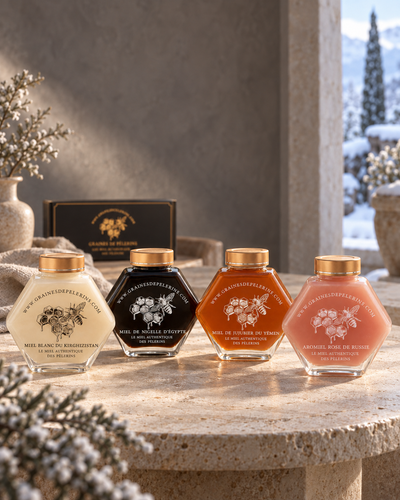
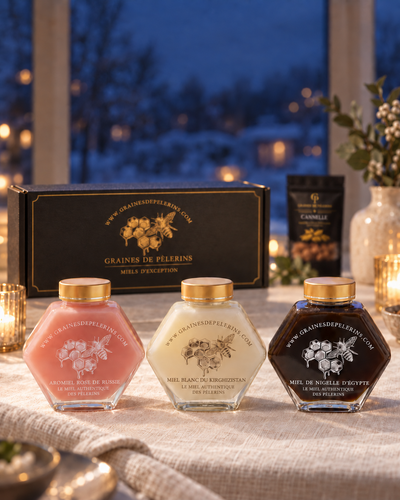
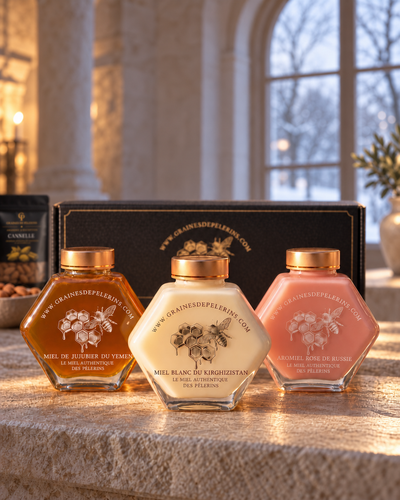
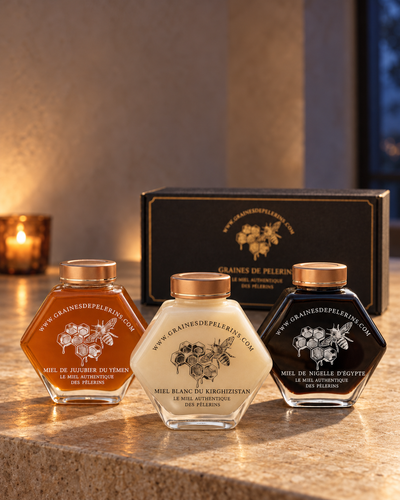
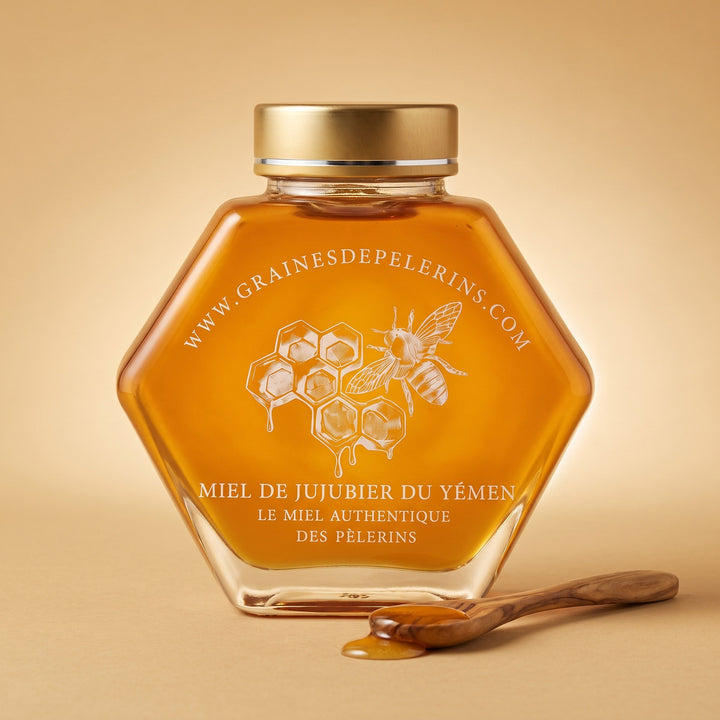
Then there is the pleasure of giving. Every jar of Rose Aromiel from Russia arrives in its black and gold presentation box, with its spoon. To let someone taste it among others, The Prestige Box places it between the ivory cream of a sainfoin honey and the amber of a honey from Yemen. The Discovery Box, the gentlest of our boxes, brings it together with two other rare honeys.

Gift box · The gentlest of our boxes
The Discovery Box
Discover the gift boxFree Mondial Relay delivery · France, Belgium and Luxembourg. Orders are usually prepared within 48 working hours, then delivered within 3 to 5 working days in France and Belgium.
Frequently asked questions
What is rose honey?
What people call rose honey is, at Graines de Pèlerins, the Rose Aromiel from Russia: a preparation made from acacia honey and rosehip extract, the fruit of the dog rose. Its powder-pink colour comes from the fruit, with no added colouring.
Is rose honey made with rose petals?
No. Its colour and its fruitiness come from the rosehip, the fruit of the dog rose, a wild rose of the hedgerows. Its composition is two ingredients, acacia honey and rosehip extract: no petals, no essential oil, no synthetic flavouring.
Why is the Rose Aromiel not called “honey”?
Because in France, once an ingredient is added to honey, the product can no longer legally be called honey. The Rose Aromiel combines an acacia honey with a rosehip extract: it is a honey-based preparation.
How should I taste the Rose Aromiel from Russia?
On its own, by the spoonful at room temperature, then on yoghurt, fresh goat’s cheese or in a pale tea, added at the end of the infusion. Never above 40 °C: its fragrance is volatile.
Sources
- Rose Aromiel from Russia product page (read on 1 October 2026): composition, method, storage, price.
- DGCCRF: honey labelling, the rules to know (in French): “honey-based preparation”.
- The Honey (England) Regulations 2015, Schedule 1: “No food ingredient has been added, including any food additive. No other additions have been made to the honey except for other honey.”
- Wikipedia: Cynorhodon (in French): false fruit, achenes, ripening, etymology.
- Dommuseum Hildesheim: the thousand-year-old rose of the cathedral (in German): the rose and its regrowth in 1945.
- Wikipedia: Thousand-year Rose, “believed to be the oldest living rose in the world”.
- Applied Sciences (MDPI), 2021: carotenoids of rosehip by ripening stage: lycopene in abundance.
- Wikipedia: Lycopene (in French): the red pigment of the tomato.
- City of Paris: the locust of the Square Viviani, oldest tree in Paris (in French): Jean Robin, 1601.
- Wikipedia: Robinia pseudoacacia (in French): “acacia honey”, slow crystallisation.
- Wiktionary: медведь (medved): the bear; see also шиповник and шип.
The jar in this article
Rose Aromiel from Russia
The fruit of the wild rose and an acacia honey, worked cold. A cream that coats the spoon, a fruity finish.
Discover the Rose Aromiel →In the same spirit: How to spot genuine honey · Is there a best honey in the world?
Editorial information. The content of this article is strictly informative, cultural and sensory. It describes the geographical origin, the botanical composition, the aroma profile and the traditional uses of rare honeys. It is not medical advice, a diagnosis, or a recommendation for treatment. Honey is a foodstuff. For any medical question, consult a qualified professional. Compliant with Regulation (EC) No 1924/2006.
Continue exploring
Pairings
The 13 desserts of Christmas in Provence: who counted to thirteen?
Mistral counted only eleven. Where does thirteen come from, what really sits on the table at Christmas in Provence, and how to set your o...
Read the article
Guide
Pain d’épices: the story of French honey spice bread, and a real recipe
For centuries, pain d’épices was a loaf of honey and rye whose dough waited for weeks. From Reims to Nuremberg, its history, the part hon...
Read the article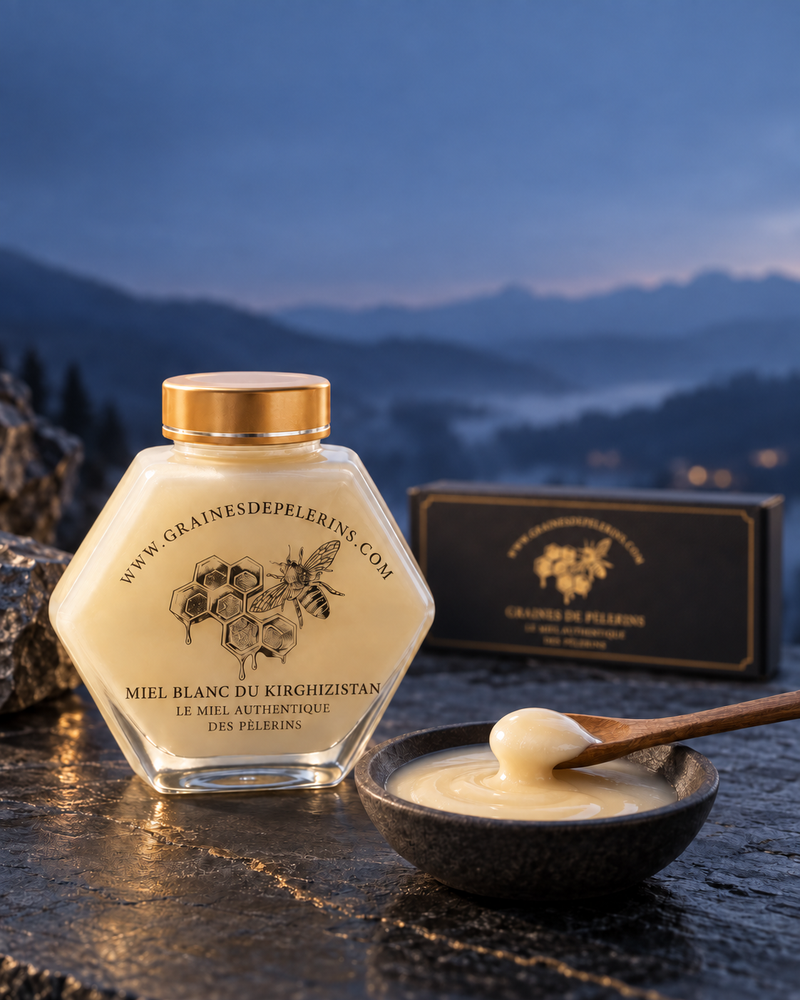
Classements
The best honey in the world: what the rankings say, what really counts
In 2025, the world beekeeping congress gave up awarding a honey. What contests and rankings are really worth, and the five criteria that ...
Read the articleDiscover our rare honeys
Four exceptional origins, limited harvests, gift boxes made for giving and for tasting.
See the collectionAlso worth discovering: our Almonds of Distinction