
How to choose honey: five checks before you buy
Choosing a good honey ought to be simple. It is, once you know what to look at. Five checks are enough to tell a rare, artisan honey from an industrial one. Five reflexes to build in front of a shelf or an online shop, and they turn buying into a connoisseur's gesture. Here is the method.
Contents
How to choose honey

Check one: is the honey raw
A raw honey has never been heated above 35°C. Industrial pasteurisation destroys the finer aromas and takes away a honey's aromatic signature. The best honeys in the world are all raw. Look for the words “raw”, “unheated”, “unpasteurised”, “cold-extracted”. They point to a production that keeps the honey exactly as it left the comb.
A named origin, and its terroir
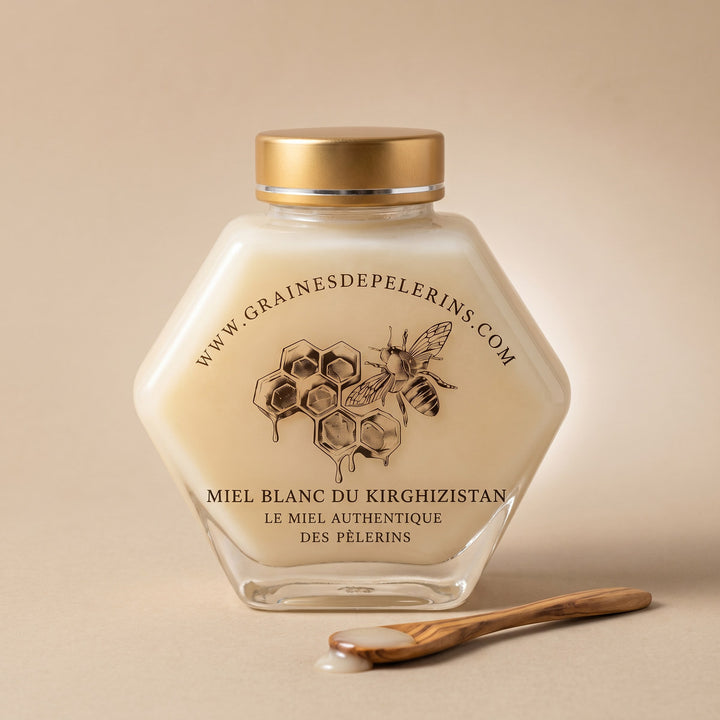
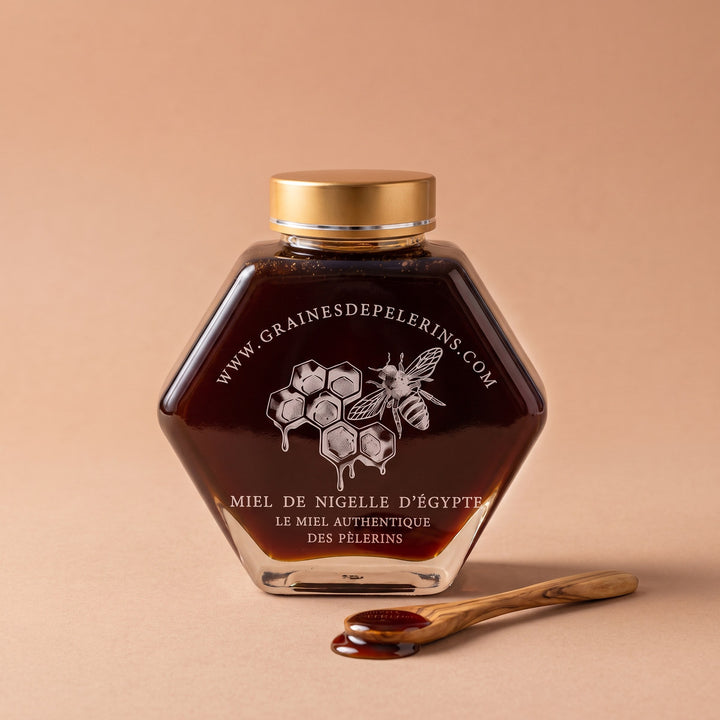
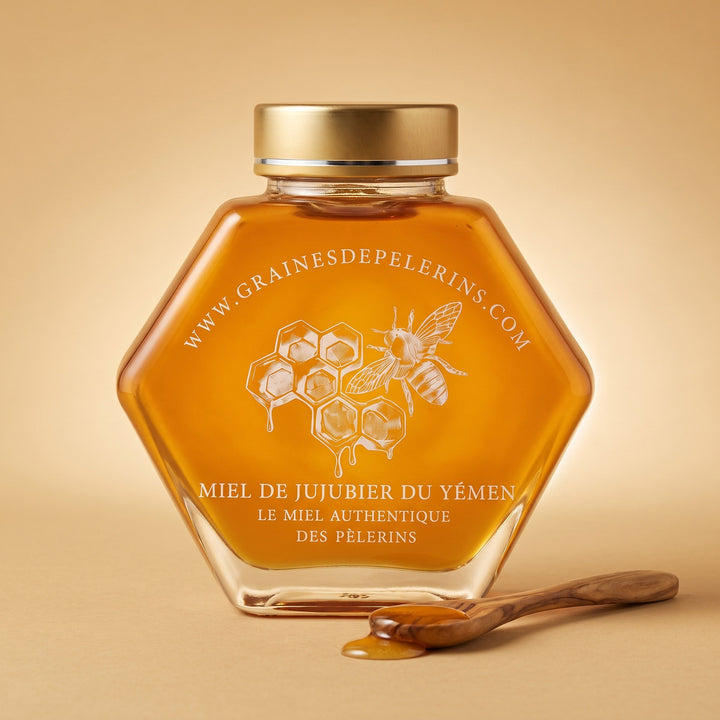
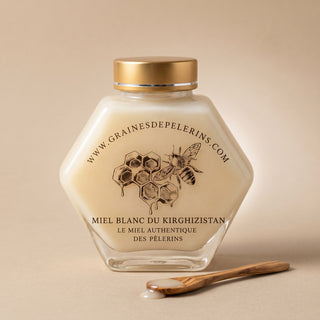
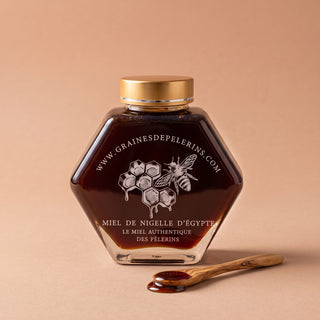
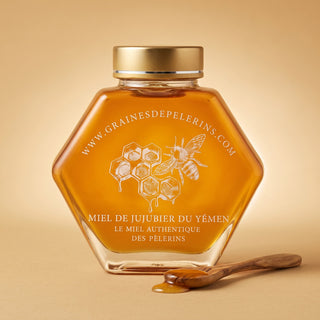
A fine honey comes from one specific region, sometimes from a single valley: its terroir, the place and climate a honey comes from. Yemeni Sidr honey (jujube) comes from the valleys of the Hadhramaut. White honey of the heights comes from the high plateaux of the Tien Shan. Black seed honey comes from the Nile Delta in Egypt. The label should give the country, and ideally the region, the name of the beekeeper or of the co-operative. The words “EU and non-EU origin” are an alarm bell: that is an industrial blend.
A documented single flower
A single-flower honey comes mainly from one flower. Acacia honey, sainfoin honey, lime honey and Sidr honey are all single-flower. The aromatic signature is clear and recognisable. A multifloral honey, gathered from everything in bloom, is far less distinctive. A single-flower honey documented by pollen analysis is a honey whose floral identity has been checked.
The texture on the spoon
A simple test: dip a spoon into the jar, lift it out and tilt it. A raw honey is thick. It runs slowly, in one unbroken thread, almost syrupy. An industrial or watered-down honey is very runny. Texture varies with the honey: black seed honey runs more freely, Yemeni Sidr honey is dense, white honey of the heights is creamy, but no good honey is completely liquid when cold.
Batch number and harvest date
A serious producer prints the batch number and the date, or the year, of harvest on every jar. That is what makes tracing possible. On our jars, each batch carries its own identifier. Our approach to lab analyses and traceability sets out how we document it.
Five checks. Thirty seconds of attention. A lifetime of tasting, changed.
The Graines de Pèlerins doctrineChoosing by aromatic intensity
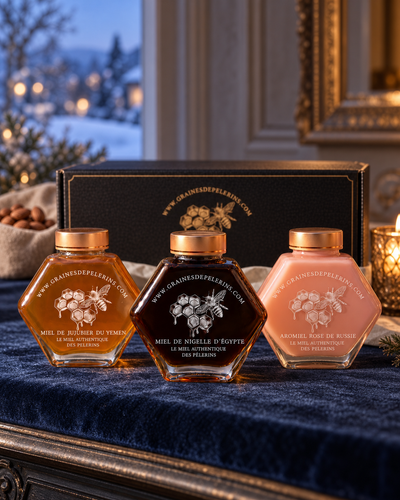
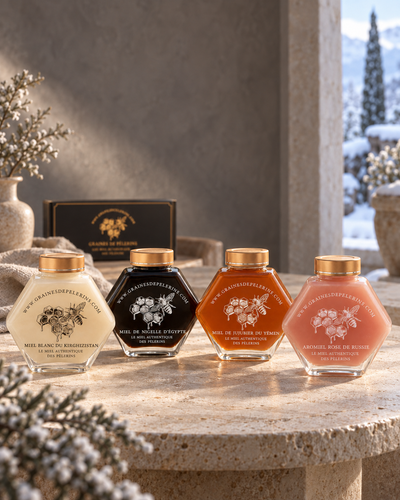
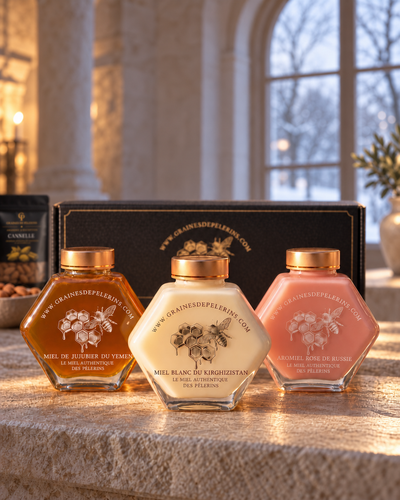
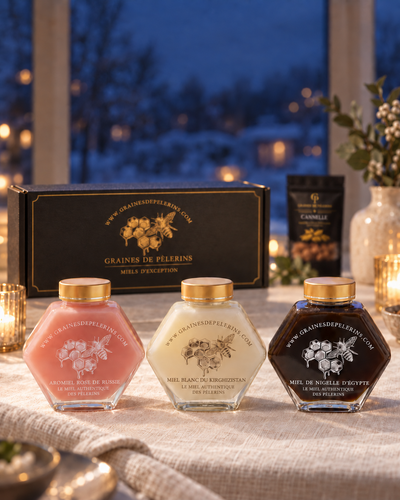
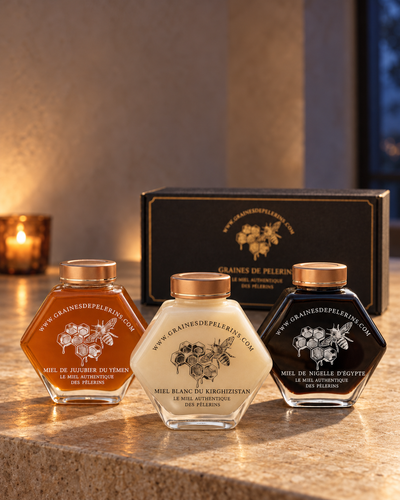
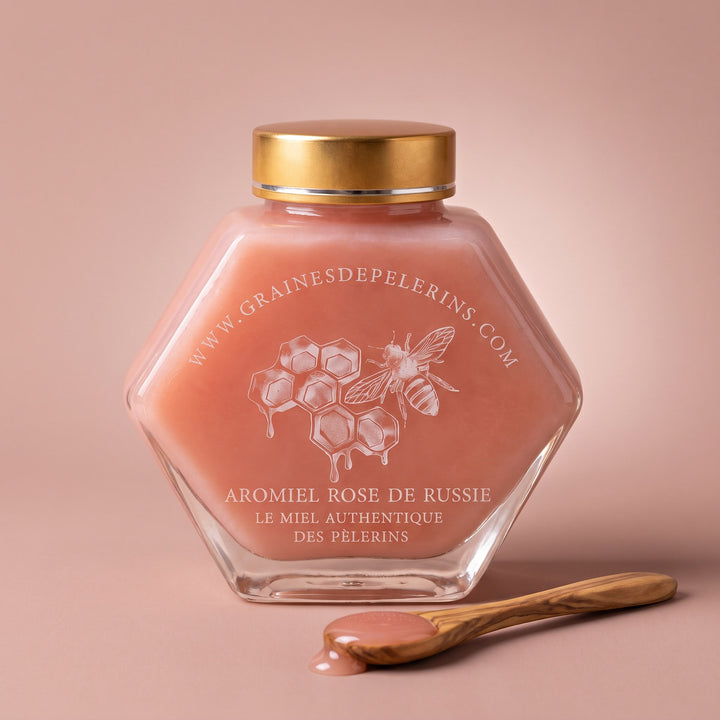
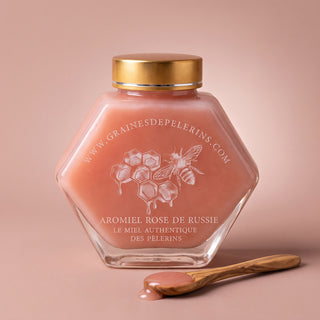
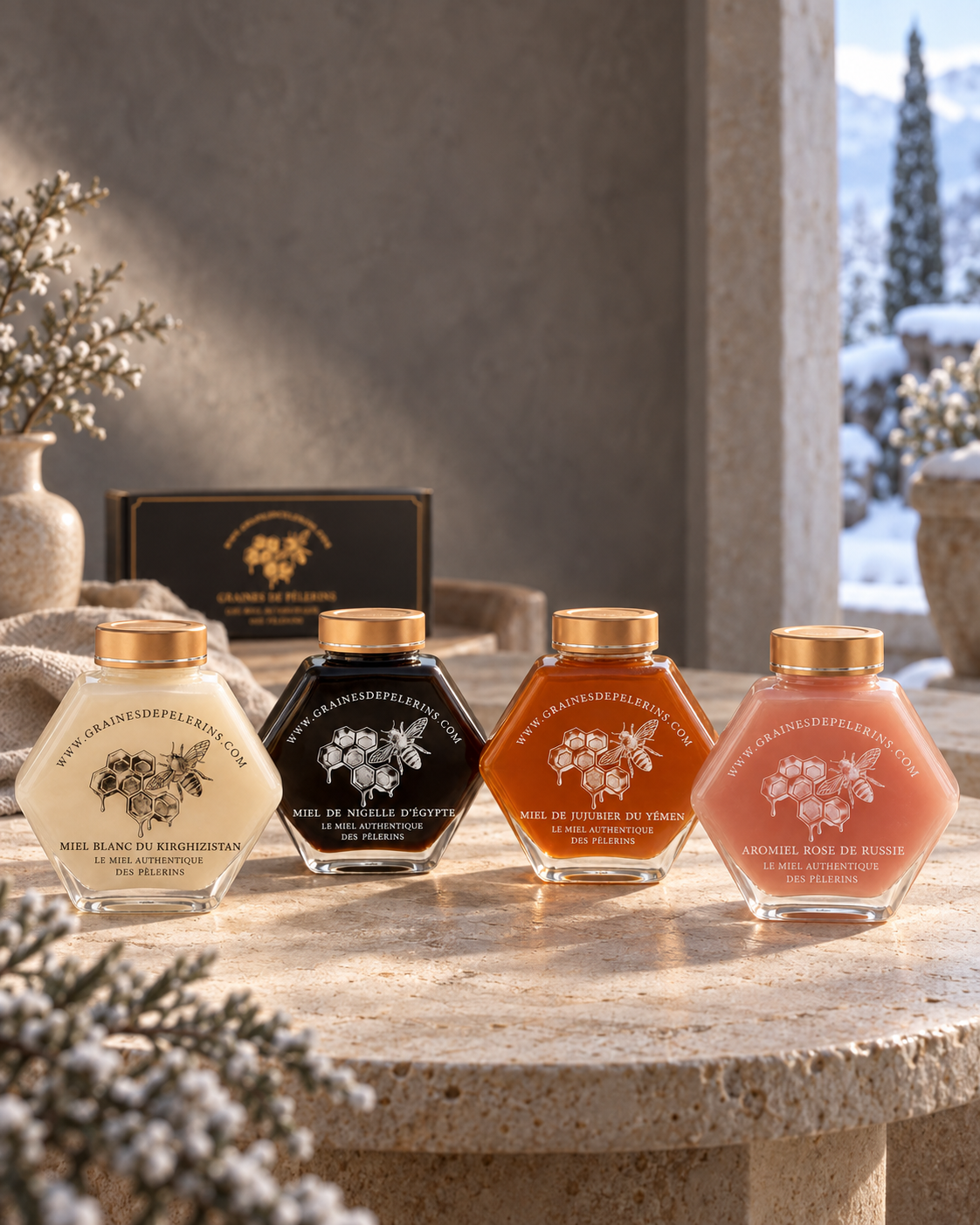
Our selection covers the four great families of intensity. The mild, milky and floral profile of White Honey from Kyrgyzstan, ideal for a first discovery. The floral, fruity profile of Rose Aromiel from Russia, acacia honey infused with rosehip, with its signature pink cast. The woody, resinous profile of Yemeni Sidr Honey, for a trained palate. The spiced, caramelised profile of Egyptian Black Seed Honey, for anyone drawn to unusual tastes.

Gift box · 3 intensities
The Ritual Box From 23,30 € / jar
Discover the gift boxWhere to buy a genuine rare honey
Favour houses that keep documentary traceability and publish their analyses. Our rare honey collection offers four remarkable origins, Yemen, Egypt, Kyrgyzstan and Russia, each one traced, documented and checked.
Going further
- How to tell if honey is real
- Our three rare honeys compared
- Why honey crystallises
- The seven rarest honeys in the world
Sources & References
- EU Council Directive 2001/110/EC. Honey quality definitions. eur-lex.europa.eu
- Bogdanov S. et al. Honey quality and international regulatory standards. Apidologie, 2009.
- ANSES. Recommendations on honey. anses.fr
Editorial information. The content of this article is strictly informative, cultural and sensory. It describes the geographical origin, the botanical composition, the aroma profile and the traditional uses of rare honeys. It is not medical advice, a diagnosis, or a recommendation for treatment. Honey is a foodstuff. For any medical question, consult a qualified professional. Compliant with Regulation (EC) No 1924/2006.
Continue exploring
Pairings
The 13 desserts of Christmas in Provence: who counted to thirteen?
Mistral counted only eleven. Where does thirteen come from, what really sits on the table at Christmas in Provence, and how to set your o...
Read the article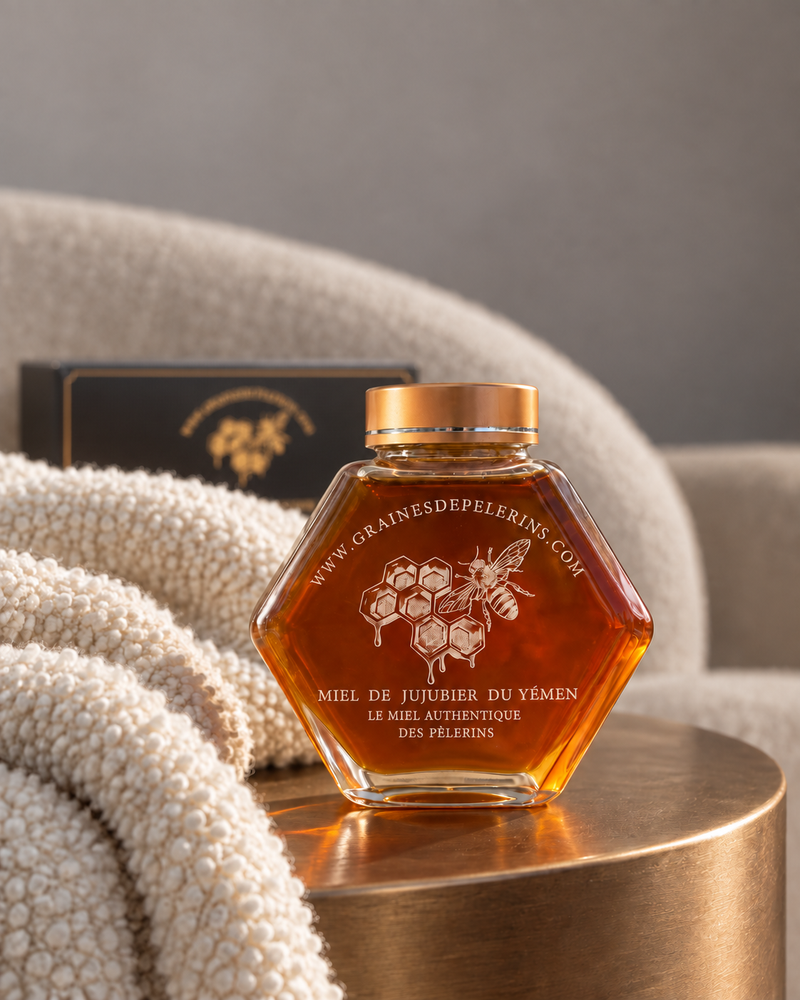
Guide
Pain d’épices: the story of French honey spice bread, and a real recipe
For centuries, pain d’épices was a loaf of honey and rye whose dough waited for weeks. From Reims to Nuremberg, its history, the part hon...
Read the article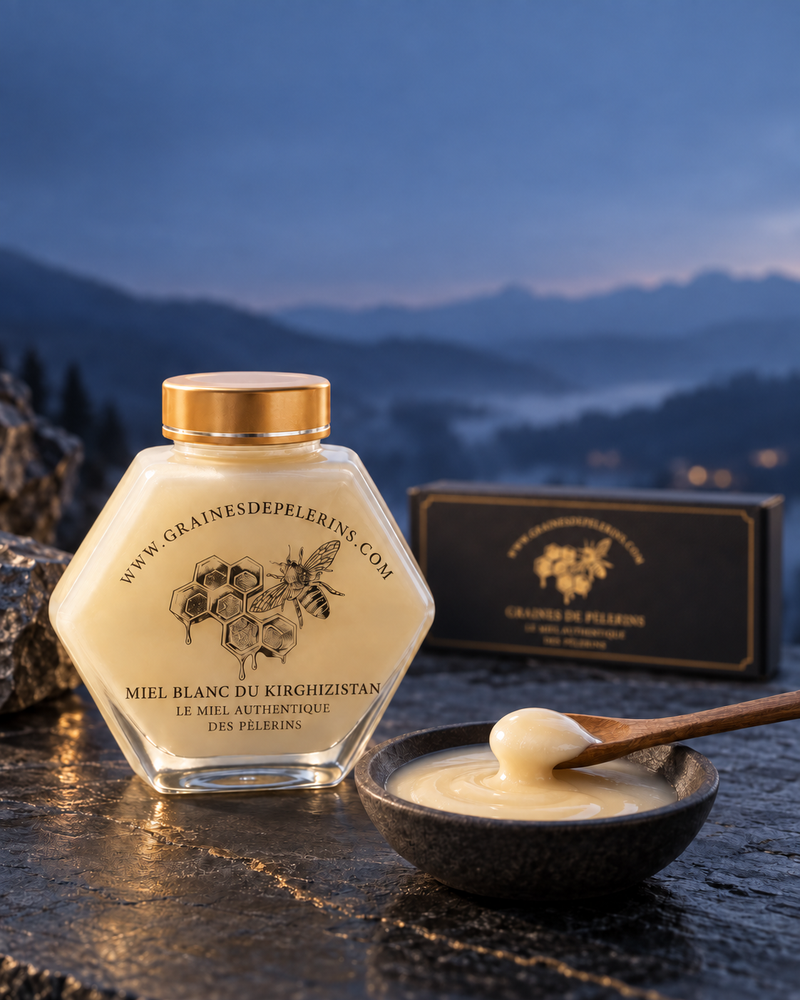
Classements
The best honey in the world: what the rankings say, what really counts
In 2025, the world beekeeping congress gave up awarding a honey. What contests and rankings are really worth, and the five criteria that ...
Read the articleDiscover our rare honeys
Four exceptional origins, limited harvests, gift boxes made for giving and for tasting.
See the collectionAlso worth discovering: our Almonds of Distinction