
Why does rare honey cost from 30 € to 1 000 € a kilo?
The price of a rare honey can vary thirtyfold depending on where it comes from. Here are the five factors behind the gap: how scarce the flowering is, how hard the origin is to reach, how it is harvested, how it is traced, and world demand.
A rare honey can cost thirty euros a kilo, or a thousand. The gap is neither arbitrary nor marketing: six objective variables set the real cost of producing a jar, from the flower to your table. Understanding them is also how you protect yourself from the two pitfalls of buying rare honey: paying far too much for a fake, and paying too little for something that will not keep its promise.
Contents
Why prices vary so much

How rare the source flower is
A flower endemic to one region gives a rare honey. The wild Sidr tree grows only in the semi-desert valleys of the Hadhramaut. Black seed is grown in the Nile Delta. High-altitude sainfoin grows on the plateaux of the Tien Shan. Acacia, lime and sunflower, by contrast, grow across many regions of Europe: plentiful output, moderate price.
The length of the harvest window
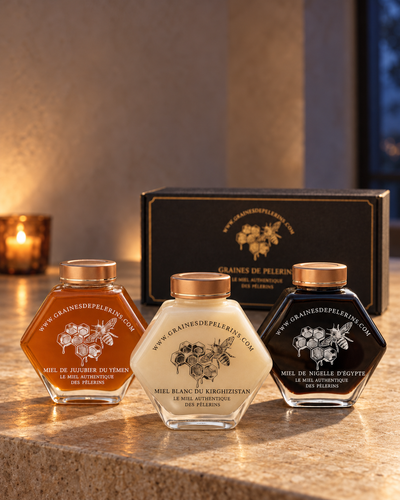
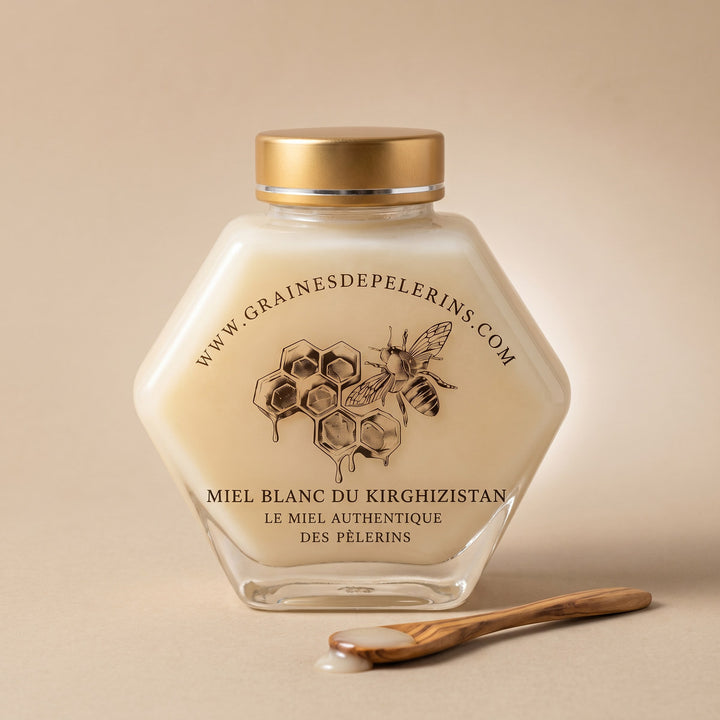
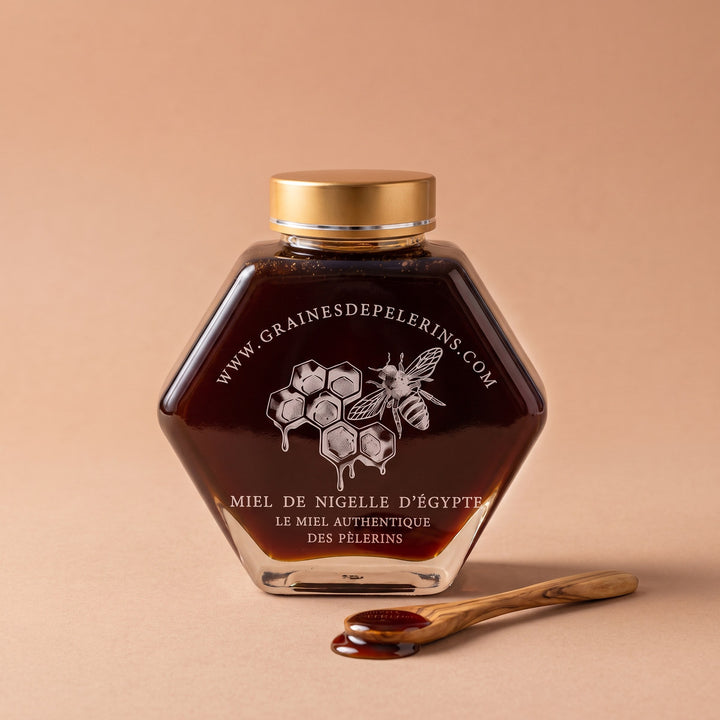
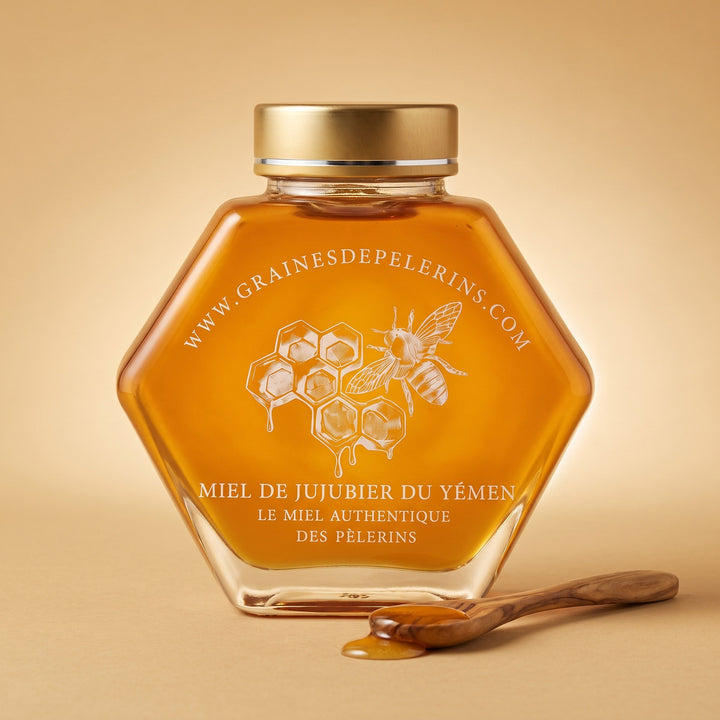
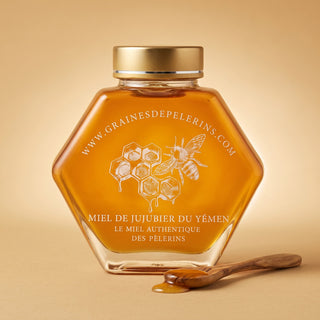
A rare honey usually comes from a very short flowering. Yemeni Sidr honey (jujube): three to six weeks a year. Egyptian Black Seed Honey: four to six weeks in February and March. White Honey from Kyrgyzstan: June to August, with the constraint of altitude on top. A short window means high risk, from bad weather to a late flowering, and a low yield. That feeds straight through to the price.
The yield per apiary
A rare honey gives five to fifteen kilos per apiary per harvest. A common honey gives thirty to sixty. A low yield means the fixed costs of an apiary (upkeep, transport, monitoring) are spread over fewer kilos, which raises the unit cost.
How it is made: artisan vs industrial
Traditional and artisan: nomadic apiaries, hand harvesting, hand filling. That is the model behind rare honeys. Industrial: pasteurisation, ultrafiltration, multi-origin blending, automated packing. Low costs, standardised quality. The difference in price per kilo is of the order of tenfold.
Import and traceability costs
A honey imported from Yemen or Egypt carries specialist transport, customs duty, sanitary checks and certificates of origin. Those costs can double the price per kilo once it lands in Europe. Documentary traceability, from pollen analysis to quality checks and batch numbers, adds a cost of its own that shows up in the final price, but it is that traceability which guarantees authenticity.
Certification and analysis
C-IRMS testing to detect added syrups, pollen analysis to confirm the single-flower character, organic or ITAP certification, the UMF or MGO index for Manuka: each step adds a cost, and each one adds a guarantee of authenticity. Our approach sets out that transparency in full.
A rare honey at a fair price tells you its whole chain: the flower, the apiary, the journey, the analysis.
The Graines de Pèlerins doctrineReference price table for 2026
| Honey | Profile | Price /kg |
|---|---|---|
| Standard European acacia | Industrial | 15-30 € |
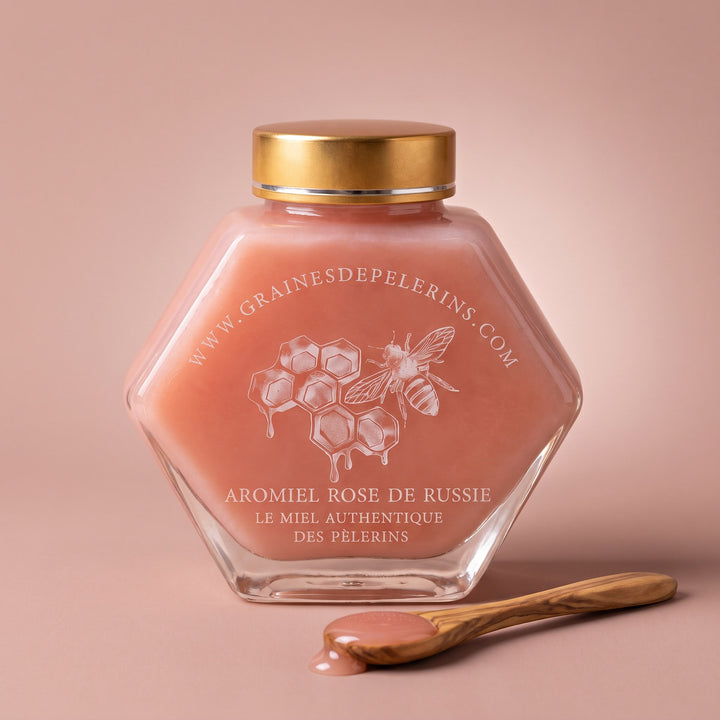
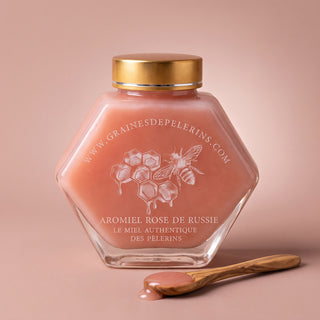
| Rose Aromiel from Russia | Traditional beekeeping craft | 80-150 € |
| White Honey, Kyrgyzstan | High-altitude sainfoin | 75-150 € |
| Black Seed, Egypt | Monofloral Nigella sativa | 75-180 € |
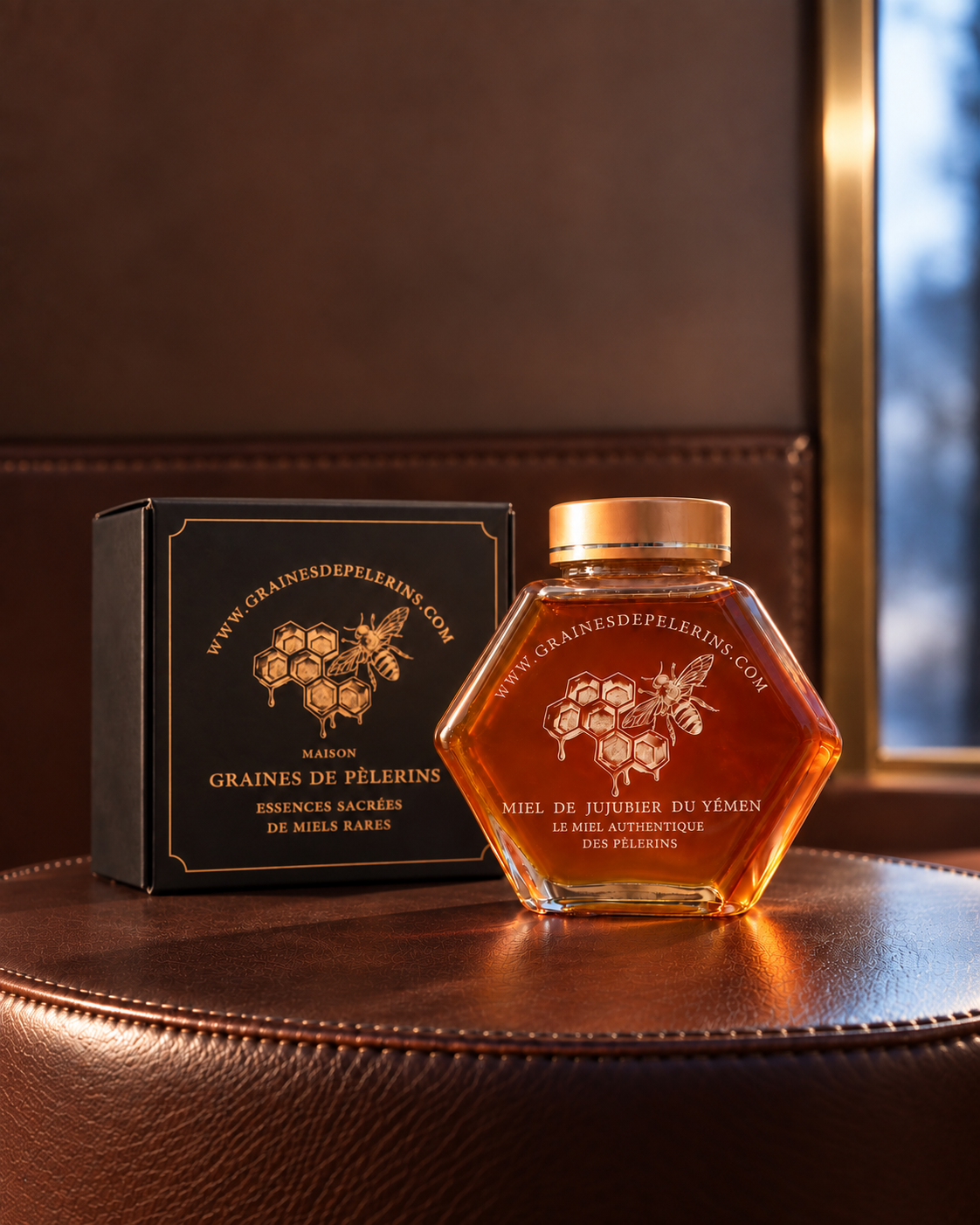
| Yemeni Sidr | Sidr tree, Hadhramaut | 150-500 € |
| Manuka UMF 20+ NZ | UMF/MGO standard | 300-800 € |
| Exceptional lots | Premium Yemeni Sidr honey / Manuka UMF 30+ | 500-1 500 € |
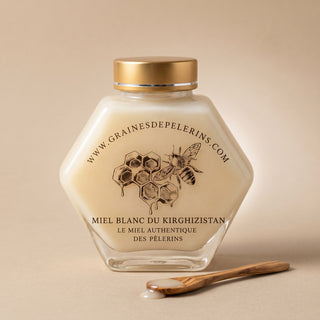
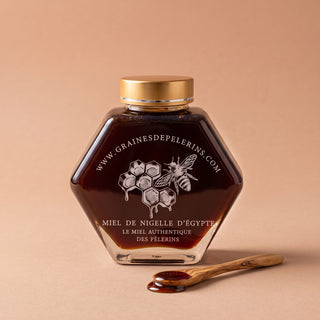
Our own honeys sit within these ranges: from 19,90 € per 250 g jar for the White Honey and the Black Seed Honey with 3 months of rare honey, to 47,90 € for a single jar of Yemeni Sidr.
How to check that a price makes sense
A price that looks “too good to be true” on a rare honey deserves suspicion. A Yemeni Sidr honey at 30 € a kilo is probably not genuine. A European acacia at 300 € a kilo is probably excessive. Look for a documented origin, the word raw, a batch number and published analyses. Those are what justify a high price and guarantee authenticity.
Gift box · Black and gold box
The Prestige Box From 23,30 € / jar
Discover the gift boxGo further
- Yemeni Sidr honey vs Manuka: the comparison
- How to spot a genuine raw honey
- The 2026 rare honey gift guide
- The seven rarest honeys in the world
Sources & References
- Codex Alimentarius. Standard for Honey CXS 12-1981.
- UMF Honey Association. UMF Grading and Pricing. umf.org.nz
- FAO. Honey value chain analysis: from rare producers to premium markets. fao.org
The honey in this article
Yemeni Sidr Honey
Rare honey in its purest form: hand harvesting, a window of a few weeks, remote valleys. Scarcity has a price, and a reason.
Discover Yemeni Sidr Honey →In the same spirit: The complete guide to Yemeni Sidr honey · The seven rarest honeys
Editorial information. The content of this article is strictly informative, cultural and sensory. It describes the geographical origin, the botanical composition, the aroma profile and the traditional uses of rare honeys. It is not medical advice, a diagnosis, or a recommendation for treatment. Honey is a foodstuff. For any medical question, consult a qualified professional. Compliant with Regulation (EC) No 1924/2006.
Continue exploring
Pairings
The 13 desserts of Christmas in Provence: who counted to thirteen?
Mistral counted only eleven. Where does thirteen come from, what really sits on the table at Christmas in Provence, and how to set your o...
Read the article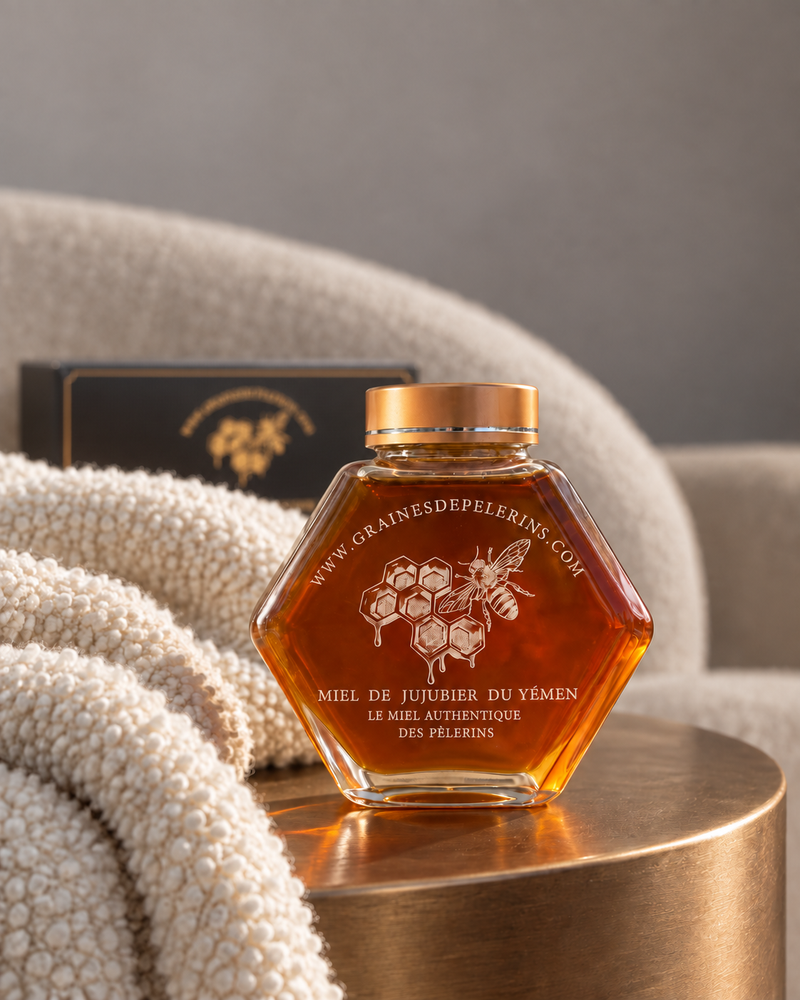
Guide
Pain d’épices: the story of French honey spice bread, and a real recipe
For centuries, pain d’épices was a loaf of honey and rye whose dough waited for weeks. From Reims to Nuremberg, its history, the part hon...
Read the article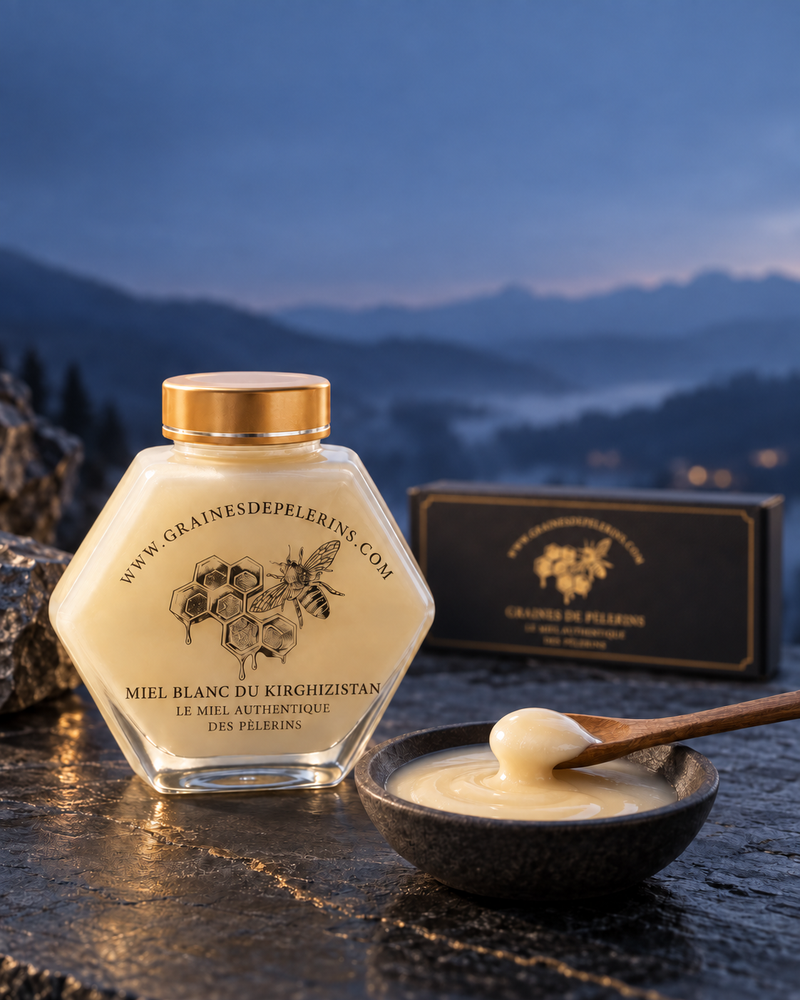
Classements
The best honey in the world: what the rankings say, what really counts
In 2025, the world beekeeping congress gave up awarding a honey. What contests and rankings are really worth, and the five criteria that ...
Read the articleDiscover our rare honeys
Four exceptional origins, limited harvests, gift boxes made for giving and for tasting.
See the collectionAlso worth discovering: our Almonds of Distinction