
Sidr honey vs acacia honey: seven differences that matter
A factual comparison of Yemeni Sidr honey (jujube) and acacia honey: origin, flower, colour, texture, price, crystallisation and aroma profile. The guide to choosing on taste rather than on reputation.
The Sidr tree belongs to the desert. Acacia belongs to the meadow. Beyond the word “honey” that names them both, they have almost nothing in common: not the colour, not the texture, not the finish, not the scarcity, not the price. Comparing them is not an academic exercise. It is a way of seeing why a keen taster may want both, and for which occasions.
Contents
Sidr honey and acacia honey, seven differences
The comparison table
| Measure | Yemeni Sidr honey | Acacia |
|---|---|---|
| Origin | Hadhramaut, Yemen | Central Europe, Russia |
| Botany | Ziziphus spina-christi | Robinia pseudoacacia |
| Flowering | Oct. to Nov. (3 to 6 weeks) | May to June |
| Colour | Deep amber, mahogany | Pale amber |
| Texture | Dense and smooth | Fluid, almost runny |
| Aromas | Woody and resinous | Delicate floral, vanilla and hay |
| Crystallisation | 6 to 12 months | 1 to 3 years |
| Price /kg | 150-500 € | 15-50 € |
Where each one comes from
Yemeni Sidr honey is born in the semi-desert valleys of the Hadhramaut, in Yemen. Traditional nomadic beekeeping, an extremely short flowering from October to November. Acacia comes mainly from Central Europe (Poland, Hungary, Romania), from Russia and from China. Modern beekeeping, a spring flowering in May and June, and relatively plentiful plantations.
Colour and texture
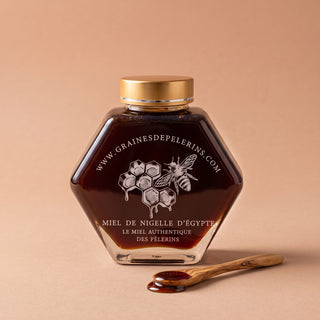
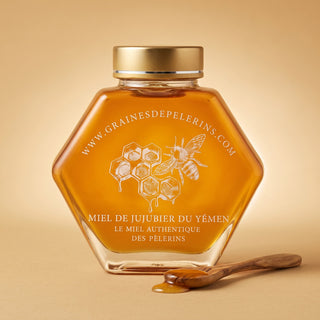
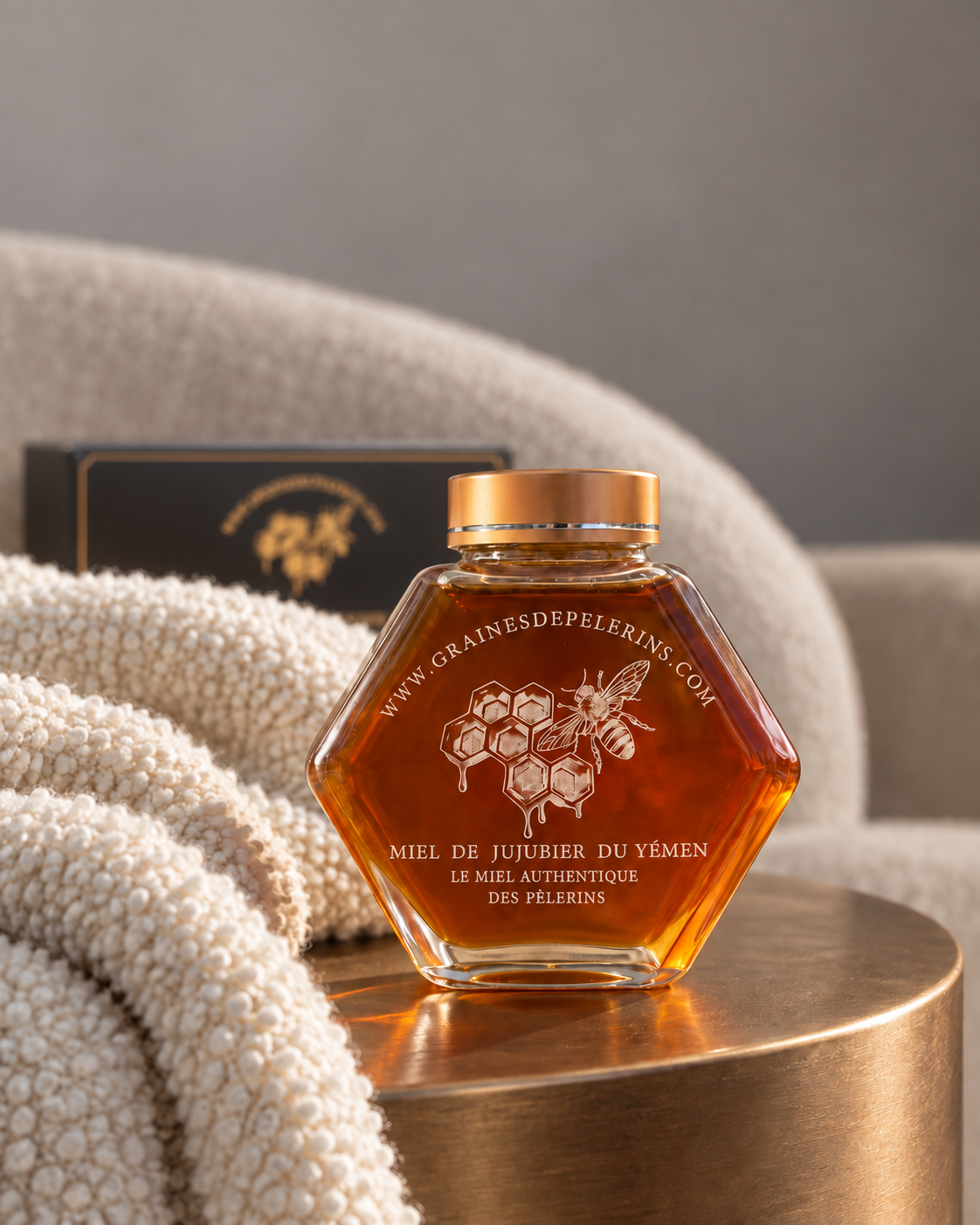
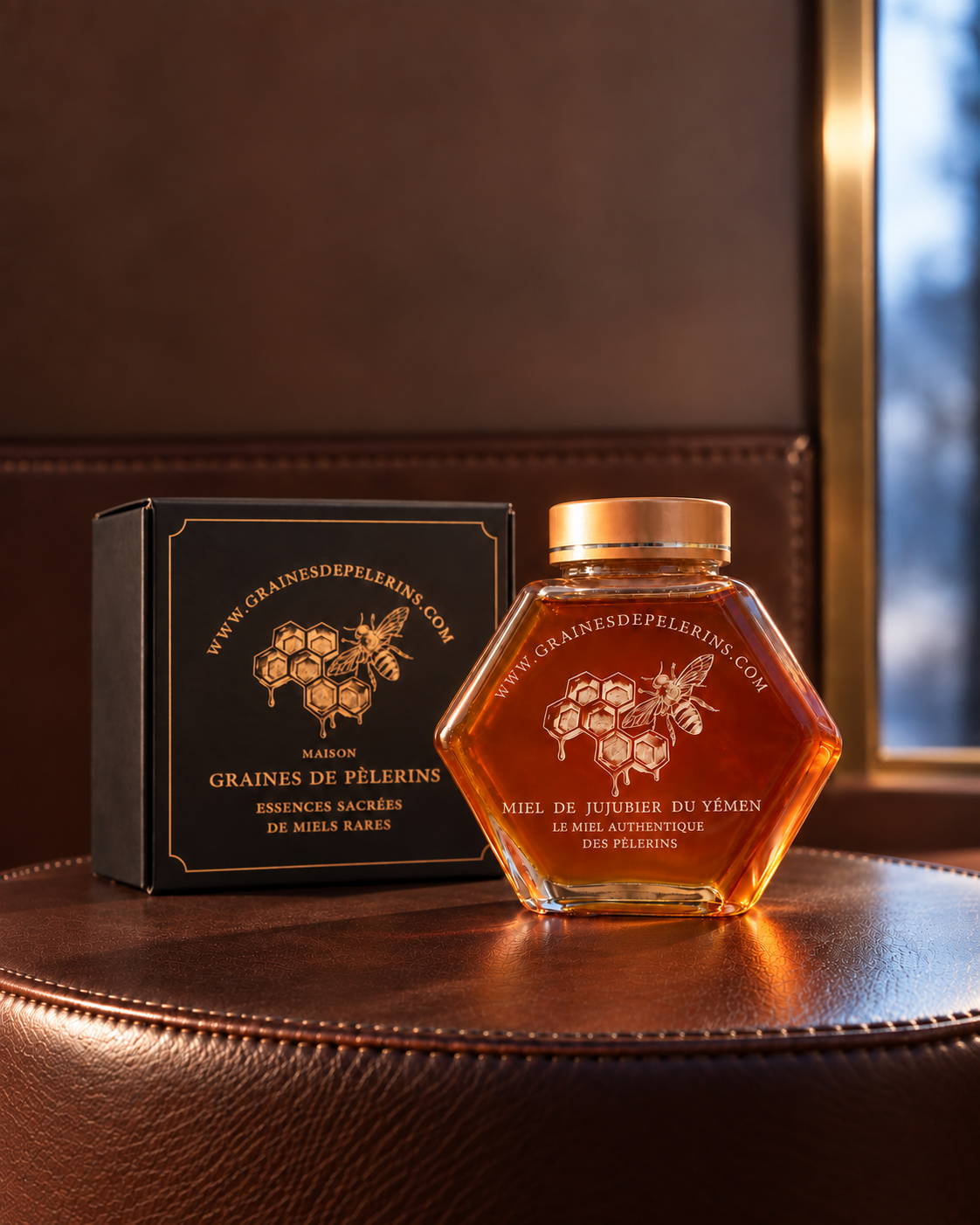
Visually, everything separates the two. Sidr honey has a deep amber colour with coppery, almost mahogany lights, in a dense texture that does not run off a tilted spoon at once. Acacia is pale amber, almost clear, fluid, close to a light syrup.
The aromas and the olfactory signature
Sidr honey opens woody and resinous, with notes of toasted dried fruit and a long finish marked by a noble bitterness. It is a honey you listen to. Acacia is all delicate floral, with notes of vanilla and fresh hay, and closes on a short, cool finish. Pure, easy, without complexity.
Crystallisation
Sidr honey crystallises moderately to slowly, over six to twelve months. Acacia is one of the honeys that stays liquid longest: one to three years before it sets at all. That is one of the reasons pastry chefs like it, since it folds in easily.
Scarcity and price per kilo
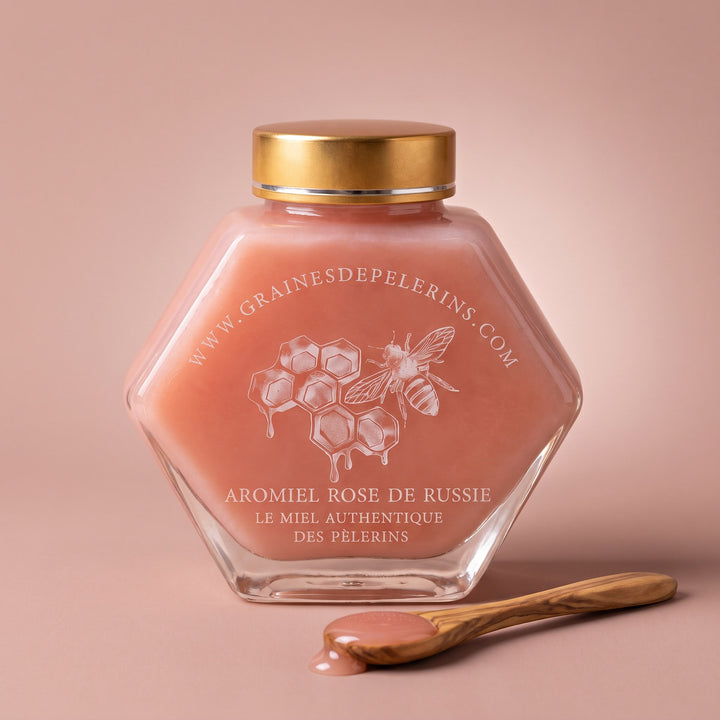
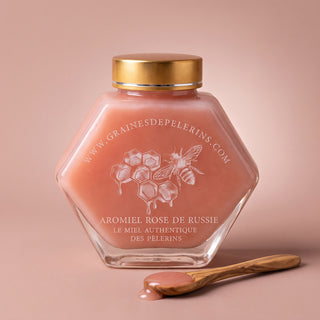
Genuine Yemeni Sidr honey usually sits between 150 and 500 € a kilo: extreme scarcity, world output limited to a few tonnes a year. Acacia runs from 15 to 50 € a kilo depending on origin and quality, because the trade behind it is a plentiful one. Worth noting: Rose Aromiel from Russia, acacia honey infused with rosehip in the Russian beekeeping tradition, reaches 80-150 € a kilo because of the craft added to it.
Sidr honey tells you about the desert. Acacia tells you about the meadow. Neither one is the “better” honey: they are different.
The Graines de Pèlerins doctrineWhich one to choose
For discovery, everyday pouring and baking: acacia honey. For the noble morning ritual and for occasions: Yemeni Sidr honey. The two can live in the same kitchen. They are never in competition, always complementary.
Yemen · Hadhramaut
Yemeni Sidr Honey From 39,90 € / jar
Discover Yemeni Sidr HoneyGo further
- Yemeni Sidr honey: the complete guide
- Yemeni Sidr honey vs Manuka: the comparison
- The seven rarest honeys in the world
- The five great rare honey regions
Sources & References
- Persano Oddo L. & Piro R. Main European unifloral honeys: descriptive sheets. Apidologie, 2004.
- Al-Khalifa M. & Al-Arifi A. Ziziphus spina-christi honey characterization. Saudi J Biol Sci, 2007.
- Bogdanov S. Acacia and jujube monofloral honeys. Bee Product Science.
The honey in this article
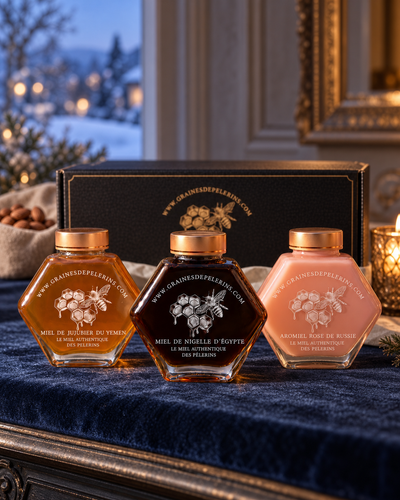
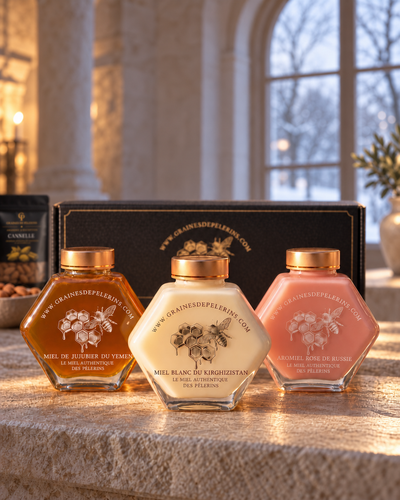
Yemeni Sidr Honey
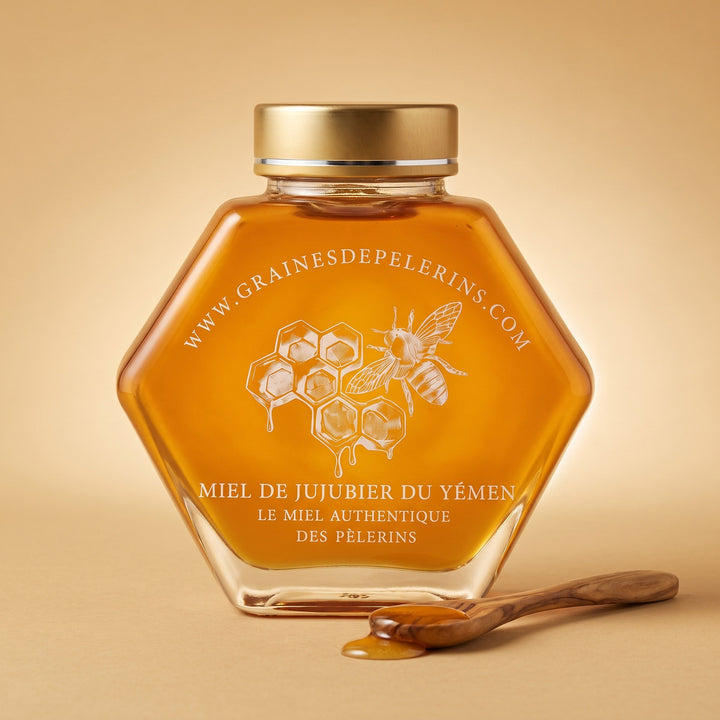
Where acacia is clear and light, Sidr honey is amber, dense and caramelised. Two worlds, one rare grand cru.
Discover Yemeni Sidr Honey →In the same spirit: The complete guide to Yemeni Sidr honey · Our three rare honeys compared
Editorial information. The content of this article is strictly informative, cultural and sensory. It describes the geographical origin, the botanical composition, the aroma profile and the traditional uses of rare honeys. It is not medical advice, a diagnosis, or a recommendation for treatment. Honey is a foodstuff. For any medical question, consult a qualified professional. Compliant with Regulation (EC) No 1924/2006.
Continue exploring
Pairings
The 13 desserts of Christmas in Provence: who counted to thirteen?
Mistral counted only eleven. Where does thirteen come from, what really sits on the table at Christmas in Provence, and how to set your o...
Read the article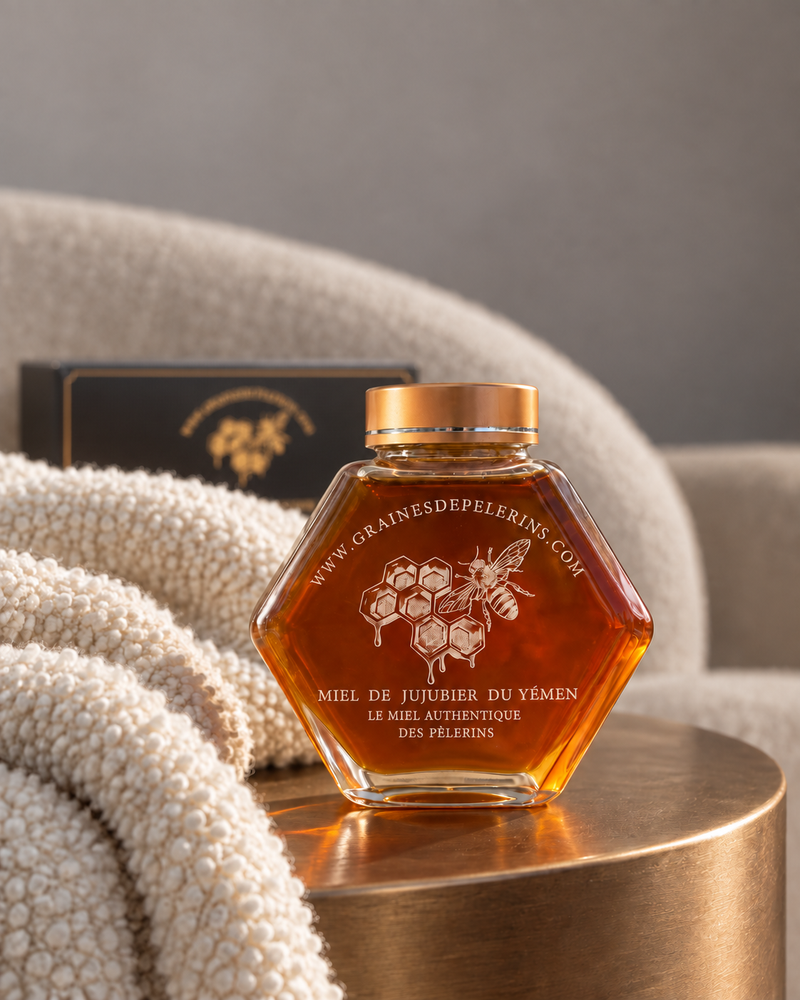
Guide
Pain d’épices: the story of French honey spice bread, and a real recipe
For centuries, pain d’épices was a loaf of honey and rye whose dough waited for weeks. From Reims to Nuremberg, its history, the part hon...
Read the article
Classements
The best honey in the world: what the rankings say, what really counts
In 2025, the world beekeeping congress gave up awarding a honey. What contests and rankings are really worth, and the five criteria that ...
Read the articleDiscover our rare honeys
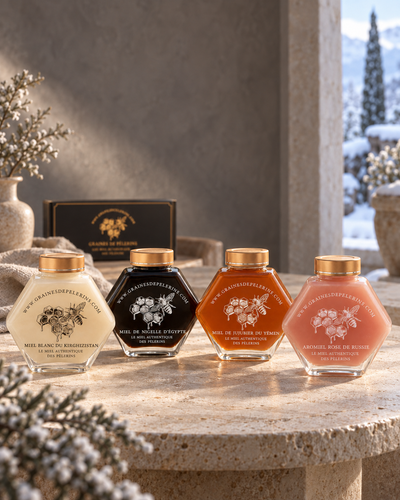
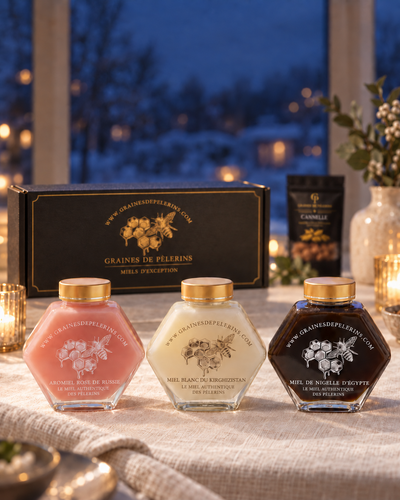
Four exceptional origins, limited harvests, gift boxes made for giving and for tasting.
See the collectionAlso worth discovering: our Almonds of Distinction