
The five great rare honey regions of the world (and their signatures)
A map of the main rare honey producing regions of the world: Yemen, Central Asia, North Africa, Russia and Oceania. Origins, dominant flowers, profiles and harvest conditions.
The world's most singular honeys are born in five great producing regions. Each one is marked by a unique source flower, a particular climate and a beekeeping tradition handed down over several generations. Understanding those regions is understanding why every jar of rare honey tells a story no other place could tell.
Contents
The five great rare honey regions

Yemen: the Sidr tree of the Hadhramaut
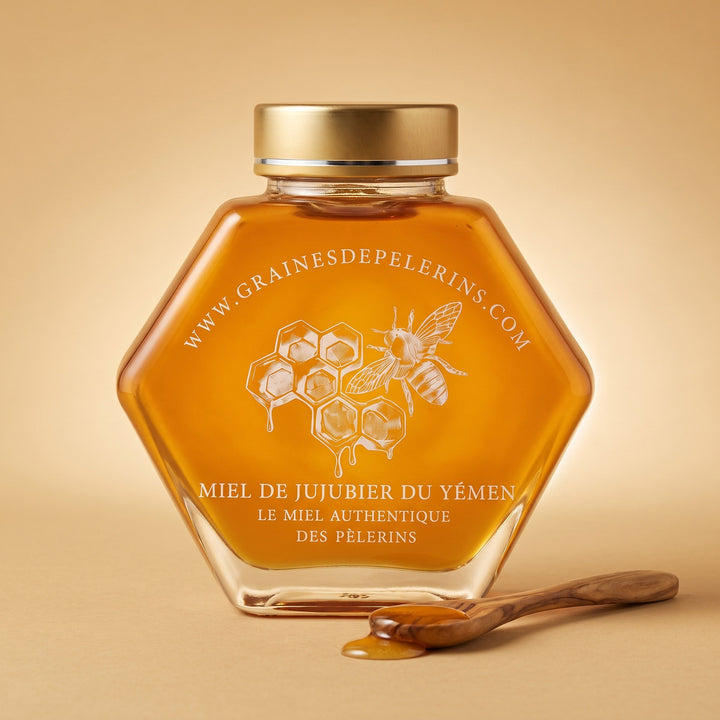
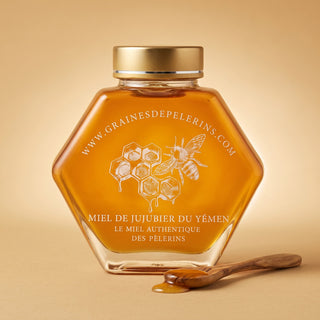
The semi-desert valleys of the Hadhramaut, in south-east Yemen, and Wadi Do'an above all, are home to the last wild Sidr trees: Ziziphus spina-christi. Flowering in October and November, nomadic apiaries following the blossom on donkey-back, a beekeeping practice handed from one generation to the next for a thousand years. The profile of Yemeni Sidr honey (jujube) follows from it: deep amber, woody and resinous, with a long, noble finish. Our complete guide to Yemeni Sidr honey covers this region in detail.
Egypt: black seed in the Nile Delta
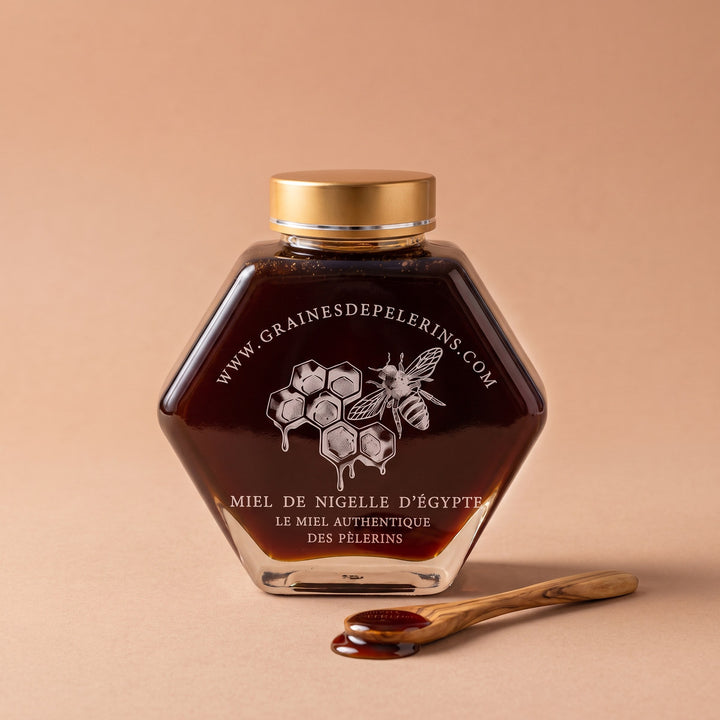
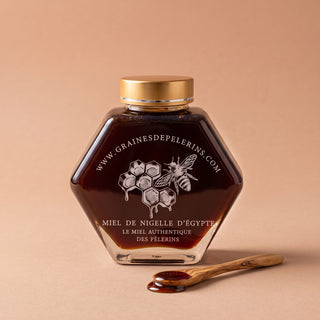
The Nile Delta, fertile plains worked for three thousand years, is where black seed is grown: Nigella sativa. Flowering in February and March, an Egyptian beekeeping tradition of clay hives and linen veils. Egyptian Black Seed Honey (Nigella) comes out golden amber to brown, spiced and caramelised, with a woody finish. The morning black seed honey ritual sets out what the habba sawda tradition has handed down for three thousand years.
Central Asia: sainfoin in the Tien Shan
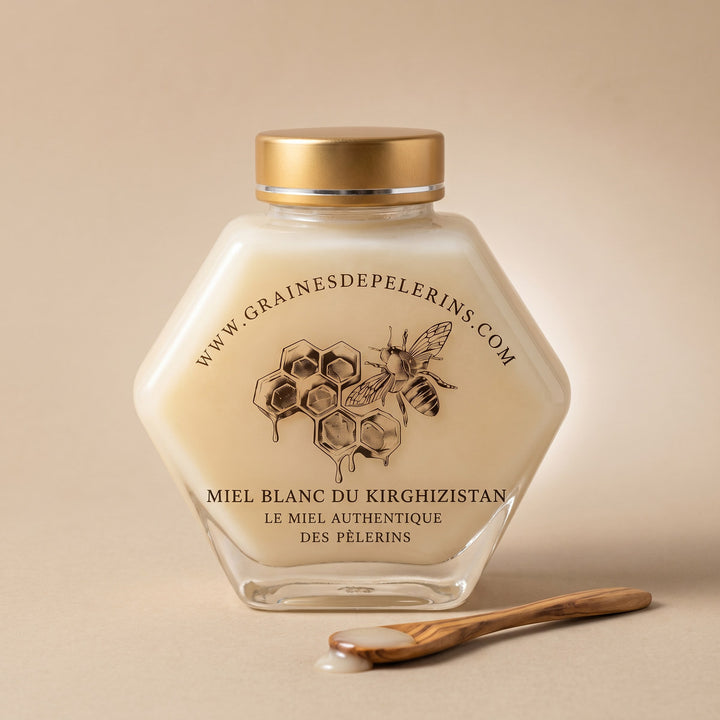
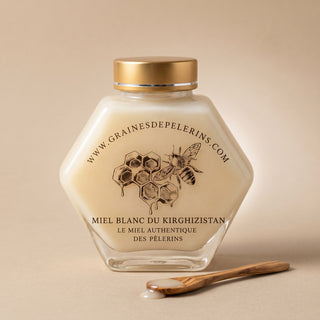
The Kyrgyz high plateaux of the Tien Shan, between 2,200 and 3,000 m in the Naryn Valley, are home to wild sainfoin: Onobrychis viciifolia. Flowering from June to August before the snow returns, nomadic high-altitude beekeeping, seasonal transhumance. White Honey from Kyrgyzstan (sainfoin) comes out creamy ivory, milky and floral, with a soft finish. Its signature is a fast crystallisation. Why White Honey from Kyrgyzstan is unlike any other goes deeper into this origin.
A region does not give you a honey. It gives you a signature: something no other place on earth can produce.
The Graines de Pèlerins doctrineRussia: Rose Aromiel, a beekeeping tradition
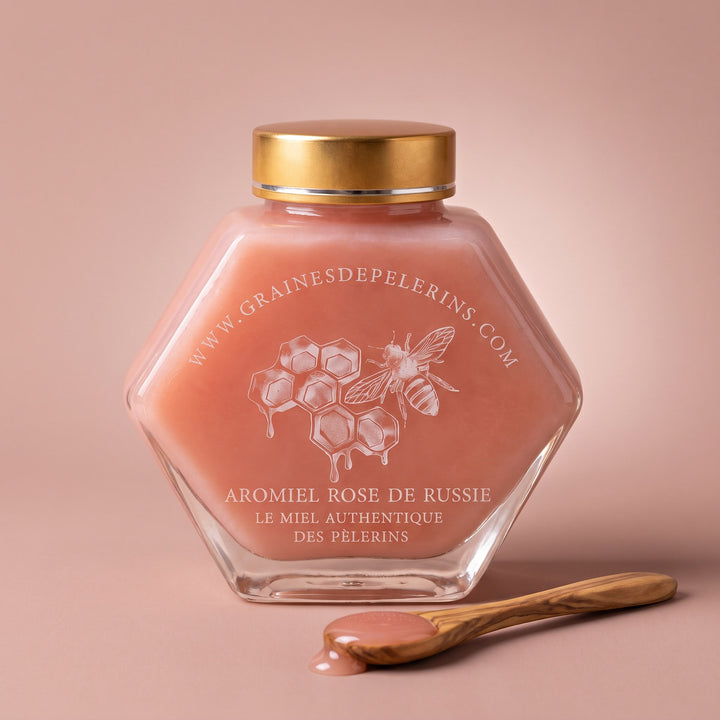
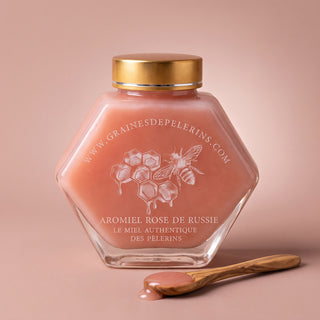
The Russian beekeeping tradition includes one singular piece of craft: Rose Aromiel. It is not a classic single-flower honey but acacia honey infused with rosehip, worked in the Russian tradition. No synthetic aroma, no essential oil: it is cold work that preserves the delicacy of the acacia honey while adding the signature pink cast and the fruity floral profile. A skill handed down in a handful of Russian workshops only.
The South Pacific: New Zealand Manuka
New Zealand's North Island, with its temperate oceanic climate, is home to manuka: Leptospermum scoparium. Flowering from December to February, the southern summer, modern industrial beekeeping, and the UMF (Unique Manuka Factor) system standardised from the 1980s on the back of the Honey Research Unit's work. Manuka is mahogany brown, sharply herbal, with an earthy finish. Yemeni Sidr honey vs Manuka, the comparison puts the two in perspective.
Secondary regions worth knowing
Beyond the five great ones, several regions produce lesser-known but outstanding rare honeys: Malaysia and Tualang (old-growth forest, the giant bee Apis dorsata nesting thirty metres up), Chile and Ulmo (the temperate rainforest of Patagonia), Madagascar and rosewood (endemic forestry), Hawaii and lehua (volcanoes, Ohia lehua).
Discover our honeys by region
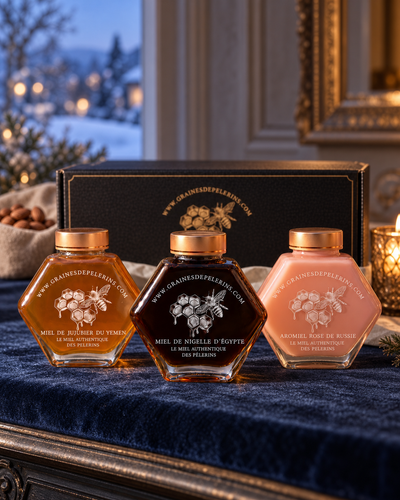
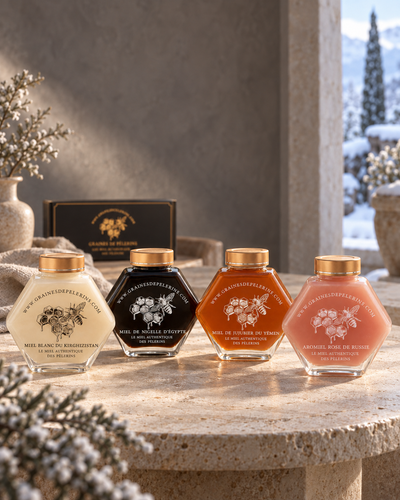
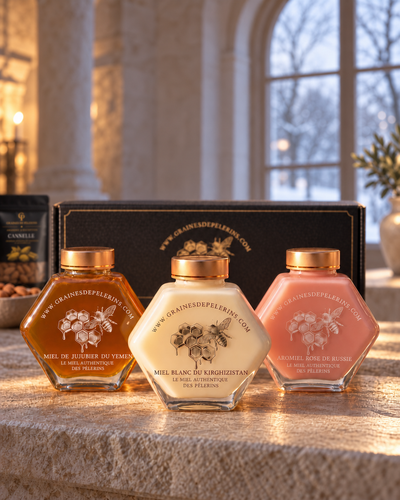
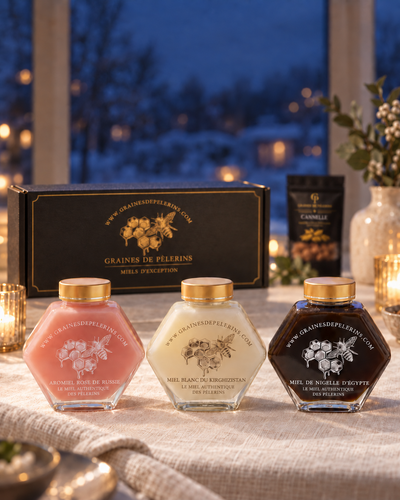
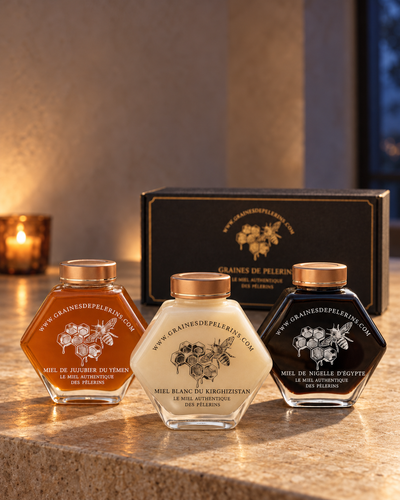
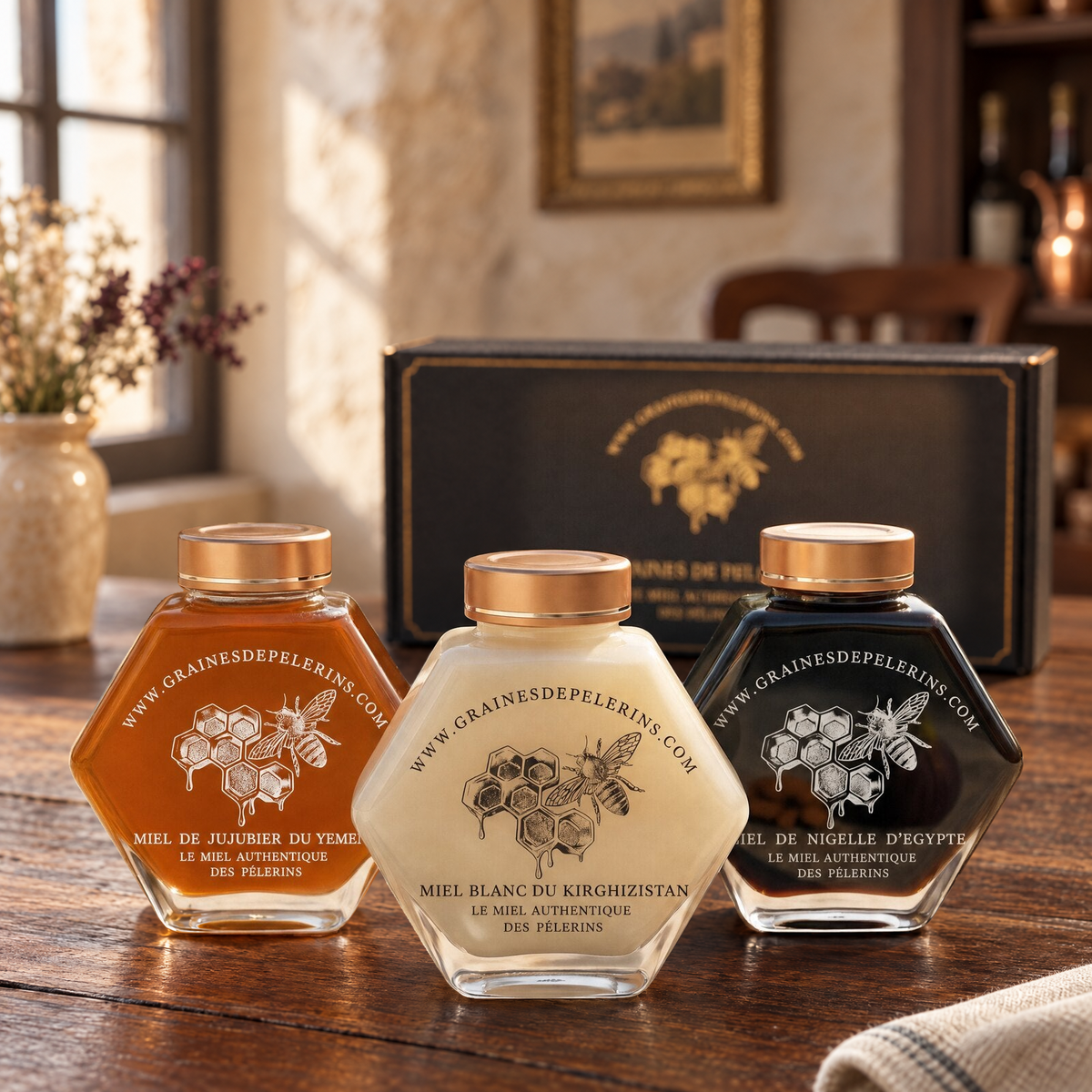
Four of the five great producing regions are represented in our rare honey collection covering Yemen, Egypt, Kyrgyzstan and Russia.

Gift box · 3 regions
The Ritual Box From 23,30 € / jar
Discover the gift boxGo further
- The seven rarest honeys in the world
- Our three rare honeys compared
- Yemeni Sidr honey vs Manuka
- Why rare honey costs 30 € to 1 000 €/kg
Sources & References
- Persano Oddo L. & Piro R. Main European unifloral honeys. Apidologie, 2004.
- UMF Honey Association. Manuka regional production. umf.org.nz
- FAO. Beekeeping in Central Asia. fao.org
Discover
Travel by origin
Yemen, Kyrgyzstan, Egypt, Russia: every honey tells you about its region. Explore our origins.
Explore the origins →In the same spirit: The seven rarest honeys · The complete guide to Yemeni Sidr honey
Editorial information. The content of this article is strictly informative, cultural and sensory. It describes the geographical origin, the botanical composition, the aroma profile and the traditional uses of rare honeys. It is not medical advice, a diagnosis, or a recommendation for treatment. Honey is a foodstuff. For any medical question, consult a qualified professional. Compliant with Regulation (EC) No 1924/2006.
Continue exploring
Pairings
The 13 desserts of Christmas in Provence: who counted to thirteen?
Mistral counted only eleven. Where does thirteen come from, what really sits on the table at Christmas in Provence, and how to set your o...
Read the article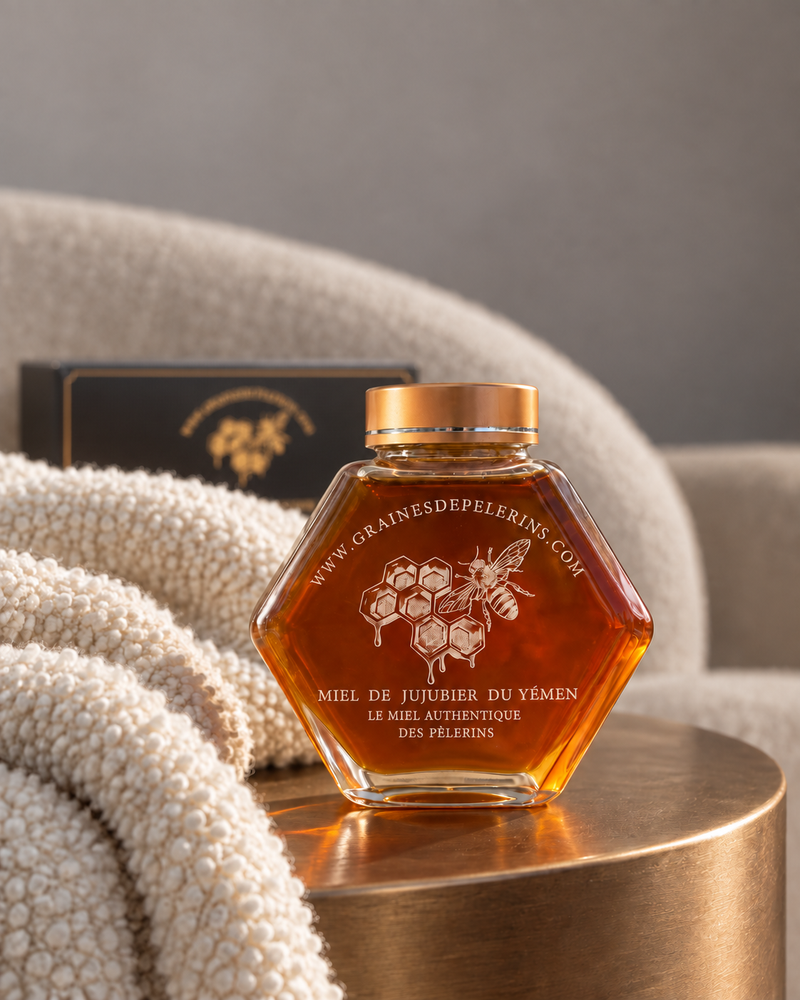
Guide
Pain d’épices: the story of French honey spice bread, and a real recipe
For centuries, pain d’épices was a loaf of honey and rye whose dough waited for weeks. From Reims to Nuremberg, its history, the part hon...
Read the article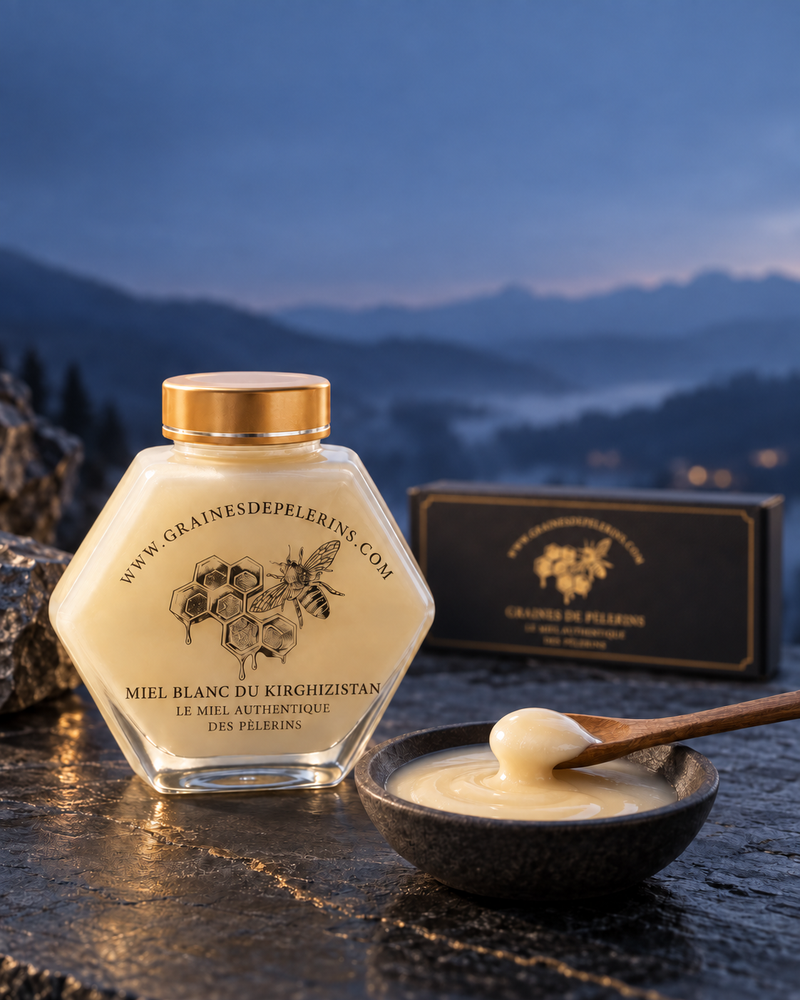
Classements
The best honey in the world: what the rankings say, what really counts
In 2025, the world beekeeping congress gave up awarding a honey. What contests and rankings are really worth, and the five criteria that ...
Read the articleDiscover our rare honeys
Four exceptional origins, limited harvests, gift boxes made for giving and for tasting.
See the collectionAlso worth discovering: our Almonds of Distinction